Costco Wholesale is benefiting from a broadening travel and lifestyle pitch that appeals to younger, smartphone-first Americans even as the stock gives back part of this year’s strong run and Walmart shows signs of pressure from a more cautious consumer.
Costco Membership Growth and Travel Strategy

The investment case is increasingly tied to whether Costco can keep turning a warehouse membership into a wider spending habit. That matters because the company’s model depends not just on traffic, but on sustaining renewal rates and extracting more revenue per member through travel, services and higher-margin ancillary spending. In a market where discretionary budgets remain under scrutiny, the ability to sell comfort, convenience and a sense of cultural discovery alongside low prices can be a durable source of growth.
Sentiment IndicatorsⓘProprietary · adalytica.com · October 4, 2026
This is a snapshot — live sentiment, awareness and momentum for 130+ markets update continuously in the dashboard.Open AlphaPulse
Costco’s latest trading pattern suggests investors are weighing that opportunity against valuation and momentum risk. The stock closed at $920.65 on Oct. 2, down from a peak near $1,092.58 in May, and sits just above its 50-day moving average of $933.13 while remaining below the 200-day average of $959.43. The relative strength index near 50.9 points to a stock that is neither overbought nor oversold, while the MACD remains negative, indicating the recent rebound has not fully reversed the summer drawdown.
That backdrop matters for a company whose appeal has long rested on the same formula: low prices, a limited assortment and a membership base willing to pay for access. In its most recent quarterly filing, Costco said membership fee revenue rose 11% in the third quarter and total paid members increased to 82.9 million from 79.6 million a year earlier. For a retailer, that kind of membership growth is important because it provides a recurring revenue stream that helps cushion margin pressure from price competition.
The strategic question is whether Costco can extend its value proposition beyond bulk staples into experiences that resonate with a younger cohort. The travel-focused story fits that theme: consumers who use a membership card and a phone to plan trips are effectively becoming repeat customers across multiple categories, from groceries and gas to vacations and services. That broadens the economic moat. It also gives Costco more ways to monetise loyalty without pushing prices higher on the core warehouse floor.
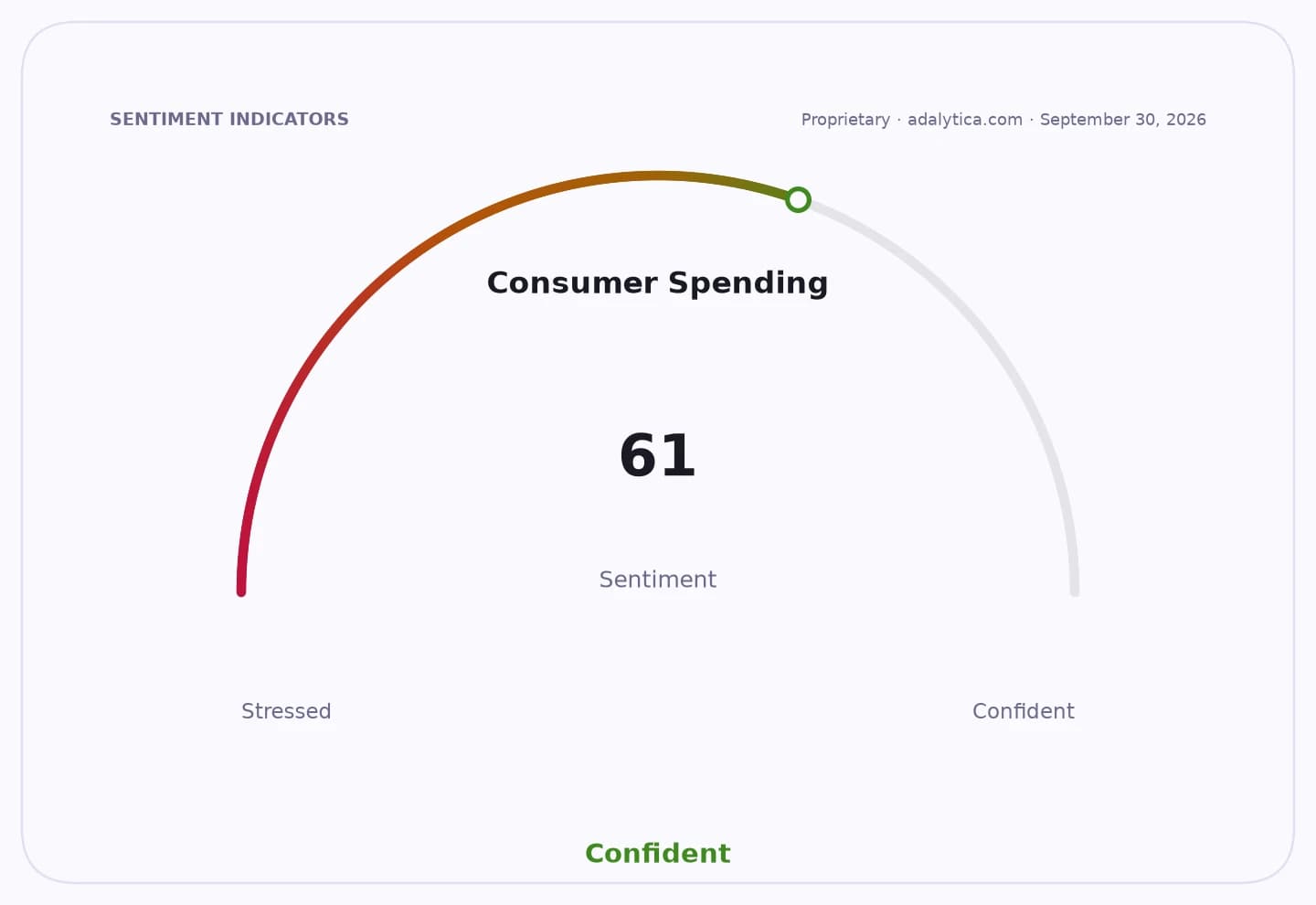
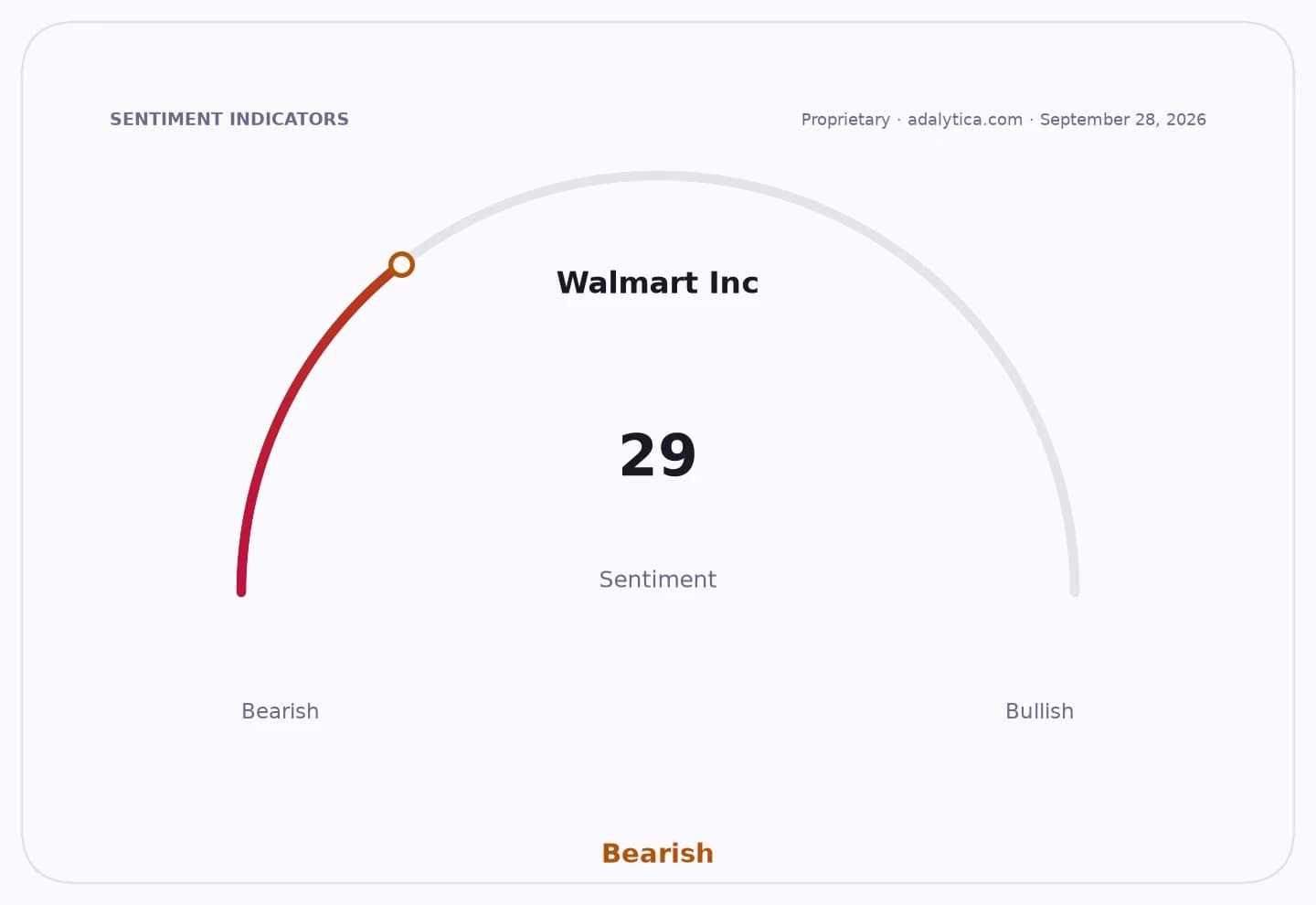
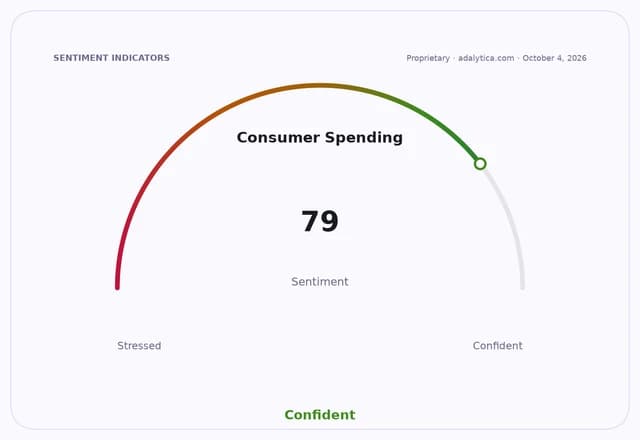
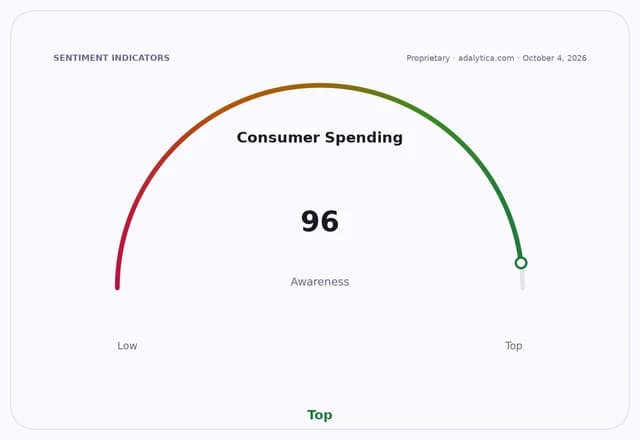
The contrast with Walmart is instructive. Walmart’s stock closed at $104.26 on Oct. 2, well below its 50-day moving average of $108.74 and 200-day average of $117.88. Its RSI of 34.3 suggests the shares have moved into technically weaker territory, reflecting investor concern that even the largest value retailer is not immune to margin and demand pressure. Adalytica’s consumer spending sentiment gauge remained in “Greed” territory at 79, but the one-day jump and mixed trend readings suggest spending confidence is still unstable rather than decisively strong.
For investors, Costco’s advantage is that it can capture trade-down behavior without relying only on defensive pantry staples. If the company can keep membership renewal rates elevated and convert its brand into a travel-and-services ecosystem, it may justify a premium multiple even after a volatile year. The bear case is that the stock remains rich relative to slower growth, and any disappointment in traffic, renewals or consumer spending could compress that premium quickly.
The next test is whether Costco can keep translating cultural relevance into recurring revenue. If younger shoppers continue to see the warehouse not just as a place to stock up, but as a platform for value travel and everyday convenience, Costco’s membership engine should stay powerful. If that behavior fades, the market will refocus on the stock’s already demanding valuation and the limits of price-based loyalty.
| Entity | Gains | Losses |
|---|---|---|
| Costco | ▲Higher member spending | ▼Valuation-sensitive bears |
| Younger travelers | ▲Convenient value travel | ▼Traditional travel operators |
| Walmart | ▲Defensive comparison interest | ▼Investors seeking stronger momentum |
| Consumers | ▲Lower-cost access to travel and goods | ▼Premium-priced rivals |