Credit chiefs are warning that the market’s reassessment of debt is turning into a real economic headwind, with U.S. banks, borrowers and bondholders all feeling the strain as Treasury yields stay pinned near multi-year highs and credit spreads stop cooperating.
Credit chiefs warn debt repricing is hurting banks

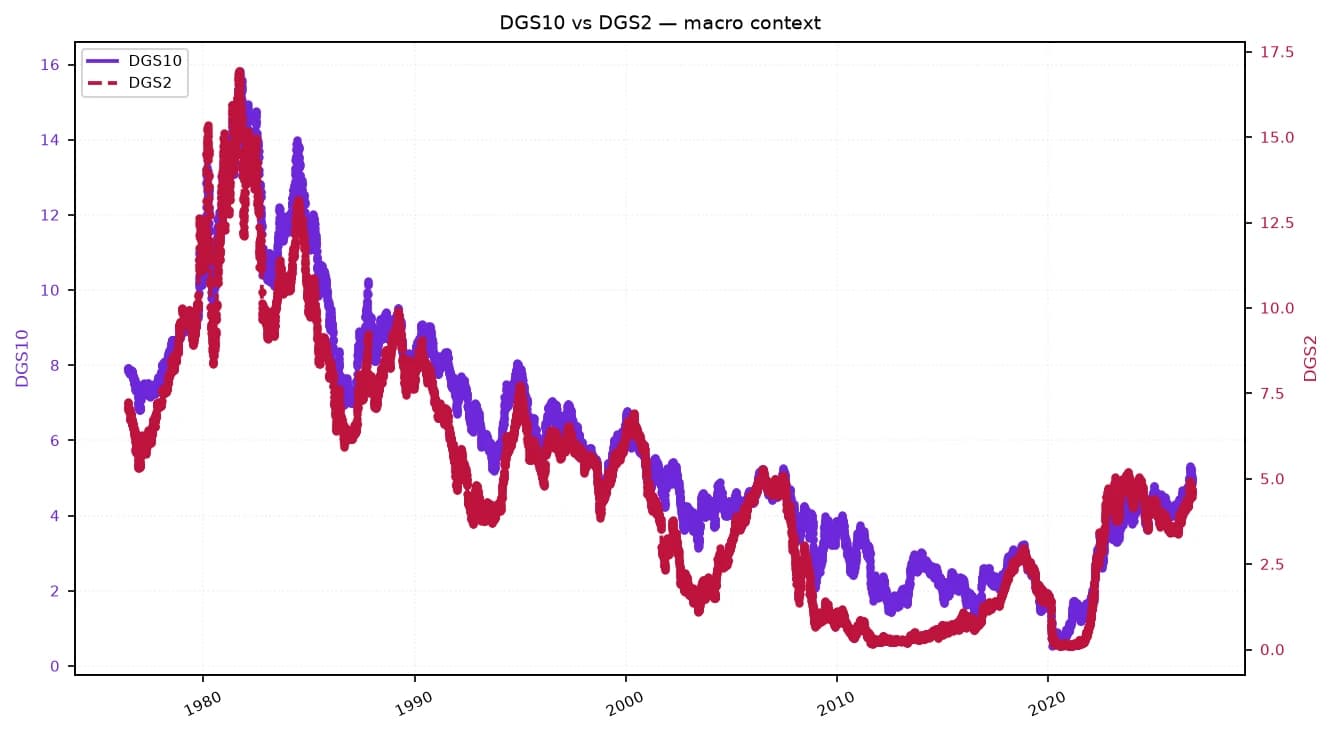
That is the core message investors should focus on. The 10-year Treasury yield is around 5.17%, the two-year at 4.85%, and high-yield credit spreads have widened to 3.42 percentage points, a combination that keeps borrowing costs elevated even after the most aggressive phase of the tightening cycle has passed. For households and companies, that means refinancing no longer offers relief. For lenders, it means credit quality is getting harder to defend.
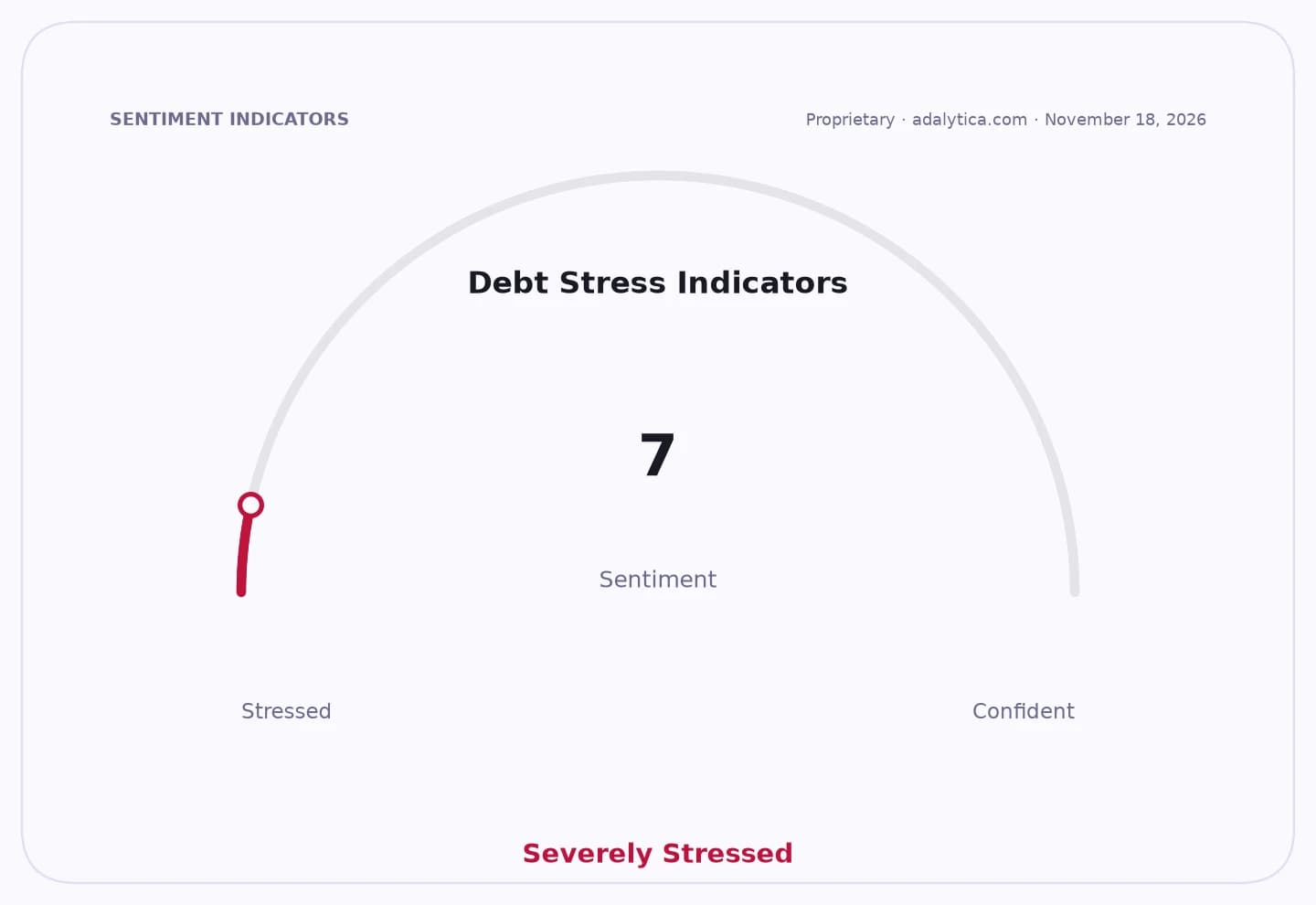
Sentiment Indicators
US Treasury
The pressure is already showing up in financial markets. JPMorgan Chase closed at $324.11, down from $352.11 earlier this month, with the stock slipping below its 50-day moving average even as it still trades above the 200-day line. Bank of America has fared worse, falling to $48.91 from $64.48 in August and now sitting below both its 50-day and 200-day averages. Those moves matter because they suggest investors are beginning to price in a less forgiving credit backdrop, not just a temporary rate shock.
The bond market is sending the same warning. Treasury sentiment tracked by Adalytica.com is in “Extreme Fear,” while investor sentiment toward the dollar has also deteriorated. At the same time, household debt stress sentiment has plunged into “Extreme Fear,” a sign that rising rates are biting beyond Wall Street and into consumer balance sheets. When the cost of money resets this sharply, the weakest borrowers are the first to break, then the repricing spreads through banks, private credit, leveraged loans and corporate treasuries.
DGS10 vs DGS2 — macro contextadalytica.com
Explore this data interactively — full history, time series and cross-market comparisons.
That is why the credit chiefs’ fear factor matters economically. Debt does not just become more expensive; it becomes more selective. Companies that relied on cheap refinancing must now pay up or shrink. Banks must reserve more conservatively. Asset managers holding duration and credit exposure face mark-to-market pressure. The result is a tighter financial environment that can slow hiring, capex and acquisitions even if the broader economy avoids an outright recession.
The market is already distinguishing between winners and losers. Large banks with diversified deposit bases and stronger earnings power can absorb higher funding costs better than regional lenders or highly levered credit vehicles. But even the strongest names are not immune if higher yields become persistent rather than episodic. That is the investment setup: the next move is not simply about whether rates fall, but whether debt repricing starts to expose the weakest balance sheets.
My thesis is that investors are underestimating how long this can last. If Treasury yields remain near 5% and credit spreads stay sticky, the real trade is not just in banks but in the entire refinancing ecosystem. That favors lenders with pricing power, platforms that can finance distressed or stressed assets, and select insurers and asset managers that benefit from higher yields. It also argues for caution on lower-quality borrowers, consumer credit names and any business model dependent on rolling debt cheaply.
The first real catalyst will be a larger wave of loan extensions, asset sales and covenant pressure, followed by a slower credit impulse into 2027. In this market, the fear factor is not a headline risk; it is the mechanism through which capital gets repriced. Investors who position early for that reset are likely to own the advantage.
| Entity | Gains | Losses |
|---|---|---|
| Large banks | ▲Wider loan pricing | ▼Credit losses rise |
| Weak borrowers | ▲Delay only | ▼Refinancing costs surge |
| Treasury buyers | ▲Higher carry | ▼Price volatility |
| High-yield issuers | ▲Access if strong | ▼Spread repricing |