A new attack on the Crimean Bridge has stopped all traffic across one of Russia’s most strategically important supply routes to occupied Crimea, sharpening the military and economic risks around a structure that underpins logistics, tourism and Moscow’s control of the peninsula.
Crimean Bridge Attack Stops Traffic Again
The bridge’s closure matters because it is not just a symbol of Russian power; it is a practical artery for moving people, fuel, food and military hardware. When traffic and train services are halted, the pressure spreads well beyond the bridge deck. It raises the cost and complexity of resupplying Crimea, forces authorities to lean on longer alternate routes and exposes another vulnerability in Russia’s southern war logistics just as the conflict remains highly fluid.
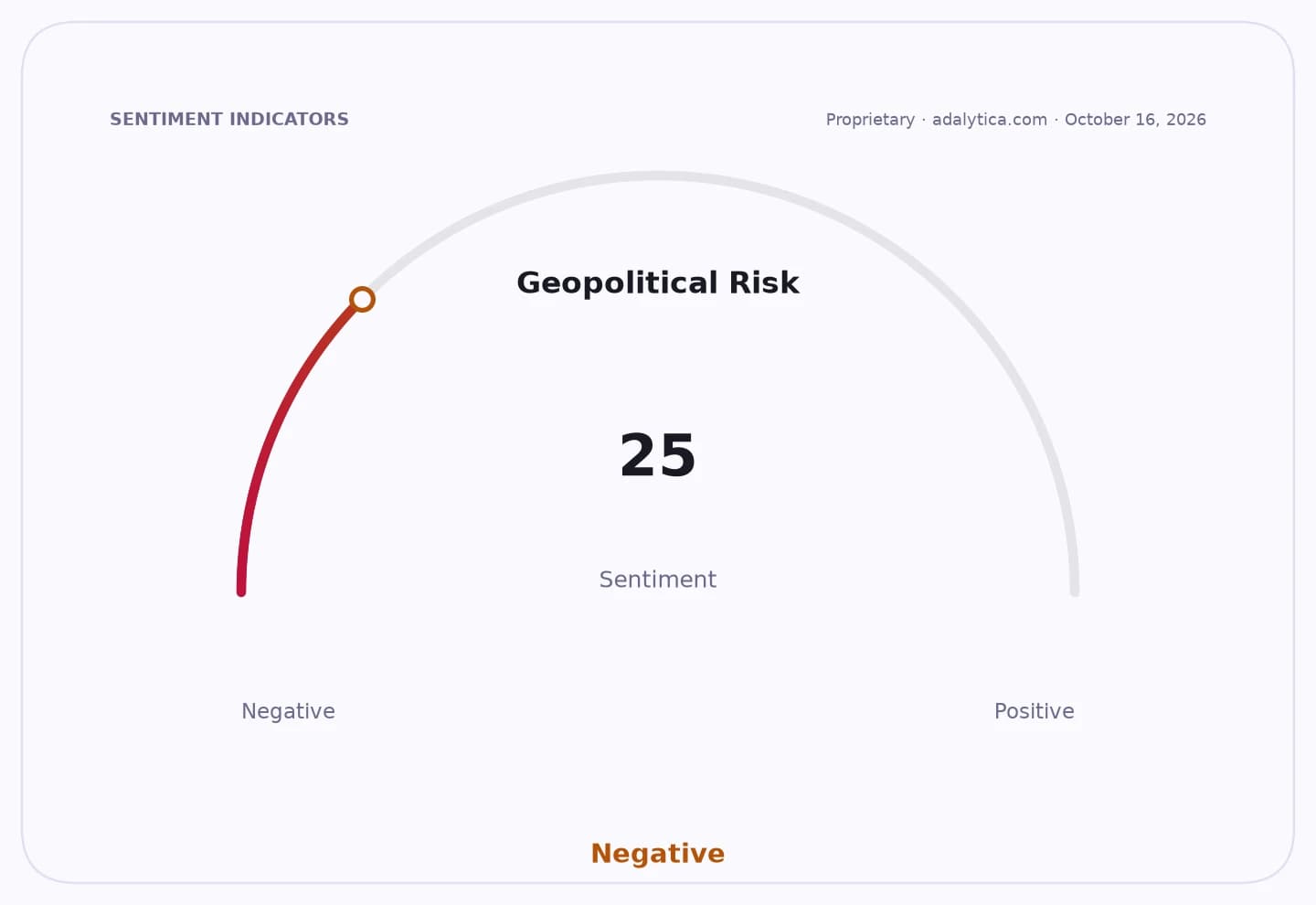
Sentiment Indicators
This was the third attack on the crossing in a week, according to the news context, underscoring how frequently Ukraine has been able to disrupt a piece of infrastructure Moscow has treated as essential. Each strike reinforces the same marketable reality: Russia cannot fully insulate Crimea from attack, and every outage increases the operational burden on its military and civil authorities. For investors watching the wider war economy, that means more pressure on Russian logistics, more uncertainty for reconstruction and transport chains, and a higher geopolitical risk premium across the region.
The latest incident also lands against a backdrop of extreme fear in Adalytica’s Global Stability Sentiment gauge, which points to a market that is already pricing elevated geopolitical stress. That matters because periods of rising instability tend to favor defense, security, surveillance and infrastructure-hardening names while punishing assets tied to risk appetite, regional trade and cross-border normalization.
For equity investors, the direct tradable impact is limited in the moment, but the second-order effects are important. Repeated attacks on strategic infrastructure strengthen the case for defense spending, drones, electronic warfare, missile defense and logistics resilience. They also keep sanctions, energy flows and Black Sea shipping risk front and center, which can ripple into commodities and any company exposed to Eastern Europe supply chains. In that sense, the bridge is more than a battlefield headline: it is a reminder that war-related infrastructure risk is still a live macro factor.
The market underestimates how persistent these disruptions can be. As long as the bridge remains a target, Russia will have to allocate more resources to protection and repair, while Ukraine demonstrates it can keep pressure on a highly visible choke point. That supports a long-duration investment thesis in defense and dual-use technology, while arguing for caution on any assets that require a quick return to regional stability. In geopolitical markets, the winners are the businesses that monetize uncertainty, and the losers are the ones that depend on it fading.
| Entity | Gains | Losses |
|---|---|---|
| Defense contractors | ▲More demand for air defense and drones | ▼ |
| Ukraine | ▲Pressure on Russian logistics | ▼ |
| Russia | ▲ | ▼Higher repair and security costs |
| Crimea-linked transport flows | ▲ | ▼Disruption and rerouting risk |