Croatia’s parliament has adopted a far-right-backed resolution supporting a separate electoral unit for Bosnian Croats, a move that is shaping up less as a policy breakthrough than as a test of Prime Minister Andrej Plenković’s coalition and of Zagreb’s appetite for another Balkan identity fight.
Croatia's Bosnia vote raises political risk, little policy impact

The vote matters because it revives one of the region’s most sensitive political disputes: how Bosnia and Herzegovina’s Croat minority is represented at the ballot box. Bosnian Croat leaders have long argued that the current system leaves them vulnerable to outvoting by the larger Bosniak population, while Bosniak parties see any special electoral arrangement as a threat to Bosnia’s fragile constitutional balance. But in practical terms, the Croatian resolution is largely symbolic. It cannot impose changes on Sarajevo, and it is unlikely to alter Bosnia’s election law without broad domestic and international agreement.
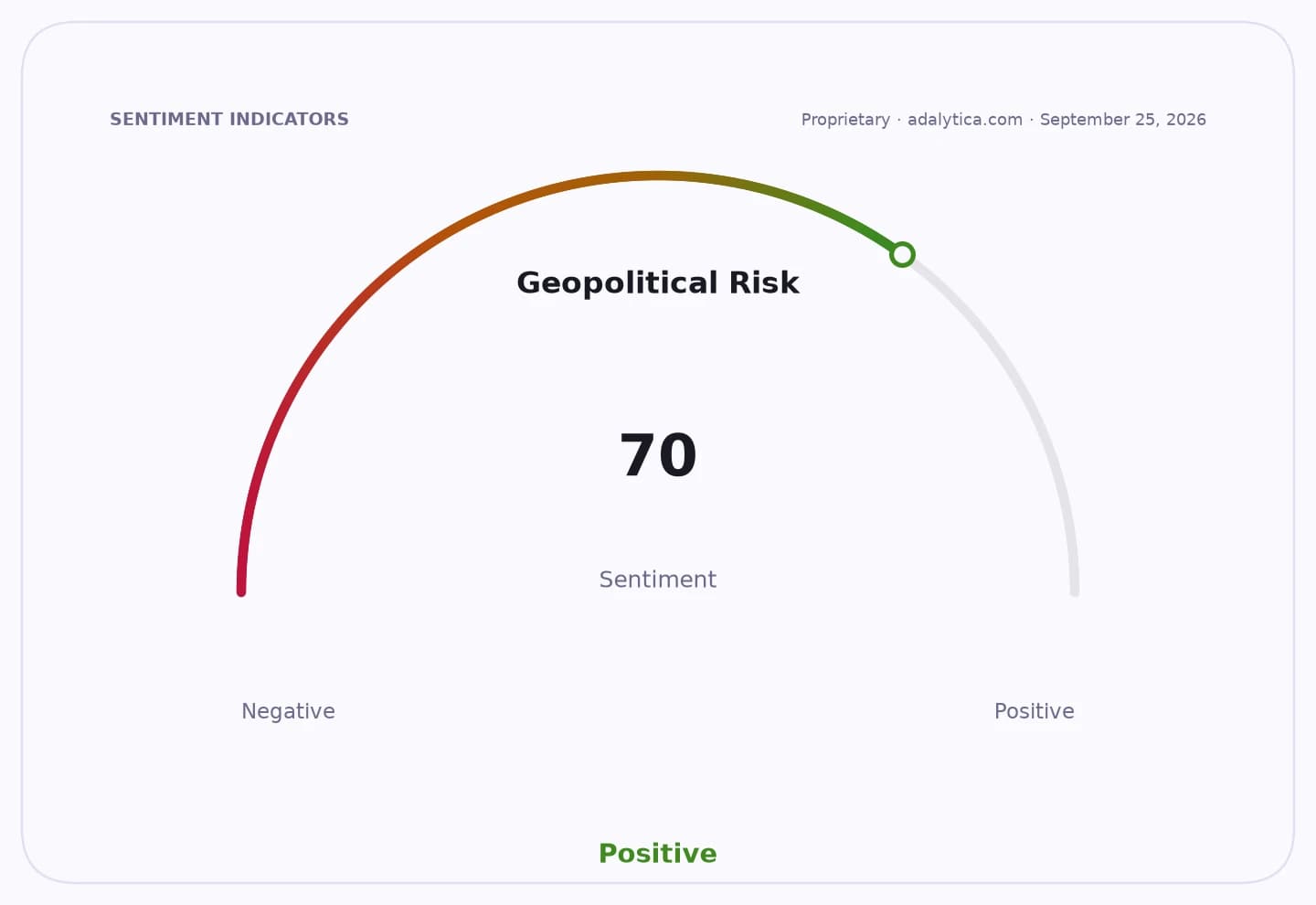
Sentiment IndicatorsⓘProprietary · adalytica.com · July 16, 2026
This is a snapshot — live sentiment, awareness and momentum for 130+ markets update continuously in the dashboard.Open AlphaPulse
That symbolism still has political weight at home. By allowing a far-right initiative to pass, Croatia’s ruling majority signaled both the influence of nationalist parties in parliament and the limits of Plenković’s effort to present himself as a moderate, pro-EU stabilizer. The issue is useful to domestic coalition politics because it plays to ethnic solidarity without carrying immediate fiscal costs or regulatory consequences. It also gives opposition and nationalist MPs an opening to accuse the government of either weakness or opportunism, depending on their angle.
The broader economic significance is indirect but real. Croatia is a eurozone member deeply tied to regional trade, labor flows and infrastructure links across the Western Balkans. Any escalation in ethnic or institutional tensions in Bosnia can complicate cross-border investment, delay transport and energy coordination, and raise the political risk premium for companies exposed to the region. That is especially relevant for banks, utilities and construction groups with operations in both countries, where investors tend to discount stability more than rhetoric.
Market signals point to that distinction. Adalytica’s sentiment gauges show strong polarization in Croatian politics, with support for the Law and Justice Party at “extreme greed” levels and Civic Platform sentiment neutral, while the euro trade signal sits in “extreme fear.” Those indicators do not imply immediate financial stress from the Croatian vote itself, but they reflect a broader environment in which political headlines can amplify investor caution toward European periphery and Balkan assets.
The episode also underscores how Bosnia remains a proxy battlefield for domestic politics in neighboring capitals. Zagreb has historically backed Bosnian Croat institutions and pressed for election changes, but every renewed push risks worsening relations with Sarajevo and drawing scrutiny from Brussels, which prioritizes institutional stability over ethnic partitioning. For Plenković, the calculation is familiar: preserve room with nationalist partners at home while avoiding any move that would materially disrupt Croatia’s standing in the EU.
For investors, the key question is not whether the resolution changes Bosnia’s electoral map tomorrow — it almost certainly will not — but whether it marks a deeper hardening of Croatian politics ahead of future coalition bargaining and regional diplomacy. If the measure remains symbolic, the market impact should stay limited. If it becomes part of a wider nationalist agenda that complicates Bosnia’s governance or Croatia’s relations with its neighbors, the risk premium on the region could rise.
| Entity | Gains | Losses |
|---|---|---|
| Croatian far-right parties | ▲Domestic visibility | ▼Policy credibility |
| Plenković coalition | ▲Short-term nationalist cover | ▼Centrist image |
| Bosnian Croat leaders | ▲Symbolic backing | ▼Little practical leverage |
| Bosnian stability / investors | ▲None | ▼Higher political risk |