Cuba’s inflation problem is now outrunning the government’s main shock absorbers, forcing economists to warn that collapsing purchasing power and wage restraint are no longer enough to keep prices in check.
Cuba inflation stays elevated as food prices rise
Pedro Monreal’s warning matters because it points to a deeper policy failure: Havana has yet to identify a credible macroeconomic anchor, even as official inflation remains elevated and the cost of basic food keeps rising. In his view, the government’s 2026 economic and social programme, together with a package of 176 measures, does not set out a mechanism capable of stabilizing the economy, leaving authorities to rely on ad hoc controls and the continued compression of salaries and pensions.
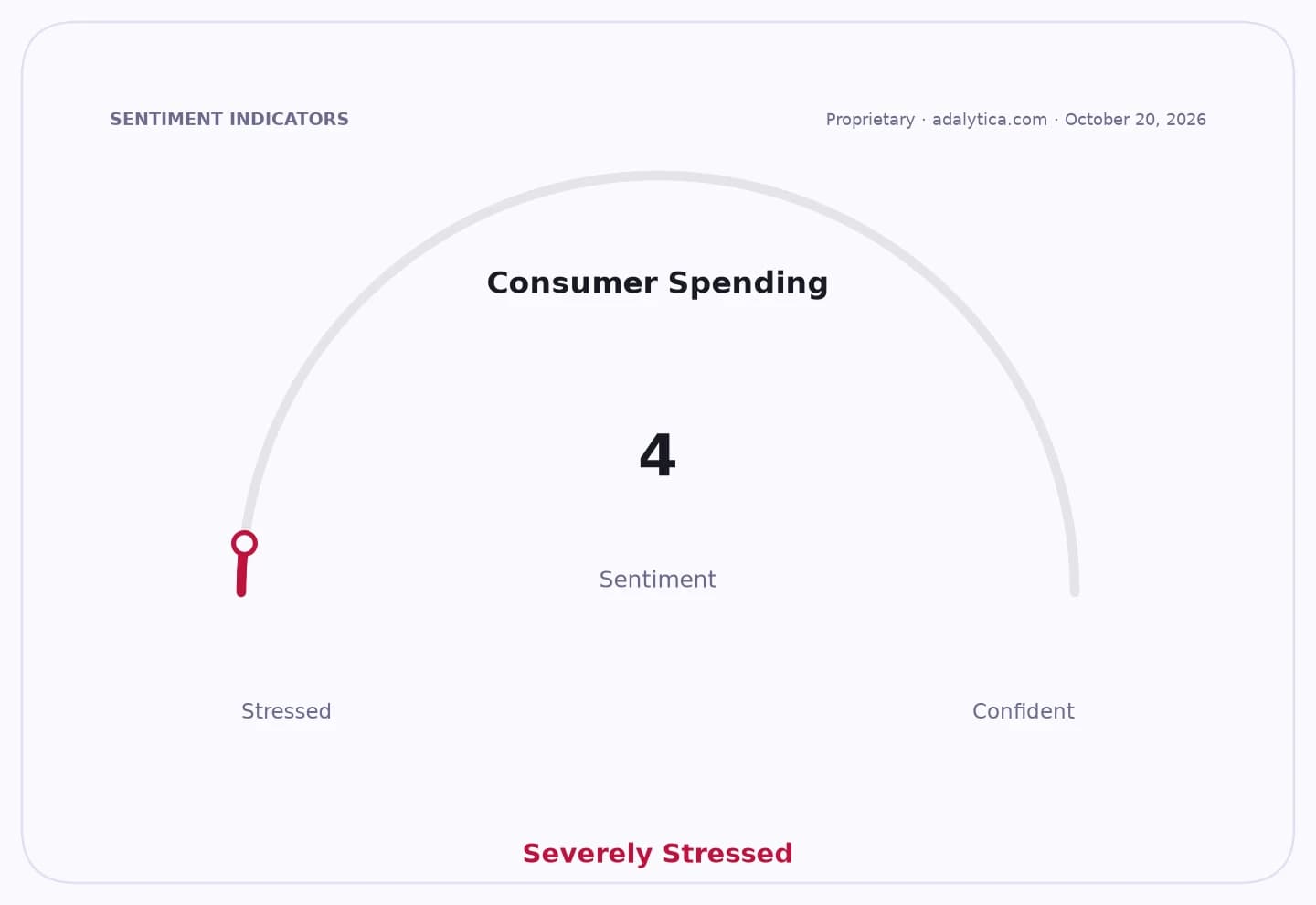
Sentiment IndicatorsⓘProprietary · adalytica.com · October 18, 2026
This is a snapshot — live sentiment, awareness and momentum for 130+ markets update continuously in the dashboard.Open AlphaPulse
The numbers show why that approach is reaching its limit. Official data cited by Monreal put year-on-year inflation in September at 28.44%, with prices up 24.85% in the first nine months of 2026, more than double the 10.88% recorded over the same period a year earlier. Monreal also argued that the official series may understate the true pace of price gains, citing the Hanke Inflation Dashboard, which estimated annualized consumer price growth at 71.4%.
Food is doing most of the damage. Monreal said food and non-alcoholic beverages accounted for 66.2% of the contribution to inflation between January and September, underscoring how a weak domestic supply base and dependence on imports are feeding a cost-of-living spiral. That pressure is visible in everyday prices: a kilogram of powdered milk was reported at 4,500 pesos in a Havana neighborhood market, while Brazilian rice cost 840 pesos per kilogram. Even the government’s newer experiment of selling some food and toiletries 10% to 15% cheaper than elsewhere offers little relief if supply remains patchy and incomes keep lagging.
The economic significance is straightforward. Cuba is attempting to restrain demand not by stabilizing prices, but by shrinking real household spending through lower wages and pensions. Monreal said that strategy has already caused accumulated human damage and is now failing as a tool of disinflation. That is a dangerous sign for a state economy with limited fiscal room, weak foreign exchange earnings and a currency that continues to lose value.
The investor relevance lies in what the episode says about policy credibility and reform execution. Without an effective anchor — whether through exchange-rate stabilization, tighter monetary control or a durable increase in productive supply — the 176-measure package risks becoming another reform plan overtaken by shortages and price pass-through. Monreal said the programme’s viability depends on better integration with the international economy and on urgent measures to lift agricultural output, two conditions that remain unresolved.
For households, the message is bleak: inflation is still being driven by food, wages are too low to absorb it, and the government has so far offered no convincing route to restore purchasing power without deepening scarcity.
| Entity | Gains | Losses |
|---|---|---|
| Cuban households | ▲Little relief from cheaper shops | ▼Real income and purchasing power |
| Cuban government | ▲Short-term demand suppression | ▼Policy credibility |
| Food importers/suppliers | ▲Higher peso revenues | ▼Demand destruction and shortages |
| Wage earners and pensioners | ▲None | ▼Living standards |