The most important development is not that Washington is talking tough on Cuba again, but that the pressure is now being interpreted in Havana and by regional businesses as part of a campaign to force economic collapse rather than a negotiation over policy.
Cuba Tensions Lift Caribbean Geopolitical Risk
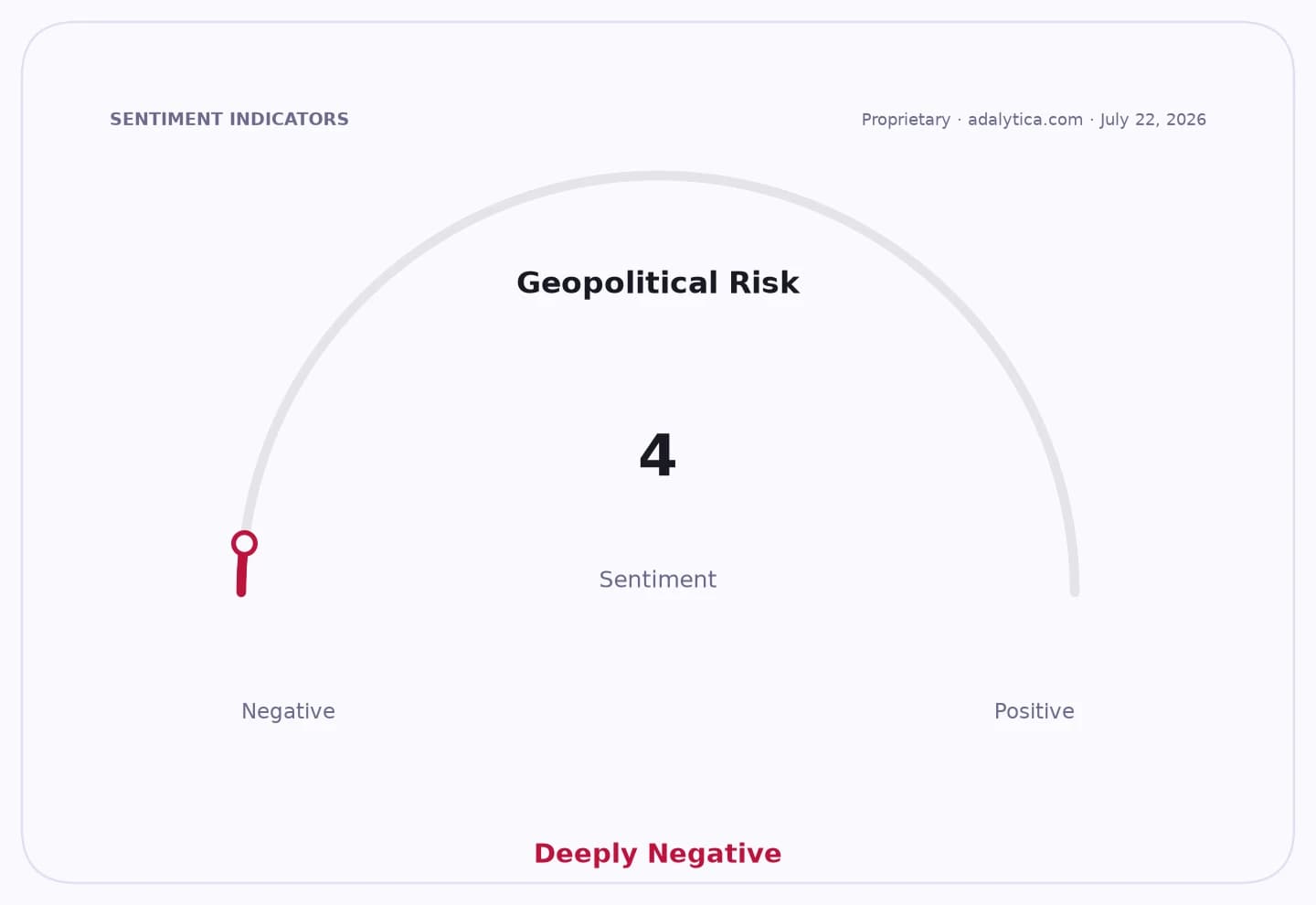
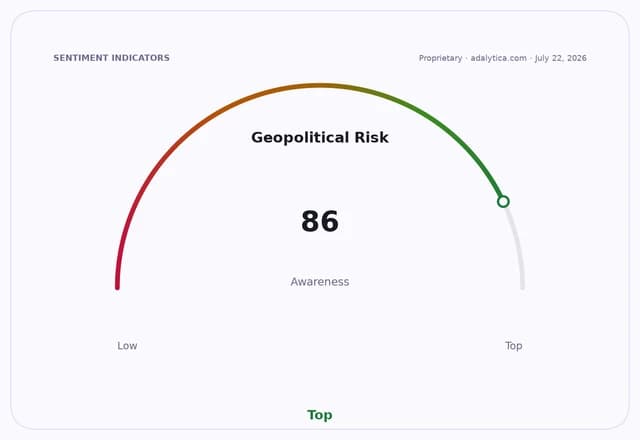
That matters because Cuba’s crisis is no longer just a political standoff. It is feeding shortages, blackouts and capital flight across the island, while raising the odds of more sanctions, more travel disruption and further strain on Caribbean tourism flows and regional risk sentiment. In the background, the market is already signaling a sharper geopolitical premium: Adalytica’s Global Stability Sentiment gauge has dropped to 4, or “Extreme Fear,” even as awareness remains elevated at 86, showing investors are paying attention to the region’s instability.
Sentiment IndicatorsⓘProprietary · adalytica.com · July 22, 2026
This is a snapshot — live sentiment, awareness and momentum for 130+ markets update continuously in the dashboard.Open AlphaPulse
The seed headline, anchored on comments from César Augusto Sención, reflects a familiar but still consequential debate: whether the US is merely ratcheting up coercion or preparing a more direct escalation. Even if a military invasion remains a low-probability scenario, the economic effect of the rhetoric is real. Cuba’s government says the latest sanctions are “criminal and genocidal,” while the withdrawal of Spain’s Meliá after 36 years underscores how sustained US pressure can alter corporate behavior well before any military threshold is crossed.
For investors, the immediate issue is not Cuban sovereign assets — which are already isolated — but second-order exposure. Tourism operators, airlines, hotel groups and suppliers with Caribbean business lines face a wider set of risks if Cuba’s deterioration spills into travel demand, regional logistics or consumer confidence. Carnival Corp. and Royal Caribbean both remain sensitive to Caribbean stability, even if the market has treated Cuba as a peripheral destination rather than a core earnings driver. American Airlines, with its extensive Latin America and Caribbean exposure, also has more at stake than broad US travel peers if regional friction curbs demand or lifts operating uncertainty.
The market has not priced this as an acute shock in US equities. Carnival shares have recovered from a March trough near $24 to about $26.32, while Royal Caribbean is trading around $286.30, close to its 50-day moving average but below its more aggressive spring highs. American Airlines remains far more fragile, with its stock at $15.22 and its RSI, a standard technical indicator, in deeply oversold territory. Those charts suggest investors are still treating the Cuba issue as a geopolitical overhang rather than a near-term earnings event.
Still, the economic logic behind the escalation is straightforward. Washington’s sanctions and blockade have already squeezed Cuba’s fuel supply and worsened the island’s power shortages. That makes the government more dependent on scarce hard currency from tourism, remittances and foreign partners, while making foreign operators more cautious about long-dated commitments. The result is a tightening loop: more pressure drives more economic stress, which then deters investment, which in turn reinforces the collapse narrative.
The bull case for Washington is that sanctions can keep raising the cost of authoritarian control and limit Cuba’s ability to present itself as stable enough for outside capital. The bear case is that the policy backfires, hardens the government’s political position and leaves investors with more reputational and operational risk but little policy change in return. The history of Cuban pressure campaigns suggests the latter outcome is at least as plausible as regime break.
For now, the key catalyst is whether the current US approach remains rhetorical and financial, or moves toward broader enforcement that affects travel, shipping and third-country operators. If that happens, the market impact would likely show up first in Caribbean-focused leisure names, then in Latin America demand trends and broader geopolitical risk pricing, rather than in any direct move on Cuban assets. In that sense, the real trade is not on Cuba itself, but on how long investors are willing to tolerate the region’s rising political temperature.
| Entity | Gains | Losses |
|---|---|---|
| US hawks | ▲Pressure on Havana | ▼Higher escalation risk |
| Cuban government | ▲Political rallying point | ▼Harder currency squeeze |
| Caribbean tourism groups | ▲Limited upside from replacement demand | ▼Cuba-related disruption |
| Investors in risk assets | ▲No immediate broad market shock | ▼Higher geopolitical premium |