Germany’s DAX hovered just below its all-time high on Wednesday, underscoring how quickly investors have moved back into European equities even as technical indicators point to a market that is extended and vulnerable to a pause. The index’s latest push to 26,140.13, after touching an intraday high of 26,229.33, leaves it within striking distance of record territory and keeps the benchmark among the strongest major developed-market performers this year.
DAX Nears Record at 26,140.13 Amid Overbought Readings

The move matters because it reflects more than momentum trading: it suggests capital is still willing to pay up for German equities despite a difficult macro backdrop of sluggish domestic growth, tariff uncertainty and uneven industrial demand. The DAX has risen from 22,300.75 in late March to more than 26,000, a gain of roughly 17%, while the iShares MSCI Germany ETF, EWG, has climbed to $43.52 from $37.45 over the same period. That combination points to renewed appetite for export-heavy German stocks and for Europe more broadly, as investors seek regions that may be less exposed than the U.S. to stretched valuations and intense AI-related concentration risk.
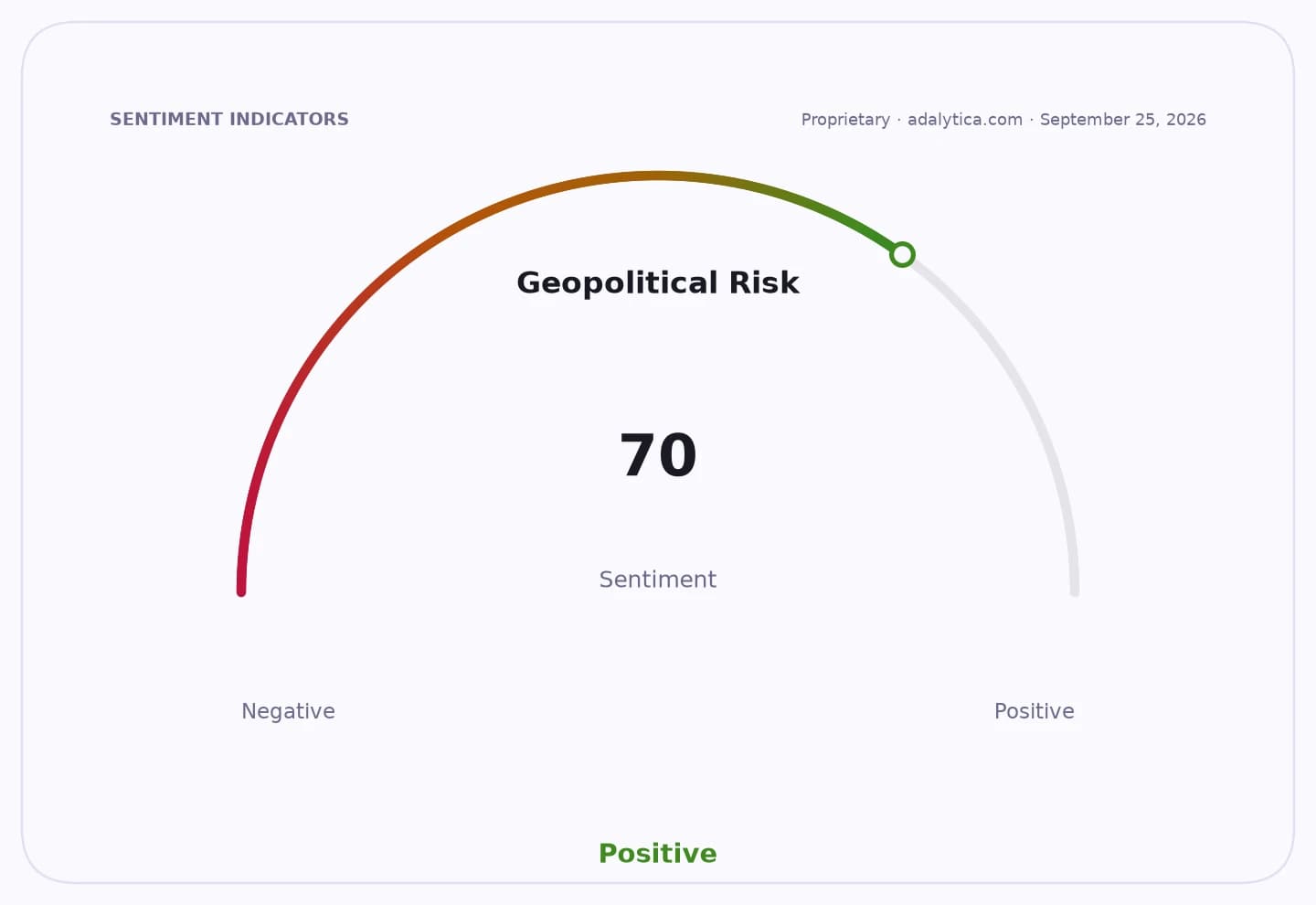
Sentiment IndicatorsⓘProprietary · adalytica.com · August 7, 2026
This is a snapshot — live sentiment, awareness and momentum for 130+ markets update continuously in the dashboard.Open AlphaPulse
The rally is also happening with a familiar warning sign attached. On the DAX’s latest reading, the index is trading well above its 50-day moving average of 25,105.63 and above its 200-day average of 24,435.10, while the RSI at 79.1 is consistent with overbought conditions. That does not by itself mean an imminent reversal, but it does imply that near-term upside may be harder to sustain without fresh earnings support or a softer macro surprise. The index’s push higher on heavy volume suggests institutional participation, yet the closing levels imply the market has already priced in a fair amount of optimism.
For investors, the question is whether the rally is broadening or merely rotating. Germany’s exporters, industrial names and financials stand to benefit if global trade steadies and the euro remains firm, and Adalytica’s euro trade signals show extreme greed in the currency, which can reinforce the case for European assets in foreign flows. But a stronger euro can also weigh on multinational earnings translated back from overseas, and the recent jump in German equities has left less room for disappointment if U.S. growth cools or trade policy turns less predictable.
The backdrop in U.S. equities is supportive but also cautionary. Adalytica’s S&P 500 signals show extreme greed, a reminder that global risk appetite remains elevated and that cross-asset flows are still favoring equities over cash. That helps explain why the DAX can sit near records without an obvious catalyst from Frankfurt itself. The danger is that when sentiment is this one-sided, even a modest earnings miss or macro wobble can trigger profit-taking.
The next test for the DAX is whether it can convert proximity to a record into a decisive breakout. If corporate results stay firm and global risk sentiment holds, the index could extend higher and force underinvested managers to chase performance. If not, the combination of elevated RSI readings, a price already above key moving averages and a crowded bullish consensus could leave German stocks vulnerable to a sharper consolidation.
| Entity | Gains | Losses |
|---|---|---|
| DAX bulls | ▲Momentum and record-chasing flows | ▼Risk of near-term pullback |
| German exporters | ▲Stronger equity valuations | ▼Strong euro on translation |
| EWG holders | ▲Exposure to Europe rebound | ▼Lower upside if DAX stalls |
| Shorts / underweight managers | ▲— | ▼Forced cover risk if breakout holds |