Germany’s DAX starts the week in the red as investors refocus on the oil market, where a recent spike to a five-month high is keeping pressure on risk appetite and inflation-sensitive assets.
DAX Falls as Oil Spike Pressures Risk Appetite

The index was down 0.7% at 25,439 points shortly after the opening bell, trimming some of last week’s gains but still holding above the levels seen in the prior two weeks. The pullback comes after the DAX finished last week up about 1% at 25,623 points, its strongest close since mid-September.
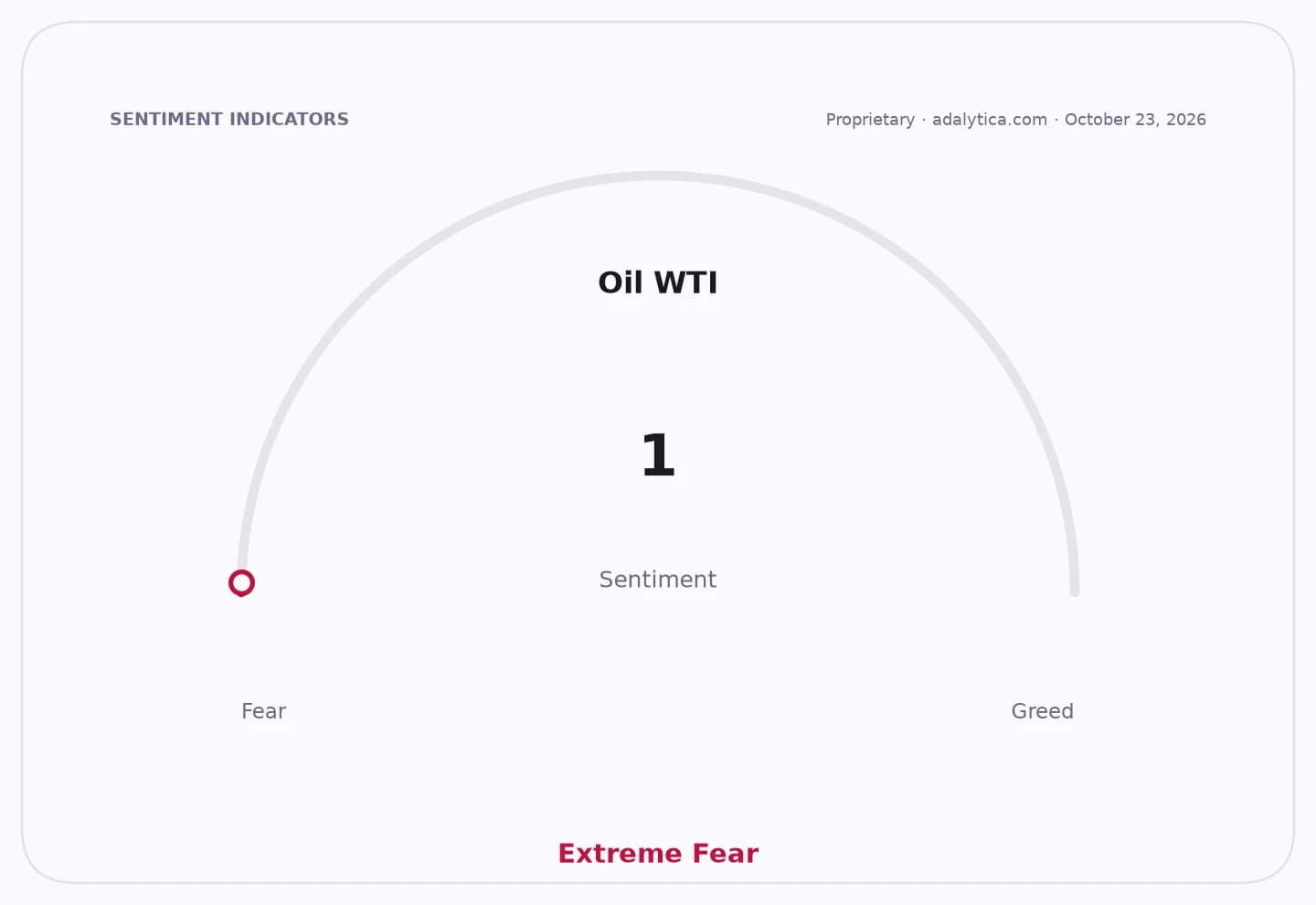
Sentiment IndicatorsⓘProprietary · adalytica.com · October 23, 2026
This is a snapshot — live sentiment, awareness and momentum for 130+ markets update continuously in the dashboard.Open AlphaPulse

Oil remains the key market driver. Brent crude hit a five-month high on Friday before easing Monday, but traders are still weighing fresh geopolitical tension in the Middle East, including renewed attacks on two tankers in the Persian Gulf and a Houthi strike on Saudi Arabia. US Energy Secretary Chris Wright said Gulf oil shipments have recovered to about 80% of pre-conflict levels, though refined product flows remain constrained.
That matters for investors because higher oil prices feed directly into inflation expectations, corporate input costs and central bank policy assumptions, especially in Europe’s export-driven economy. German equities are particularly sensitive to energy costs, margin pressure and any knock-on effect on consumer demand.

The move also reflects a broader risk-off tone after Wall Street’s chip-led selloff last week rippled through global markets. The S&P 500 came under pressure as investors sold semiconductor shares, adding to caution around cyclical assets.
For now, the oil market remains the main swing factor. Brent had fallen to $70 over the summer on hopes of lower Middle East risk, but with Iran-US talks stalled for months, prices have climbed back sharply. Brent is now about 15% below this year’s peak, but still roughly 80% higher than at the start of 2025, keeping energy costs and market volatility in focus.
| Entity | Gains | Losses |
|---|---|---|
| Oil producers | ▲Higher revenue | ▼None from price spikes |
| German exporters | ▲Weaker euro-supportive demand? | ▼Higher fuel and input costs |
| Consumers | ▲Lower fuel bills if oil eases | ▼More inflation pressure if oil rises |
| DAX bulls | ▲Chance to buy dips | ▼Near-term index momentum |