The German stock market’s failure to clear 25,000 points on Friday is more than a round-number pause: it is a sign that Europe’s marquee equity benchmark is losing momentum just as global risk appetite turns uneven.
DAX stalls below 25,000 as momentum cools

That matters because the DAX has been trading like a barometer of whether investors still believe in Germany’s earnings recovery, export leverage and policy-sensitive industrial cycle. When a market gets pinned below a psychological milestone after a strong run, it usually means buyers are becoming more selective, not more aggressive.
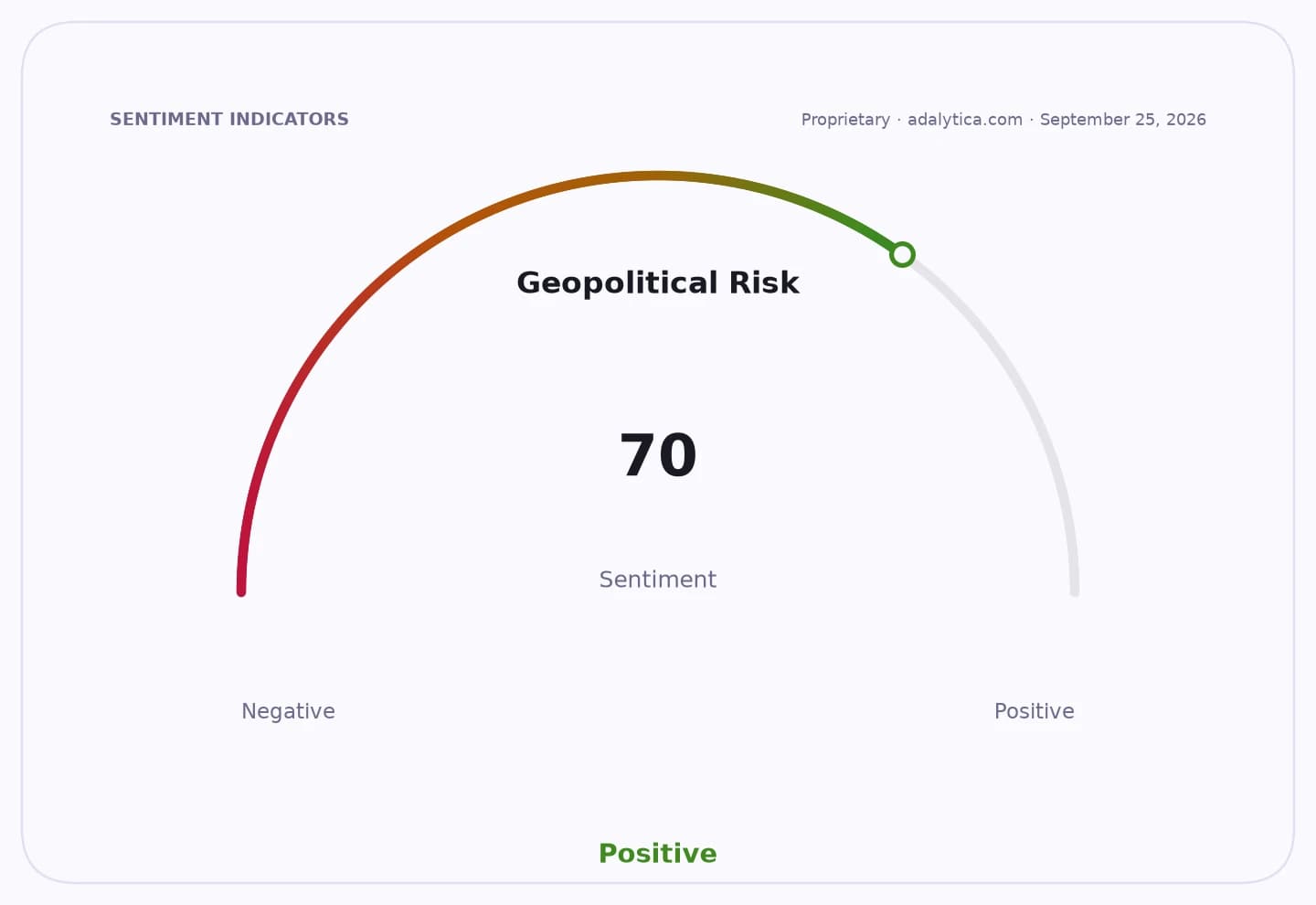
Sentiment IndicatorsⓘProprietary · adalytica.com · July 17, 2026
This is a snapshot — live sentiment, awareness and momentum for 130+ markets update continuously in the dashboard.Open AlphaPulse

The DAX was down slightly in early trade, extending what traders have described as a post-rally hangover. At 44.19 in the latest data snapshot — with the 50-day moving average at 44.37 and the 200-day at 44.04 — the fund proxy is hovering close to key support rather than breaking out. The index’s RSI readings around 52.7 suggest momentum has cooled from overbought levels, while the MACD remains only marginally positive. In other words, this is not panic selling; it is consolidation in a market that needs a fresh catalyst.
The problem for bulls is that the macro backdrop is not offering an obvious one. Global sentiment has turned choppier, with Adalytica’s S&P 500 trade signals still showing greed but elevated fear in awareness, while the euro is flashing extreme fear. That combination usually favors caution over risk-taking and leaves export-heavy European equities vulnerable if investors rotate back toward the US or trim cyclicals.
For Germany, the 25,000-point threshold matters because it is where valuation meets narrative. A clean move above that level would have reinforced the case that investors are willing to pay up for German industrials, autos, machinery and financials despite soft global growth and geopolitical noise. The fact that the rally is stalling instead suggests the market underestimates how much of the move was already driven by positioning rather than fundamentals.
That is exactly why investors should pay attention. A stalled DAX does not just signal near-term fatigue; it can mark the point where the market starts separating winners from the broad index. If growth-sensitive sectors cannot carry the benchmark through resistance, capital is likely to migrate toward defensives, quality exporters with pricing power, and companies tied to structural spending themes rather than the old cyclicals trade.
The broader European context reinforces that view. Adalytica’s global stability gauge remains in fear territory, and the euro’s weakness signals that investors are not yet comfortable with the region’s growth outlook. In that kind of tape, German equities may still outperform on stock selection, but the index itself is likely to struggle until macro fears ease or earnings upgrades force a reassessment.
The message for investors is straightforward: treat the DAX’s inability to conquer 25,000 as a warning, not a verdict. The next decisive move will likely come from either a renewed global risk bid or a stronger-than-expected earnings and policy backdrop. Until then, the better opportunity may be in buying the German market selectively — not chasing the index at resistance.
| Entity | Gains | Losses |
|---|---|---|
| German exporters with pricing power | ▲Selective demand | ▼Broad index momentum |
| Defensive European stocks | ▲Relative inflows | ▼Cyclical rotation |
| DAX bulls chasing 25,000 | ▲Possible breakout if catalyst emerges | ▼Near-term conviction |
| Cash-heavy or underweight investors | ▲Better entry points | ▼Immediate upside missed |