For investors looking beyond equity schemes, the biggest issue in debt mutual funds is not return chasing but understanding what actually drives those returns. Debt funds park money in government securities, corporate bonds and other fixed-income instruments, so the economics of the asset class hinge on basic terms such as bond, coupon rate, face value and maturity.
Debt mutual funds and bond price risk explained
That matters because bond funds are not fixed-income in the sense of fixed outcome. Their performance moves with interest rates, bond prices and the credit strength of the issuer. When rates rise, bond prices tend to fall; when an issuer’s finances weaken, the risk of delayed or missed payments rises. For retail investors, that means a debt fund can lose value even if the underlying instruments look conservative on paper.
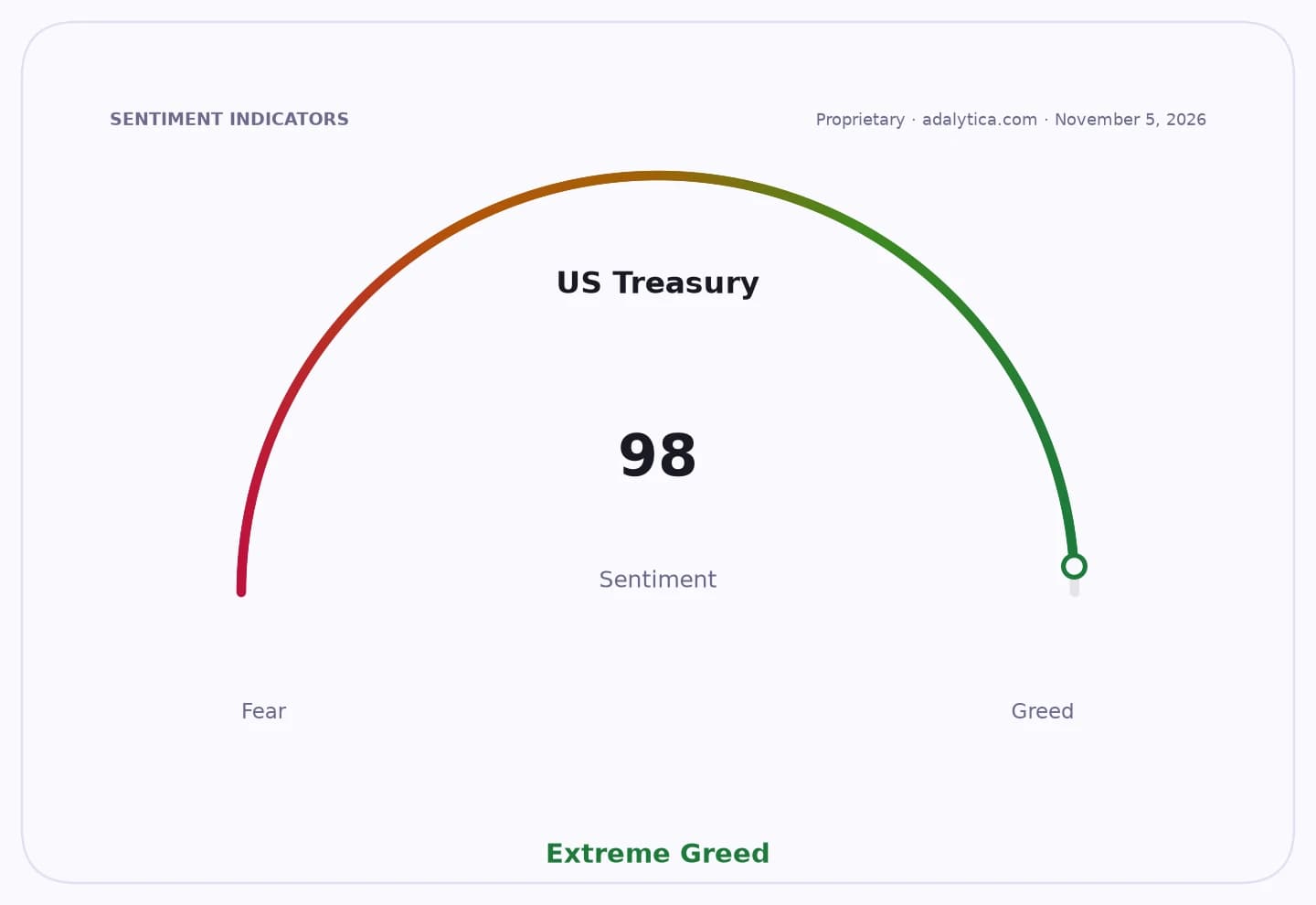
Sentiment Indicators
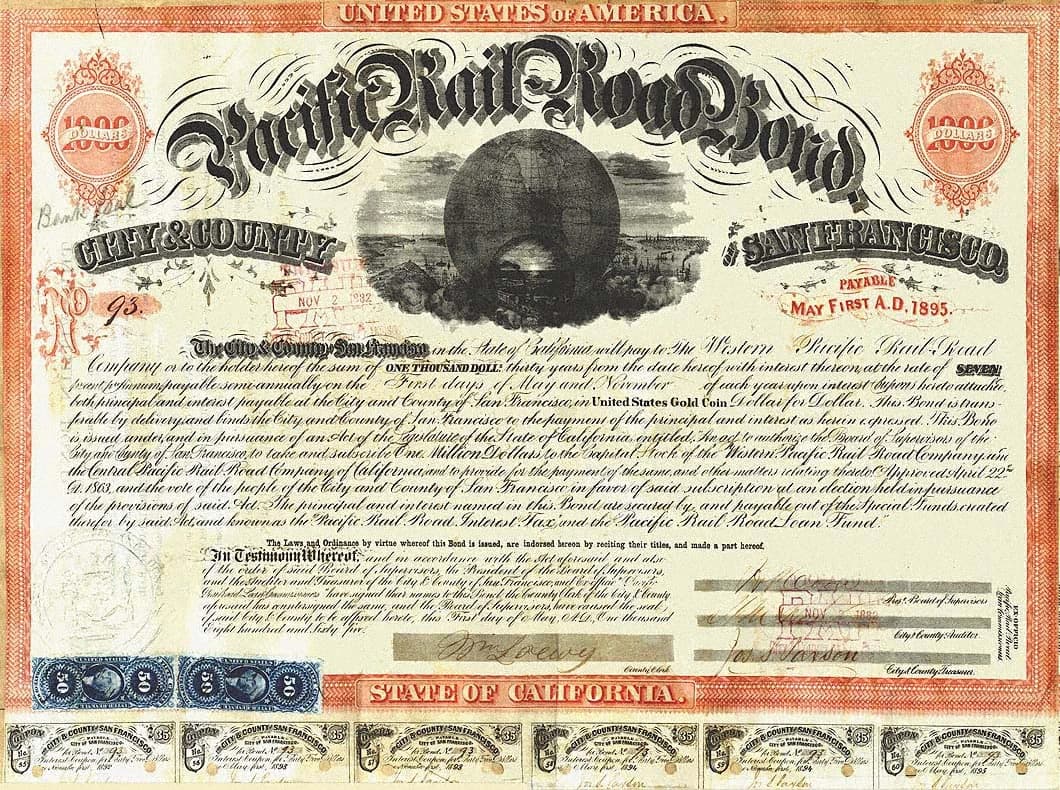
In simple terms, a bond is a loan to a government, company or institution. The face value, or par value, is the amount on which interest is usually calculated and the principal is repaid at maturity. A ₹1,000 face-value bond, for example, generally returns ₹1,000 at the end of the term, while a bond with a 8% coupon rate on ₹10,000 would pay ₹800 a year in interest, often split across monthly, half-yearly or annual coupon payments.
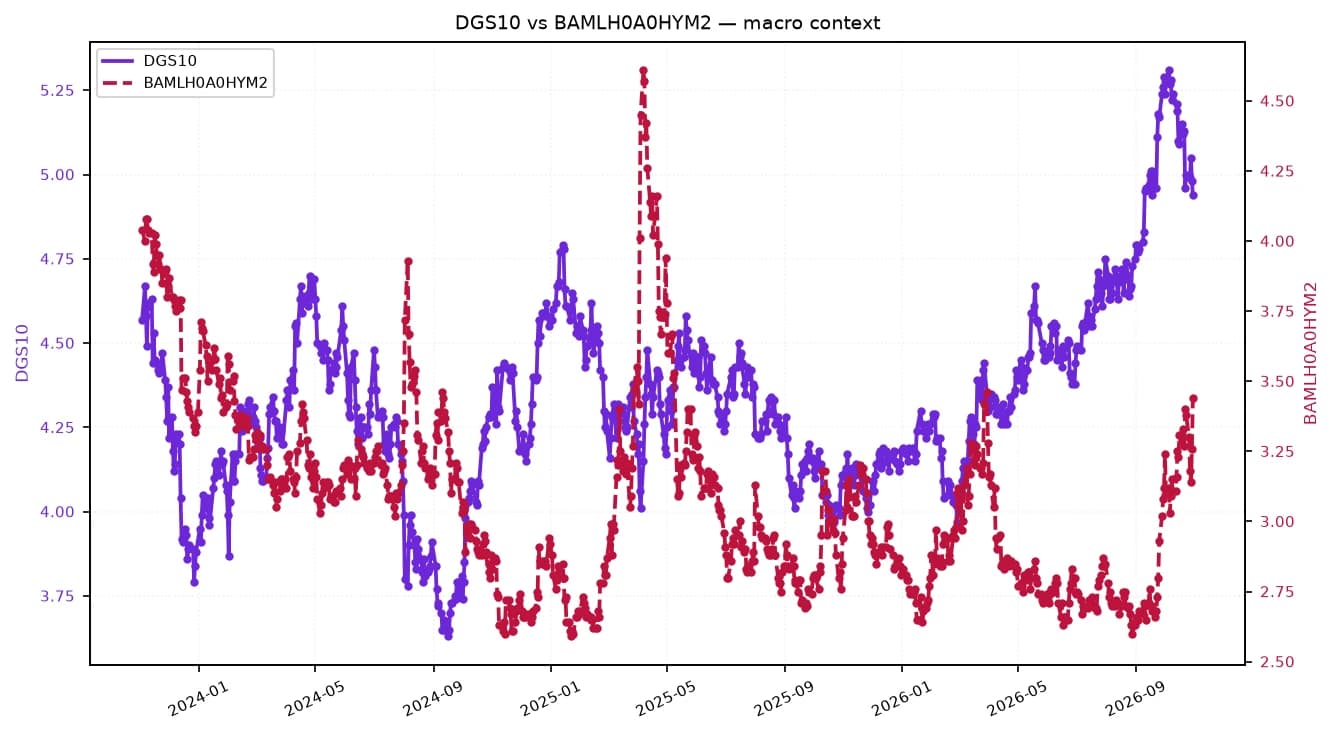
The maturity date is equally important because it marks when the issuer must repay the principal. Longer maturities usually mean greater sensitivity to interest-rate moves, which is one reason debt fund returns can swing even in relatively stable markets. That sensitivity has been visible globally: US Treasury yields recently moved sharply, with the 10-year yield touching 4.91% to 4.95% before the latest forecast pointed to 4.885%, underscoring how quickly fixed-income prices can react to changing rate expectations.
DGS10 vs FEDFUNDS — macro contextadalytica.com
Explore this data interactively — full history, time series and cross-market comparisons.
The broader market backdrop helps explain why the terminology matters. US short-term rates remain elevated, with the federal funds rate at 3.88% and forecast at 3.89%, while credit spreads in high-yield debt have widened at times to 3.44% before easing to 3.40%. In parallel, Treasury ETFs such as TLT have been trading around 81.7, above their 50-day average of 80.4 but still below the 200-day average of 83.5, a sign that duration exposure remains sensitive to policy expectations. High-yield ETF HYG has also been fluctuating around 77.5, with its 50-day average near 77.9, reflecting a market still pricing in credit risk.
For Indian mutual fund investors, the lesson is straightforward: debt funds are not risk-free deposits. They are portfolios of securities whose value depends on interest rates, issuer quality and time to maturity. Conservative investors may prefer shorter-duration or higher-quality funds if they want less volatility, while those willing to take more rate risk may seek higher potential returns from longer-duration strategies.
The practical takeaway is that debt mutual funds reward understanding more than assumptions. Before investing, buyers need to know whether they are being paid mainly for lending, for duration risk, or for taking credit risk. Those distinctions will matter most if rates stay volatile, inflation remains sticky and credit conditions tighten again.
| Entity | Gains | Losses |
|---|---|---|
| Short-duration fund investors | ▲Lower interest-rate sensitivity | ▼Less upside if yields fall |
| Long-duration bond fund investors | ▲More gain if rates decline | ▼Bigger losses if rates rise |
| High-quality issuers | ▲Easier funding access | ▼ |
| Weak-credit issuers | ▲ | ▼Higher borrowing costs |