Treasury and credit markets are drawing fresh investor attention as volatility in equities and higher-for-longer rate expectations keep the case for bonds alive, even as pockets of the market show clear strain.
Treasury bonds gain as yields and spreads hold
US Treasury
The move matters because bonds are once again doing two jobs at the same time: offering income and acting as a hedge against stock-market swings. That dual role is especially important now, with the 10-year US Treasury yield hovering near 4.9%, the 10s-2s curve still barely positive at around 0.32 percentage point, and high-yield credit spreads at 3.40%, a level that suggests investors are not pricing in broad systemic distress but are demanding more compensation for risk.
Sentiment Indicators
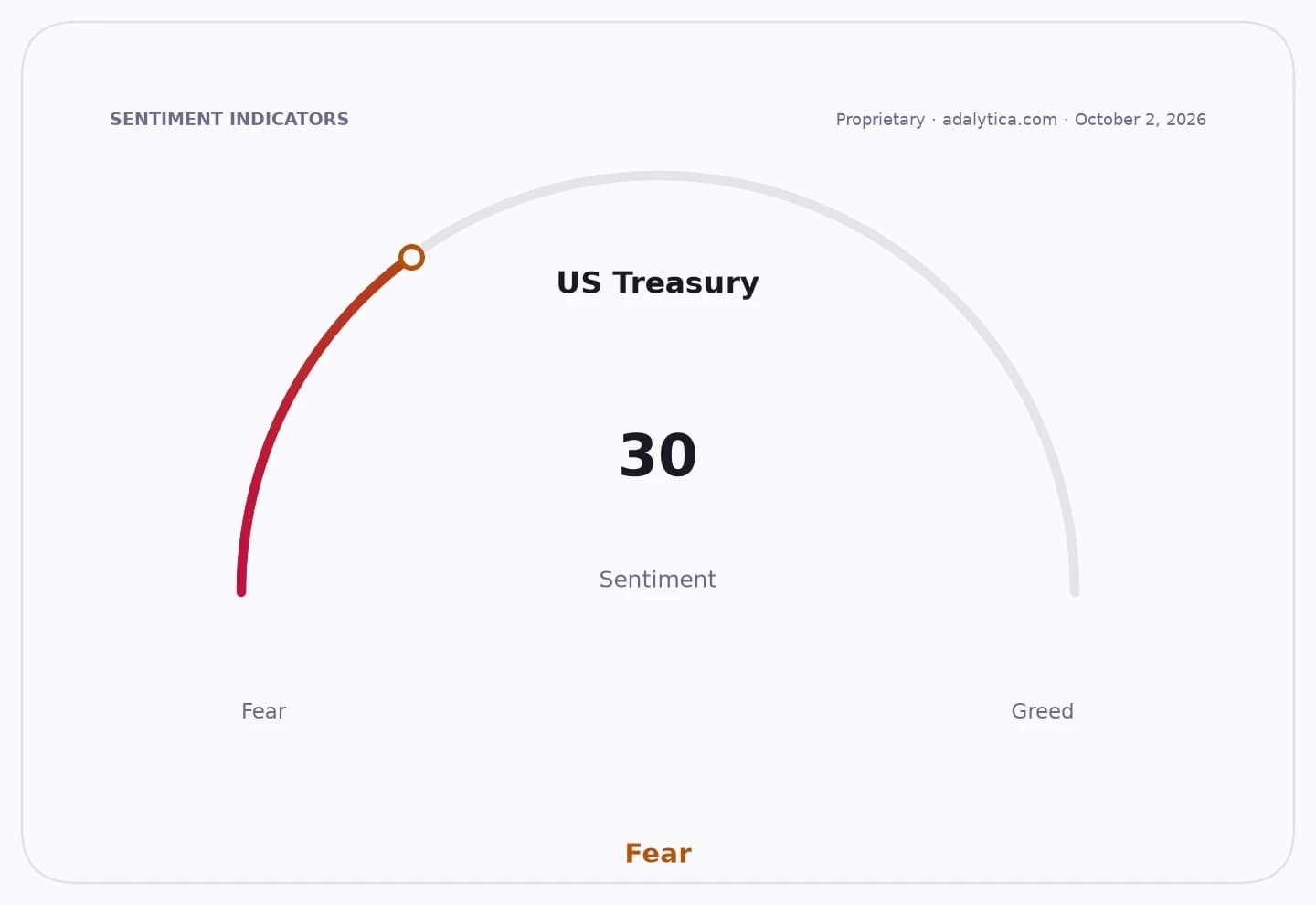
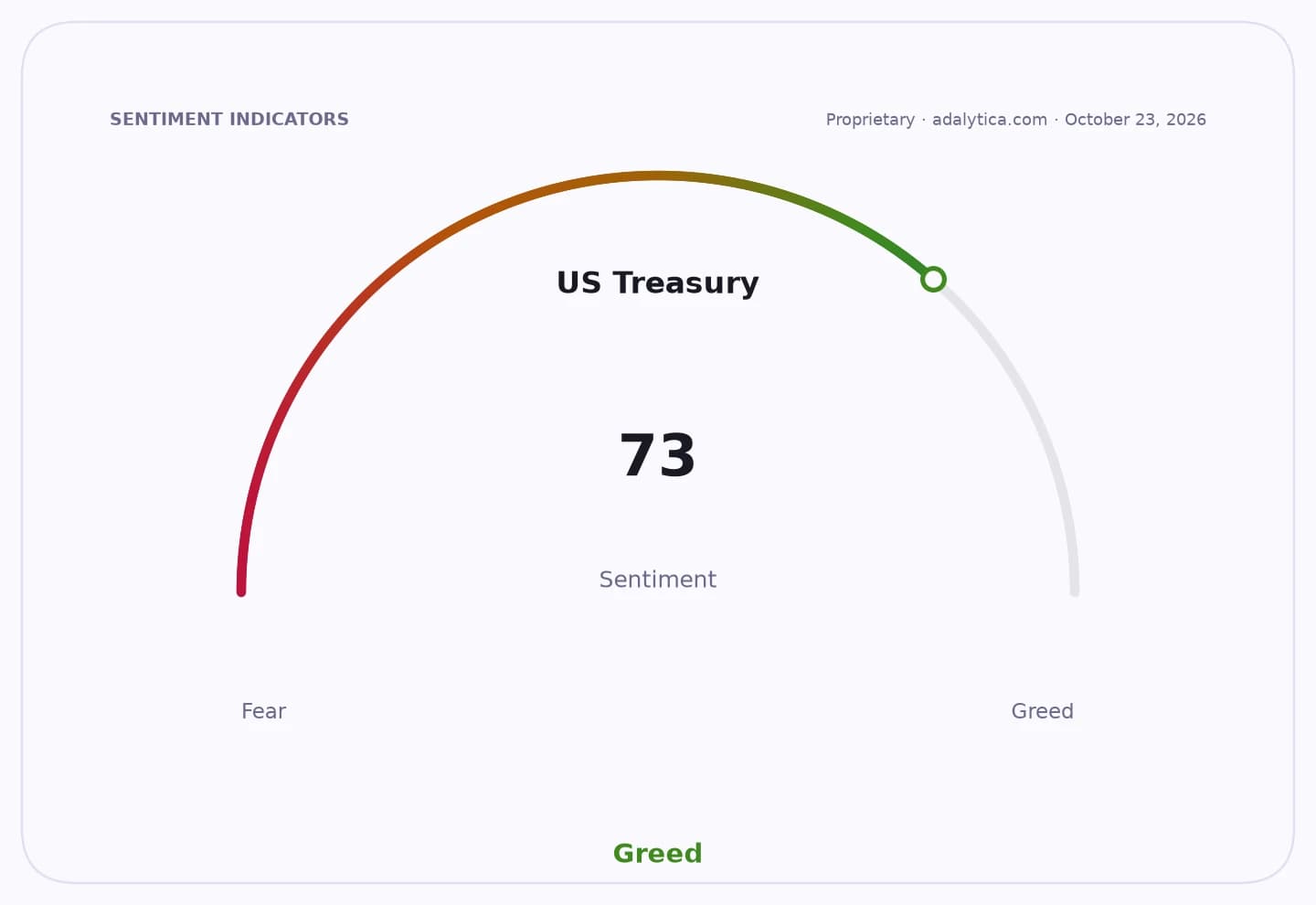
In practice, that has helped sustain demand for government debt even after a sharp run-up in yields. TLT, the iShares 20+ Year Treasury Bond ETF, closed at $81.76 on Nov. 4, above its 50-day moving average of $80.40 and back well above its recent October low, while its RSI reading of 63.5 points to firm momentum rather than an oversold bounce. The Adalytica signal on US Treasury bonds shows “Extreme Greed,” reflecting the rush into duration as investors seek safety and potential capital gains if growth cools or policy eases.
The flip side is that bond investors are still being selective, not indiscriminately bullish. JNK, the SPDR Bloomberg High Yield Bond ETF, rose to $93.03 on Nov. 4, but its price remains below the 200-day moving average of $93.98, underscoring that risk appetite in lower-quality credit is improving but not yet fully repaired. HYG, the iShares iBoxx $ High Yield Corporate Bond ETF, climbed to $77.52 and is trading just under its 200-day average of $78.19. That split between Treasuries and high yield shows a market that still prefers quality over risk.
The larger economic significance is that bond markets are again serving as the pressure valve for uncertainty. When rates are elevated, duration risk becomes the dominant concern; when growth wobbles, credit quality becomes the key fault line. Recent reports of yield spikes and price weakness in AI-linked debt on Wall Street, along with stress in parts of China’s bond market, reinforce the idea that investors are not simply buying bonds for safety — they are also sorting winners from losers within the asset class.
That distinction matters for portfolios. Asset managers with large fixed-income books, including BlackRock and other large bond buyers, benefit when clients extend duration and rotate toward sovereign debt. At the same time, leveraged borrowers and lower-rated issuers lose if spreads widen further or if higher financing costs persist into 2027. Banks and insurers can benefit from higher yields on new assets, but they also face mark-to-market and credit-quality risks if volatility deepens.
The next test is whether Treasury yields can stay near current levels without reigniting losses in long-duration assets, and whether credit spreads remain contained if growth slows. If the 10-year yield breaks lower from here, bond bulls will argue the market is finally pricing in weaker growth and easier policy. If it stays near 5%, investors may continue to use bonds less as a return trade than as a defensive one — the classic wheel of misfortune turning in favor of those willing to buy fear.
| Entity | Gains | Losses |
|---|---|---|
| Treasury bond buyers | ▲Safer income, duration upside | ▼Yields if rates rise |
| High-grade bond funds | ▲Inflows, defensive demand | ▼Risk-on competitors |
| High-yield borrowers | ▲Stable spreads if risk holds | ▼Refinancing costs if spreads widen |
| Equity investors | ▲Diversification hedge | ▼Relative returns if bonds outperform |