Russia has begun recruiting untrained people in Denmark to carry out sabotage against local companies that supply military-related goods to Ukraine, in what Danish intelligence says is a sharper phase of Moscow’s hybrid war campaign and a direct bid to raise the cost of Western support.
Denmark Warns of Russian Sabotage Recruitment
That matters because the target is no longer only battlefield logistics in Ukraine but the European industrial base helping keep Kyiv supplied. If sabotage or intimidation disrupts small and mid-sized manufacturers, the effect can ripple through production schedules, insurance costs, security spending and investor appetite for firms tied to defense and dual-use supply chains.
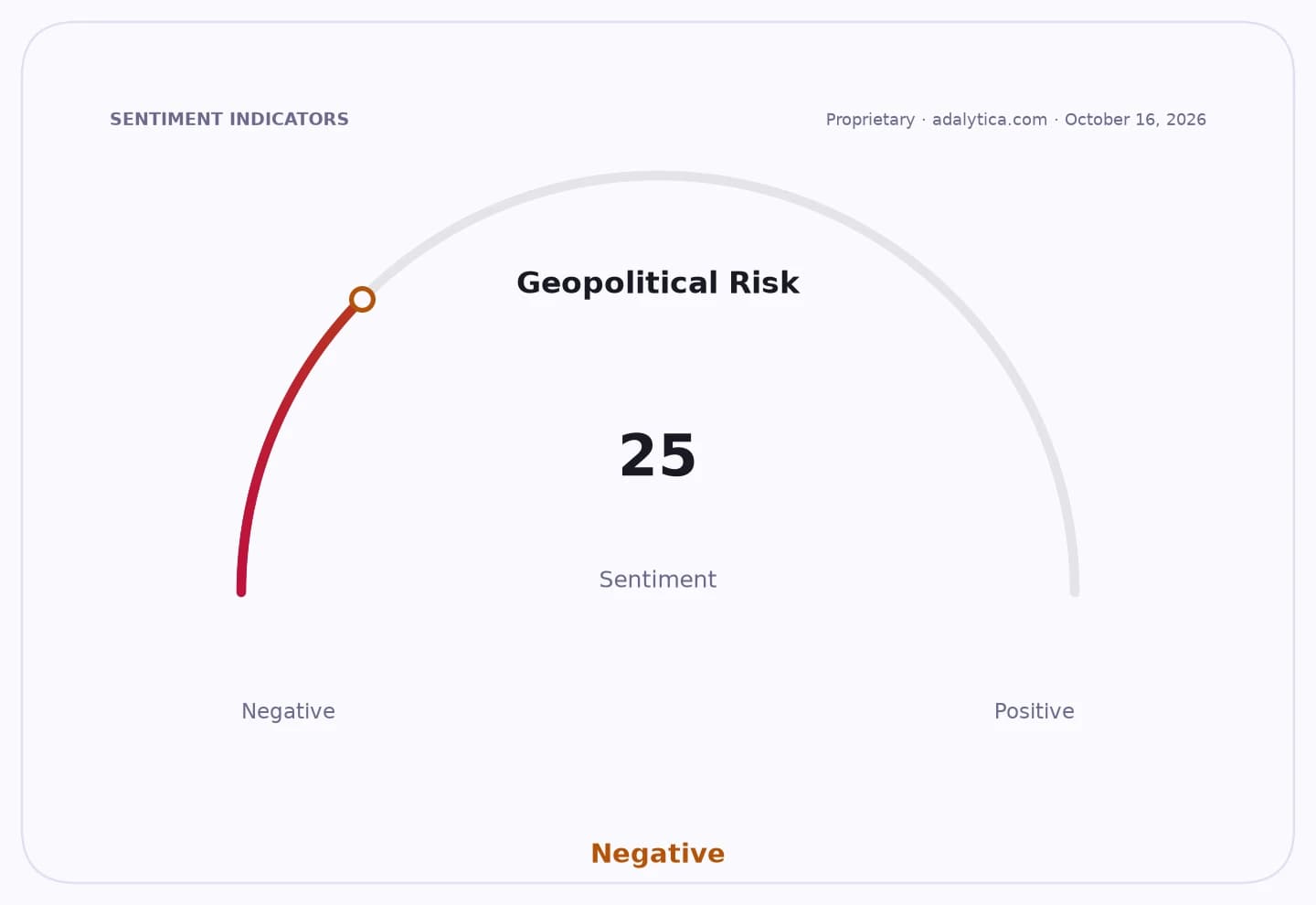
Sentiment IndicatorsⓘProprietary · adalytica.com · October 9, 2026
This is a snapshot — live sentiment, awareness and momentum for 130+ markets update continuously in the dashboard.Open AlphaPulse
A Danish intelligence representative said Moscow has moved from planning to execution after earlier efforts failed to slow Western military aid. The official, speaking at a domestic security conference in Copenhagen, said Russian handlers were using Telegram and other social media to recruit homeless people and drug users for low-skill tasks that could escalate from reconnaissance and photography to direct sabotage. The approach is deliberately expendable: if one recruit fails, another is found.
The warning adds to a broader pattern of pressure on NATO’s northern flank. Danish intelligence last month said Russia was likely to intensify hybrid attacks against the West over the coming months, after Germany accused Moscow of trying to launch drone attacks around Leipzig airport in August. Denmark has already faced disruption: drones interfered with air traffic at six Danish airports in September, including Copenhagen, the Nordic region’s busiest airport, an episode Prime Minister Mette Frederiksen described as a hybrid attack.
For investors, the immediate effect is less about direct earnings exposure than about a higher risk premium around European industrial assets linked to defense supply chains. Companies delivering components, electronics, drones and other military-adjacent goods may face elevated security and compliance costs, while insurers and logistics providers could reprice risk if sabotage becomes more frequent. At the same time, any sustained threat can reinforce demand for cybersecurity, perimeter security and counter-drone systems.
The geopolitical significance is also clear: Moscow appears to be testing how far it can go below the threshold of open conflict while still influencing the flow of arms to Ukraine and probing NATO cohesion. Russia denies involvement, and its embassy in Copenhagen rejected the accusations on Oct. 7, but the strategic logic is consistent with a campaign designed to deter support, strain Europe’s internal security apparatus and exploit vulnerable recruits for deniable operations.
For markets, the story is a reminder that the war’s impact is widening beyond energy and commodities into industrial security, defense supply chains and European transport nodes. The key question now is whether Denmark and its allies can harden targets quickly enough to keep hybrid attacks from becoming a recurring operating risk for firms helping sustain Ukraine’s war effort.
| Entity | Gains | Losses |
|---|---|---|
| Russia | ▲Deniable pressure on Ukraine support | ▼Higher diplomatic isolation |
| Danish defense-linked firms | ▲More security investment demand | ▼Sabotage and disruption risk |
| NATO/European governments | ▲Stronger case for security spending | ▼Greater domestic security burden |
| Insurers/logistics providers | ▲Higher demand for protection services | ▼Repricing of operational risk |