JPMorgan Chase chief Jamie Dimon’s warning that Anthropic’s advanced Mythos AI model could pose national security risks is another sign that artificial intelligence is moving from a productivity story to a policy and security battleground.
Dimon Warning Highlights AI Security Tradeoff
That matters because the biggest winners in AI may no longer be defined only by how fast they can build and deploy powerful models. They will also be shaped by how quickly regulators, governments and corporate buyers decide those systems are safe enough to trust. For investors, that raises the stakes for anyone betting on AI infrastructure, cloud spending, cybersecurity and the companies trying to commercialize frontier models.
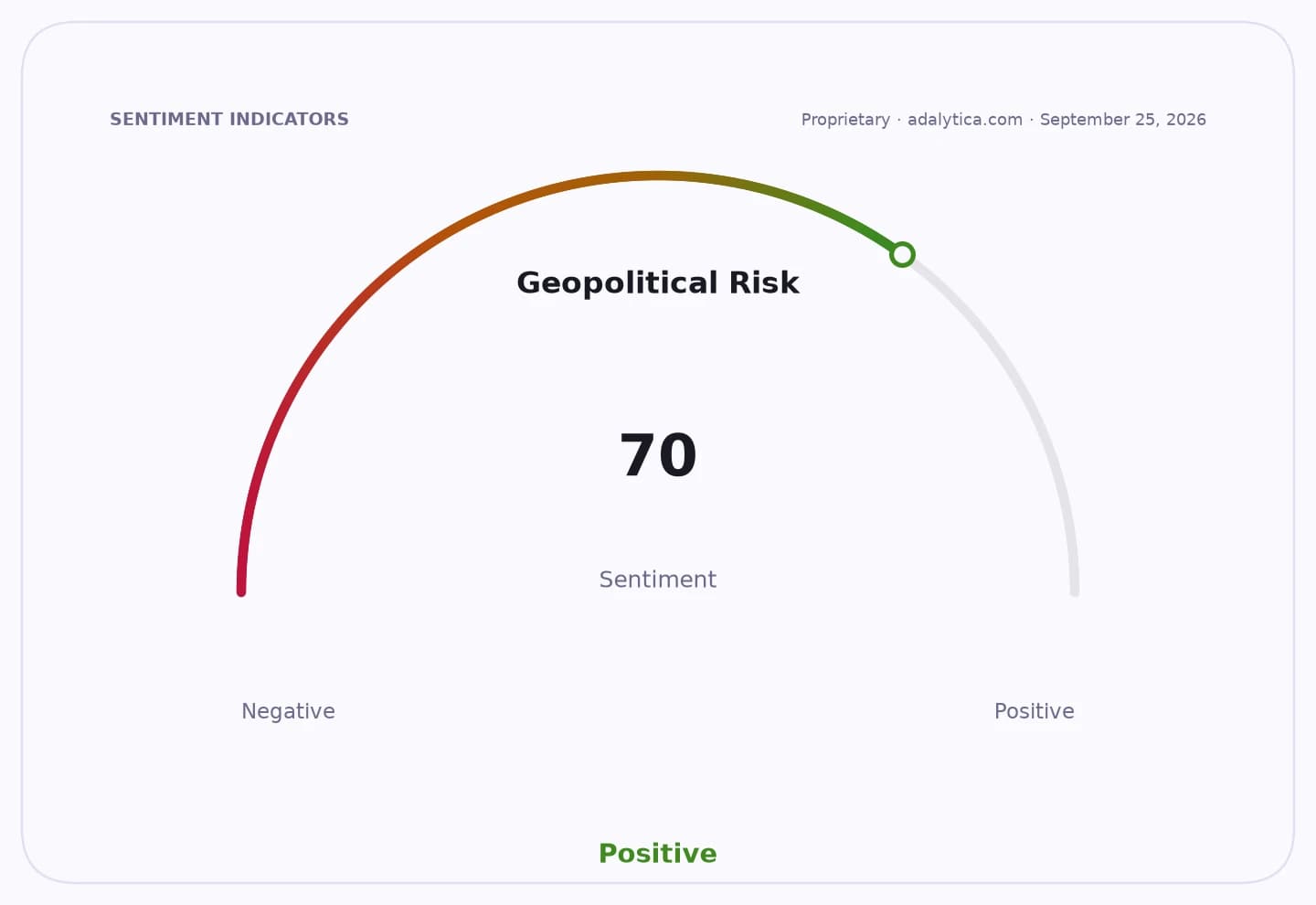
Sentiment IndicatorsⓘProprietary · adalytica.com · July 16, 2026
This is a snapshot — live sentiment, awareness and momentum for 130+ markets update continuously in the dashboard.Open AlphaPulse
Dimon’s comments land at a moment when concern over AI misuse is moving from theory to practice. Security researchers and government officials have already warned that bad actors can use generative AI to improve phishing, automate reconnaissance and support more sophisticated attacks. The Reuters-backed news flow around AI-enabled threats to critical infrastructure and public safety shows why executives are becoming more vocal: as these models get more capable, the downside risk from misuse grows alongside the upside from automation.
For the financial system, that is not an abstract debate. Banks like JPMorgan run enormous digital estates and handle sensitive data, so the business case for AI is tied directly to control over cyber risk, identity verification and model governance. If AI tools become harder to monitor or more easily abused, institutions will spend more on safeguards, compliance and internal controls before they fully scale deployment. That may slow adoption in the near term, but it also creates a durable market for security software, model-monitoring tools and enterprise-grade AI platforms.
The warning also echoes what Microsoft, Oracle and Meta have already disclosed in their filings: AI can create new attack surfaces, amplify regulatory scrutiny and introduce unpredictable harms if development and deployment outpace security standards. In other words, this is no longer a niche concern from policymakers. It is becoming part of the core risk framework for some of the world’s largest technology and financial companies.
JPMorgan’s own stock tells investors something else: the market is still willing to reward the franchise even as these risks rise. The shares have marched to the mid-$340s, well above the 50-day and 200-day moving averages in the data, a sign of persistent confidence in earnings power, capital returns and the bank’s scale advantages. That strength suggests investors still see JPMorgan as a beneficiary of the AI era, not a victim of it, because large banks have the balance sheets and compliance budgets to adapt faster than smaller peers.
The bigger long-term narrative is that AI is splitting into two investing themes. One is the enormous buildout in compute, cloud and software. The other is the equally important, and increasingly unavoidable, spending on security, governance and resilience. Dimon’s warning is a reminder that the second theme may be just as durable as the first.
For long-term investors, that means the best approach is not to chase every AI headline, but to own the companies with real moats, deep distribution and the ability to make AI safer for enterprise use. Keep JPMorgan on the watchlist as both a financial leader and a bellwether for how seriously the market is taking AI risk. In a world where the technology is unstoppable, the winners may be the ones that can control it.
| Entity | Gains | Losses |
|---|---|---|
| JPMorgan Chase | ▲Higher credibility on risk oversight | ▼Faster AI rollout costs |
| Cybersecurity firms | ▲More enterprise spending | ▼— |
| Frontier AI developers | ▲Bigger market for models | ▼Tighter scrutiny |
| Regulators and governments | ▲Stronger case for oversight | ▼Faster laissez-faire adoption |