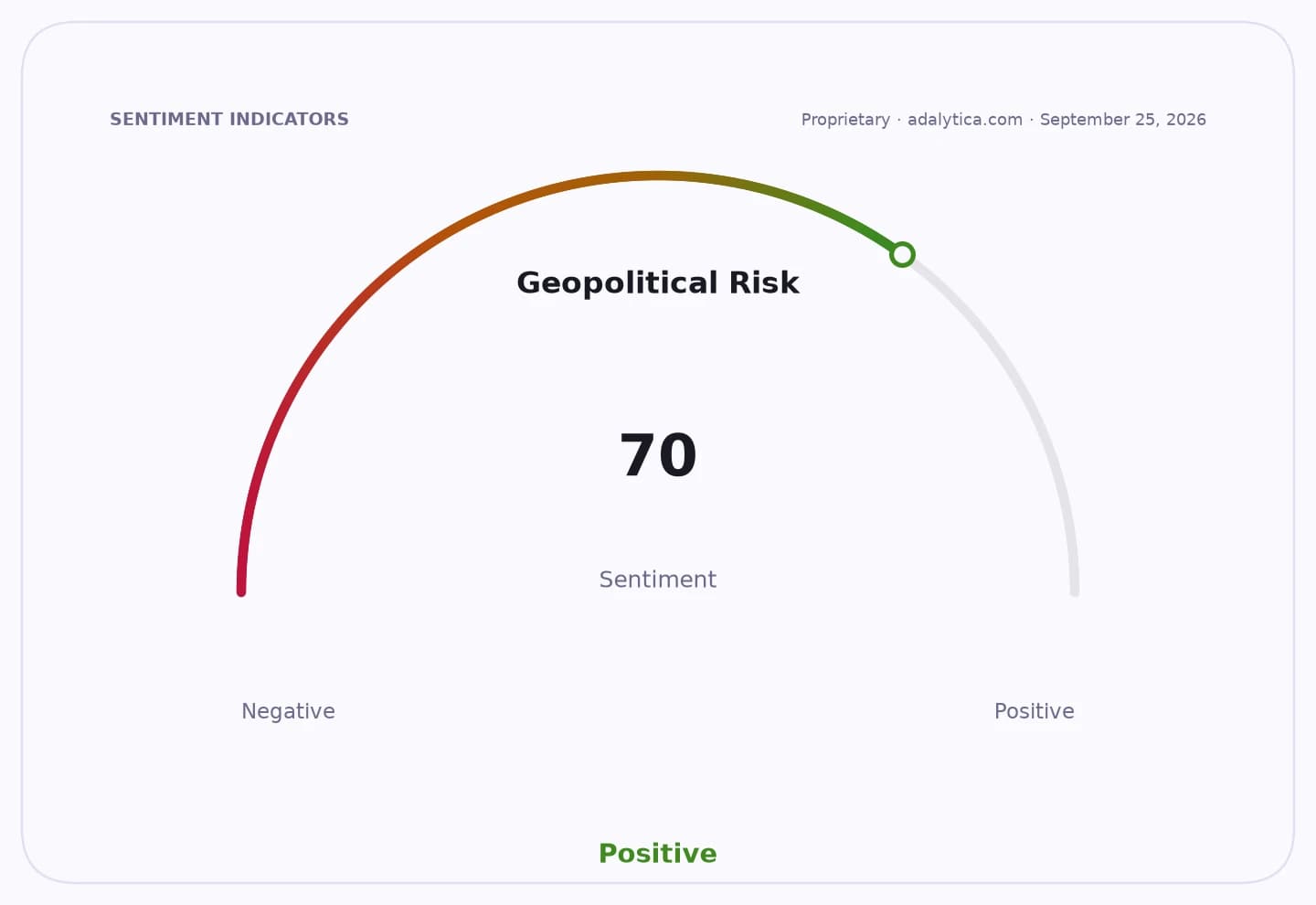
Jamie Dimon’s blunt warning against buying long-term US Treasuries is landing at a moment when bond yields are still elevated, the curve is only modestly inverted and investors are being forced to decide whether duration risk has finally become compelling or remains a value trap.
Dimon Warns Against Buying Long Treasuries
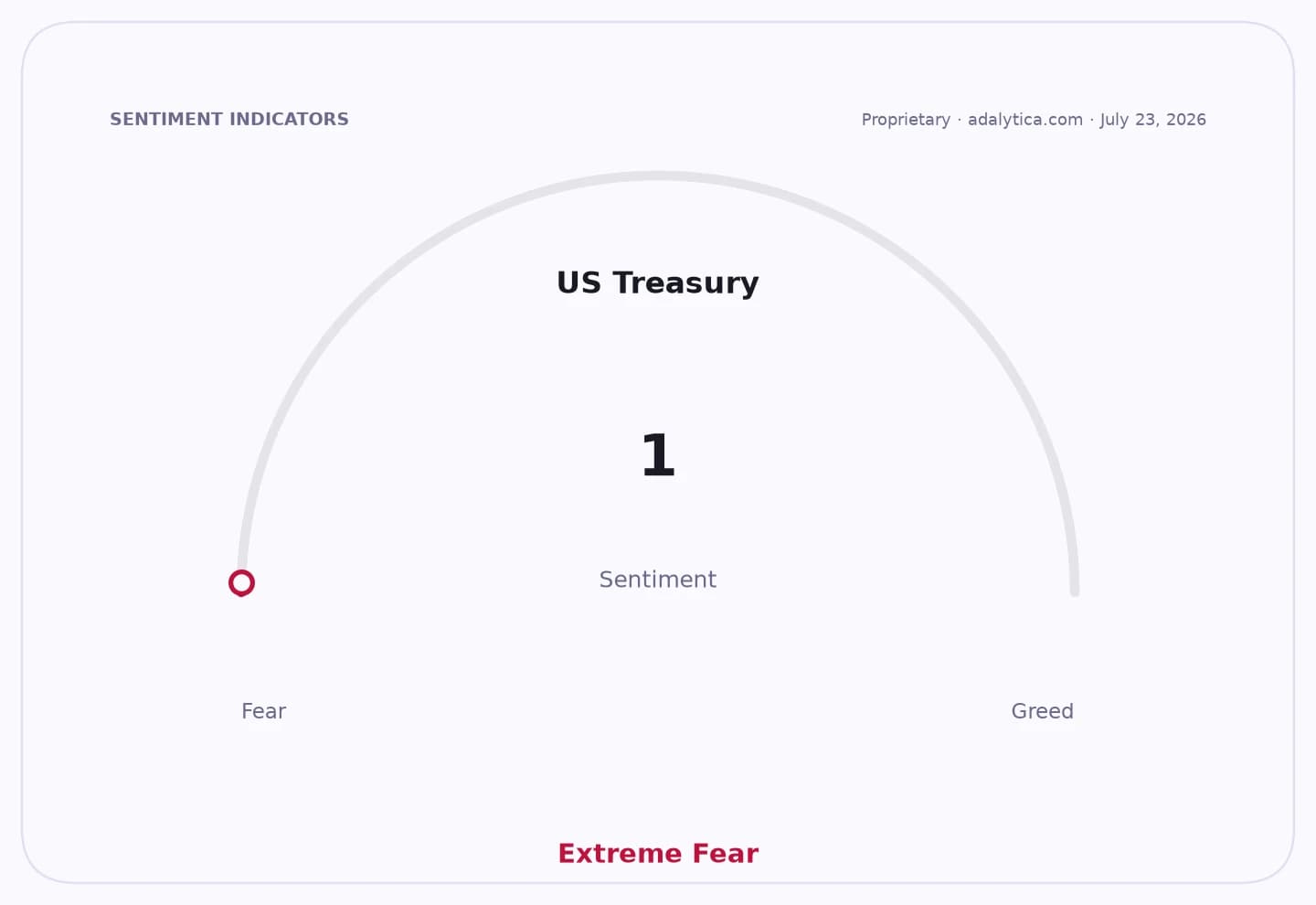
The JPMorgan Chase chief executive’s comment that he “would not be a buyer” of long bonds matters because it speaks to the central tension in fixed income: whether higher yields are enough compensation for the risk that inflation, fiscal deficits and sticky policy rates keep long-dated borrowing costs structurally higher. The 10-year Treasury yield was last around 4.63%, according to the latest data, near levels that would have been considered extreme in much of the post-crisis era and well above the roughly 3.6% area that prevailed during the 2020 bond rally. The Federal Reserve’s policy rate remains at 3.63%, leaving the market with only a narrow cushion over cash and shorter-dated bills.
Sentiment IndicatorsⓘProprietary · adalytica.com · July 23, 2026
This is a snapshot — live sentiment, awareness and momentum for 130+ markets update continuously in the dashboard.Open AlphaPulse
That backdrop helps explain why the bond market is sending mixed signals. The 10-year to two-year spread stands around 36 basis points, showing the curve has re-steepened from deep inversion but is still far from a clean endorsement of a growth-led easing cycle. Long-duration bond funds are under pressure: TLT has fallen about 19% over the past 30 days in the Adalytica snapshot, with its proprietary trade signal showing “Extreme Fear” even as awareness of the trade remains elevated. The fund’s 50-day average sits above the current price, and its RSI readings point to a technically oversold market, a sign that selling has been persistent enough to push sentiment to the point where bargain hunters may be tempted — but not yet enough to clear the macro overhang.
Dimon’s warning also carries weight because he is speaking from inside one of the world’s most important fixed-income franchises. JPMorgan’s latest quarterly results showed robust profits and, by extension, healthy activity across markets, including debt capital markets where issuance remains strong. That activity is part of the same story: governments and companies are still able to sell bonds, but often only by paying up for funding as investors demand more yield to absorb duration and credit risk. Moody’s has flagged increased defaults in some segments, while sovereign borrowers such as Honduras have tapped markets at relatively high coupons, underscoring that access to financing is still available but not cheap.
DGS10 vs T10Y2Y — macro contextadalytica.com
Explore this data interactively — full history, time series and cross-market comparisons.Open AlphaPulse
For investors, the call is less about one CEO’s macro view than about positioning. If long yields stay near current levels or move higher, long-duration Treasuries and funds such as TLT could keep lagging despite any short-term relief rallies. If growth slows sharply and the Fed is forced to cut faster than expected, those same bonds could rebound meaningfully because their prices are highly sensitive to rate changes. The bull case for owning them is straightforward: duration offers convexity if recession risk rises. The bear case, which Dimon is clearly leaning into, is that the market is underestimating the persistence of deficits, refinancing needs and term premium.
The broader message is that the bond market is no longer trading as if low inflation and near-zero rates are the baseline. Investors are being asked to price a world in which the cost of money stays materially higher than in the last cycle, and that shifts the balance of power toward cash, short maturities and active duration management. If Dimon is right, long bonds are still vulnerable; if he is wrong, the upside for duration will likely come only after a sharper economic slowdown than the market has yet priced in.
| Entity | Gains | Losses |
|---|---|---|
| Short-duration Treasury holders | ▲Higher carry | ▼Less price upside |
| Long-bond buyers | ▲Potential rally if cuts deepen | ▼Duration losses if yields rise |
| JPMorgan trading desk | ▲Volatility opportunities | ▼N/A |
| TLT holders | ▲Rebound if recession fears grow | ▼More downside if term premium climbs |