Public support for workers hit by Storm Kristin has climbed to more than 287 million in six months, underscoring how costly climate shocks are becoming for labor markets, household incomes and state budgets.
Disaster Aid Shields Jobs but Raises Fiscal Strain
The latest aid tally matters because it shows disaster relief is no longer a one-off fiscal response but a recurring economic stabilizer. When storms knock out jobs, disrupt transport and damage small businesses, the immediate risk is not only repair costs but a drop in consumption, delayed hiring and pressure on already fragile local labor markets. For policymakers, the size of the support package suggests authorities are trying to prevent the storm from turning into a broader employment setback.
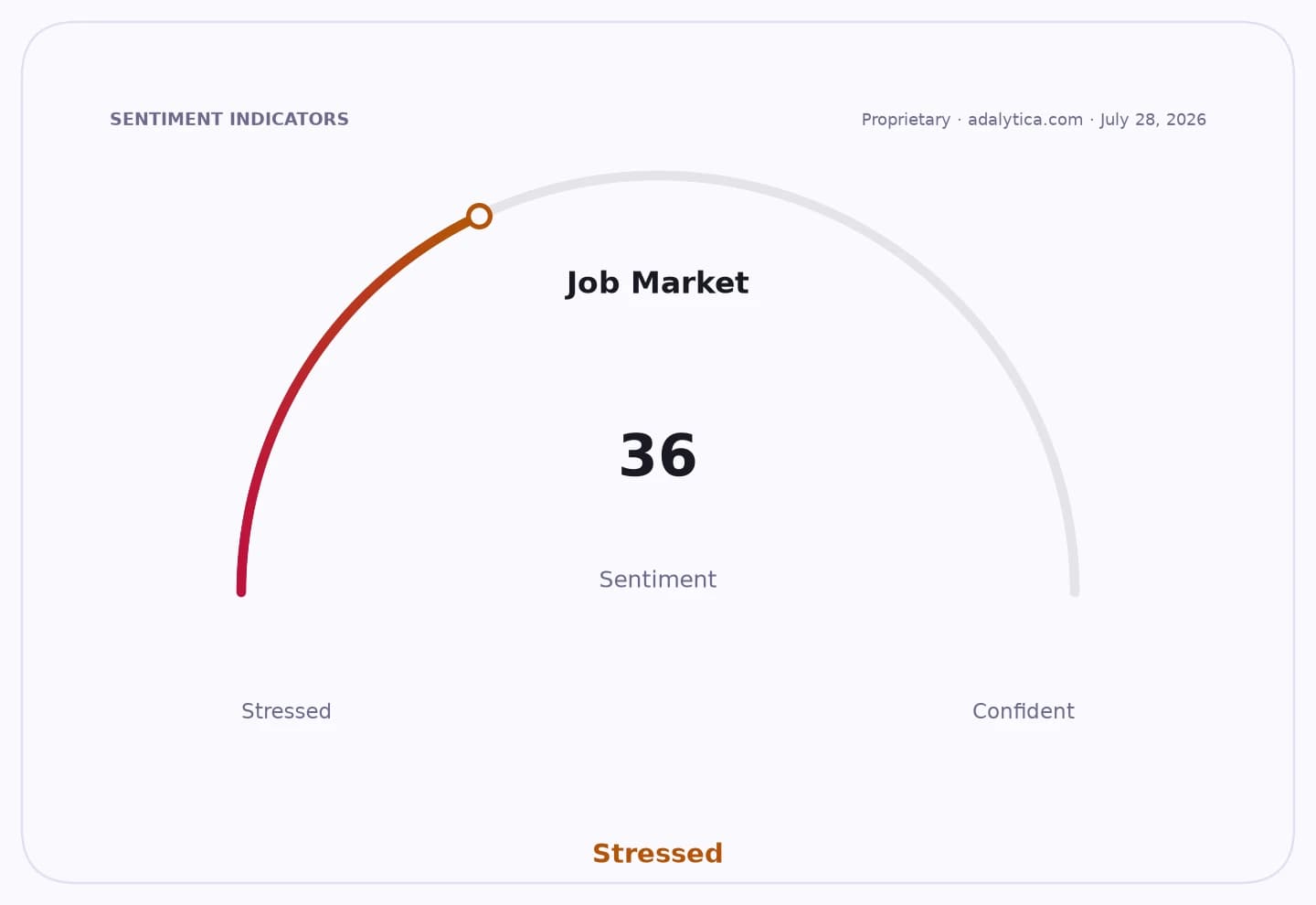
Sentiment IndicatorsⓘProprietary · adalytica.com · July 28, 2026
This is a snapshot — live sentiment, awareness and momentum for 130+ markets update continuously in the dashboard.Open AlphaPulse
That is consistent with the wider backdrop in the labor market. The U.S. unemployment rate has edged down to 4.2%, with a July forecast at 4.18%, suggesting a cooling but still resilient jobs market. Job openings, meanwhile, are forecast to rise to 7.66 million, pointing to continuing demand for workers even as sentiment around the labor market has weakened sharply. Adalytica’s Job Market Sentiment gauge is in neutral territory at 36, but its awareness reading is at 29, labelled fear, showing that perceptions have deteriorated faster than the hard data.
For investors, the message is twofold. The fiscal response can cushion earnings pressure for consumer-facing businesses, utilities, insurers and local lenders exposed to storm damage and income disruption. But it also highlights the rising bill for governments and employers as climate-related events become more frequent and more expensive. That matters for public finances, wage-setting and the trajectory of household spending, particularly in regions dependent on public-sector employment support.
The equity market backdrop is mixed but still supportive. The S&P 500, tracked by SPY, has recovered to the 741 area and sits above its 200-day moving average, though momentum has cooled from overbought levels in May, when the index briefly surged near 746. Treasury prices have also stabilized, with TLT recovering from a late-May low and its RSI back near neutral, suggesting bond investors are no longer pricing the same degree of stress that briefly hit markets in the spring.
The broader narrative is that governments are being forced to absorb more of the economic shock from weather events to protect employment and confidence. If relief continues to expand, it can help prevent a sharper slowdown in affected areas. The risk for investors is that repeated disaster spending becomes a structural drag on budgets, while insurers, employers and borrowers face a higher incidence of claims, delays and credit stress.
| Entity | Gains | Losses |
|---|---|---|
| Storm-hit workers | ▲Income support | ▼Delayed normalization |
| Local businesses | ▲Short-term demand buffer | ▼Damage and disruption costs |
| Governments | ▲Social stability | ▼Higher fiscal burden |
| Insurers and lenders | ▲Faster stabilization | ▼Potential claims and credit strain |