Dividend yield matters now because the market is relearning a basic truth: income competes directly with bonds, and when Treasury yields rise, the price investors will pay for cash payouts changes fast.
High-Yield Dividend Stocks Face Rising Bond Competition
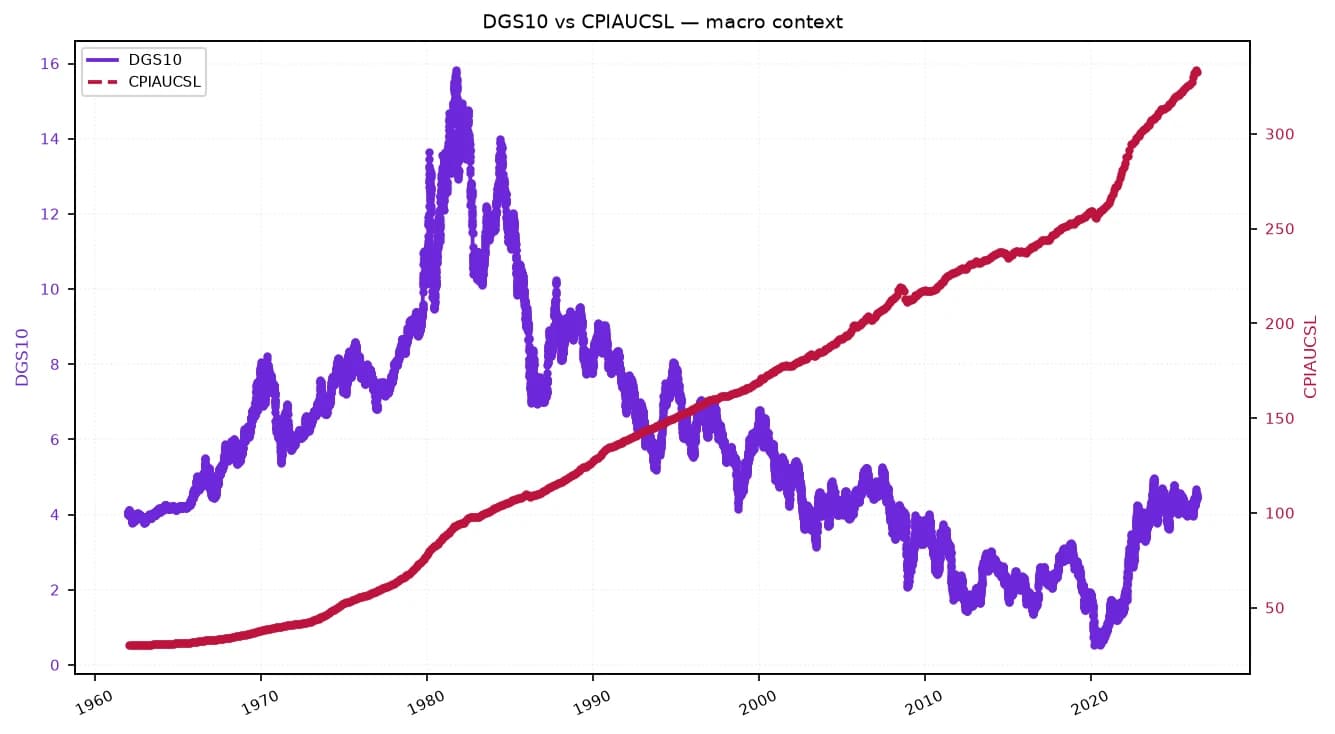
That is the core investment story behind the renewed focus on dividend yield. The 10-year Treasury yield is hovering around 4.58%, a level that still offers equity investors a credible risk-free alternative. At the same time, inflation remains elevated enough to keep pressure on real returns, with the consumer price index forecast at 335.512 for July after June’s 332.568. In that environment, dividend stocks are no longer just “defensive” holdings — they are income vehicles that have to justify themselves against fixed income on both yield and quality.
That is why the market’s treatment of dividend ETFs is telling. Vanguard High Dividend Yield ETF, VYM, has climbed to 160.85 from 135.78 less than a year ago, while Schwab U.S. Dividend Equity ETF, SCHD, has surged to 33.04 from 26.74 over the same broad stretch. The moves reflect more than simple price momentum. They show investors are still willing to pay for durable payouts when those payouts are backed by scale, cash flow and balance-sheet strength. SCHD’s sharp rise above its 200-day moving average and its strong momentum readings point to continuing demand for high-quality income exposure, even after a strong run.
The market underestimates how powerful that demand can become when rates settle above the pre-2020 norm. A 10-year yield near 4.5% changes the math for retirees, endowments and income funds. It also changes the valuation framework for dividend stocks: weak payers lose their shine, but companies with sustainable distributions and room to grow payouts become more valuable, not less. That is the key distinction investors should focus on. Dividend yield is not just a percentage on a screen; it is the return hurdle that income investors use to decide whether they want stocks, Treasuries or a blend of both.
For investors, this creates a clear asymmetry. The losers are the overlevered dividend names and the sectors that sold yield without earning it. The winners are businesses and funds that can combine yield with capital appreciation, a formula that matters more in a rate-sensitive market. Utilities, telecoms, consumer staples and dividend ETF strategies can all benefit, but only where the payout is covered by cash flow and not propped up by financial engineering. National Grid’s dependable payout and Ericsson’s combination of profit growth and dividends show why the market still rewards quality income rather than yield alone.
The bigger narrative is that dividend yield has shifted from a backward-looking statistic into a forward-looking macro signal. It tells you how much income equities must offer to stay competitive in a world where bond yields are no longer near zero and inflation has not fully disappeared. That is why dividend investing is still relevant, but it must be selective. The next phase of outperformance should go to the names that can defend their payout, grow earnings and compound capital, not just advertise a high yield.
For investors, the actionable takeaway is simple: own dividend payers with strong coverage and buy the vehicles that screen for quality, not just headline yield. In this rate regime, yield alone is not the prize — sustainable yield plus pricing power is.
| Entity | Gains | Losses |
|---|---|---|
| High-quality dividend ETFs | ▲Steady inflows | ▼Yield traps |
| Treasury bonds | ▲Competitive income appeal | ▼None from payout investors |
| Utilities and dividend growers | ▲Valuation support | ▼Weak balance-sheet payers |
| Income investors | ▲Stable cash flow | ▼Chasing unsustainable yields |