The U.S. dollar eased on Oct. 7 as traders further dialed back expectations for another Federal Reserve rate increase this month, allowing the euro and British pound to rebound against the greenback.
Dollar Eases as Fed Rate-Hike Bets Fade
That shift matters because the move in the dollar reflects a rapid repricing of U.S. interest-rate expectations after September payrolls came in weaker than forecast. With investors seeing less need for the Fed to keep tightening, Treasury yields also backed off, reducing support for the dollar and helping risk assets extend gains.
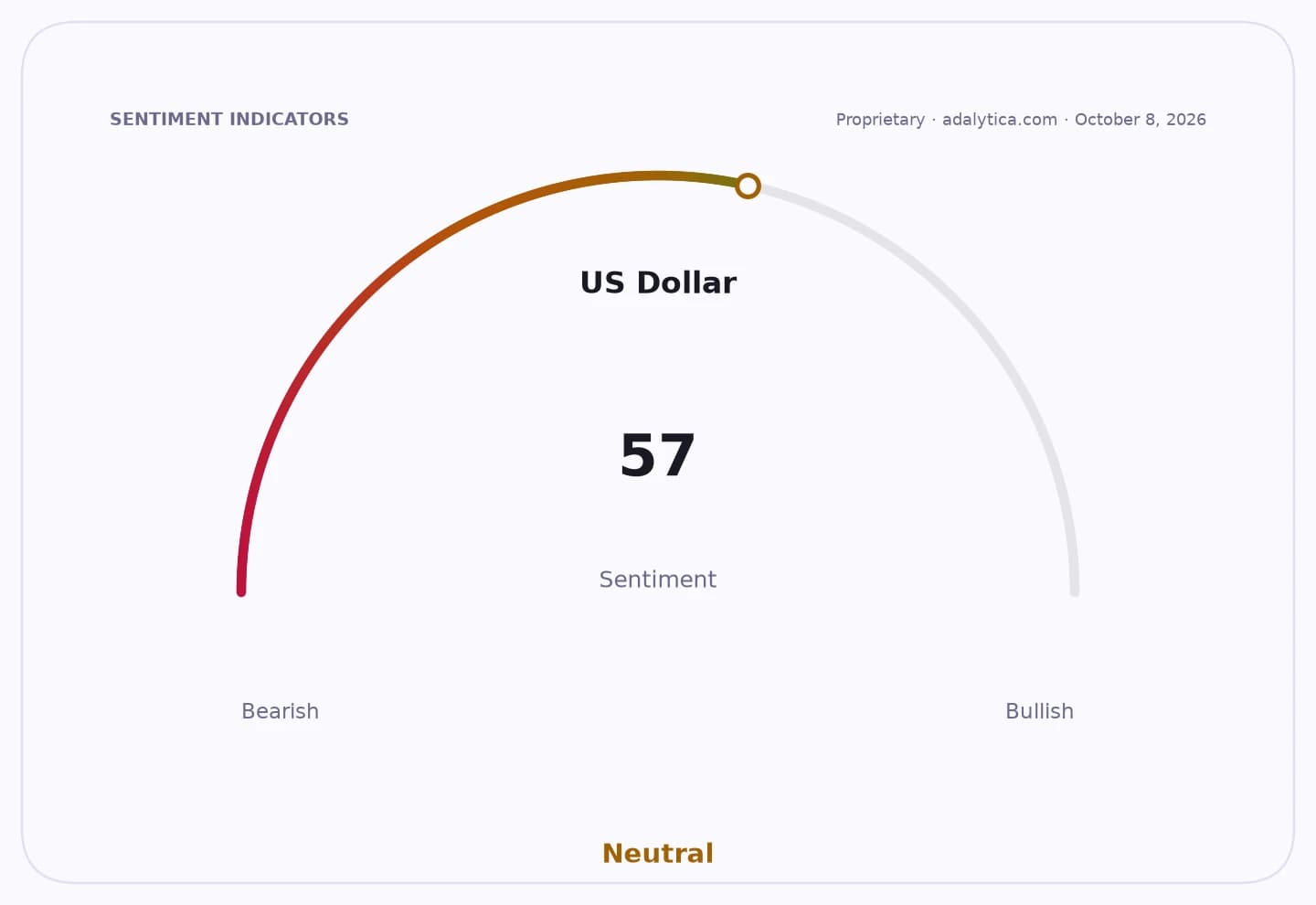
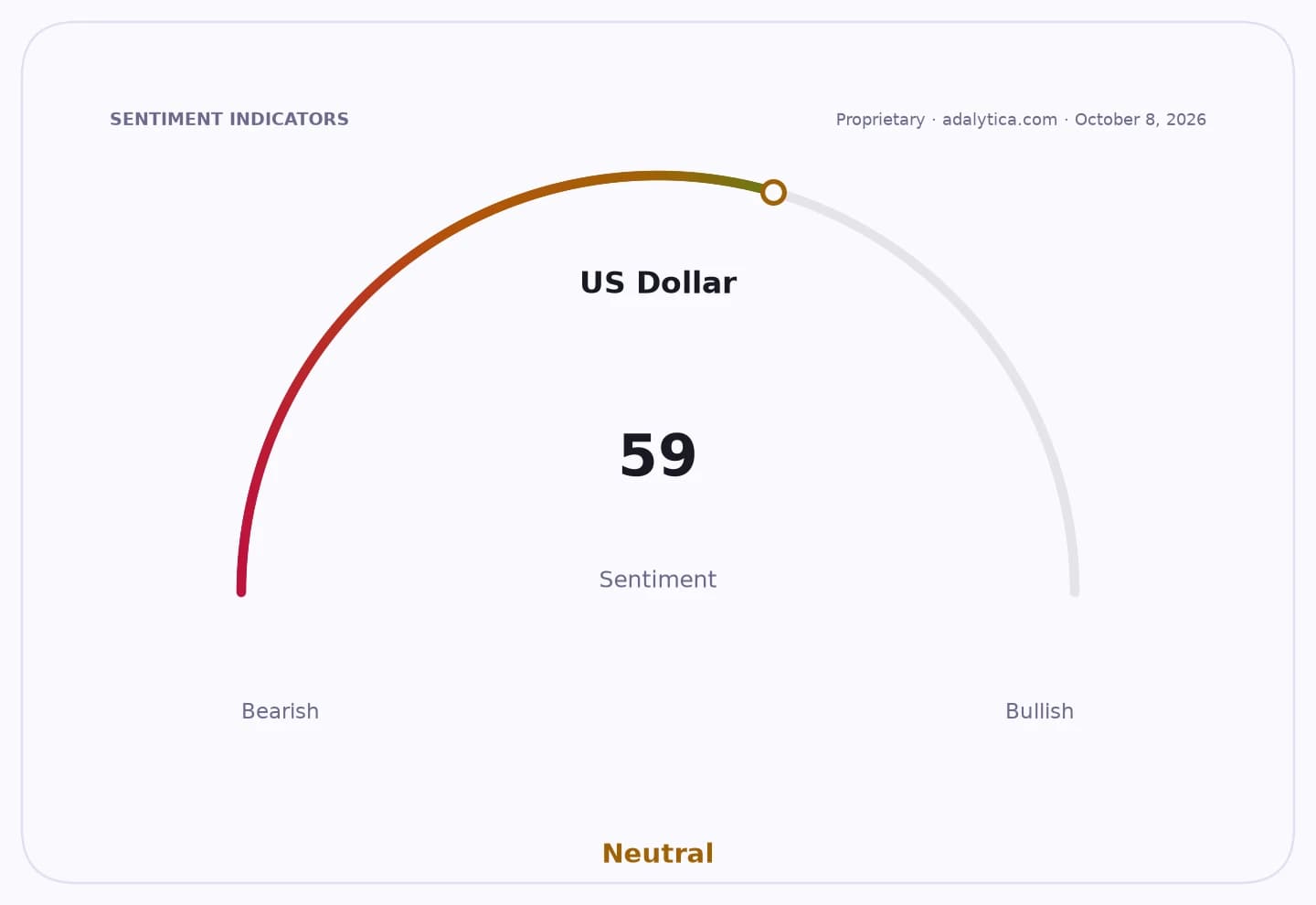
Sentiment IndicatorsⓘProprietary · adalytica.com · October 8, 2026
This is a snapshot — live sentiment, awareness and momentum for 130+ markets update continuously in the dashboard.Open AlphaPulse
In Vietnam, the State Bank set the central VND/USD rate at 25,638, down 7 dong from the previous day. Vietcombank cut its dollar quote to 25,800 dong for transfers and 26,180 dong for sales, while ACB lowered its selling rate to 26,160 dong.
The euro gained 18 dong at Vietcombank to 28,778 dong on the buy side and 29,992 dong on the sell side, while the British pound rose 52 dong to 33,917 dong and 35,003 dong respectively. The Japanese yen slipped modestly.
US Dollar — 30-day sentimentadalytica.com
Explore this data interactively — full history, time series and cross-market comparisons.Open AlphaPulse
Overseas, the dollar index fell to 101.98, while the 10-year U.S. Treasury yield dropped 3 basis points to 5.281%. The 30-year yield was little changed after both maturities had surged to their highest levels since 2002 on Oct. 5, underscoring how sensitive currency markets remain to the Fed path.
The softer dollar also fed into Wall Street’s latest rally, with the S&P 500, Dow Jones and Nasdaq all closing at record highs. Chipmakers helped lead the advance, with Marvell Technology, AMD and Broadcom among the biggest gainers as investors rotated back into growth names that tend to benefit when U.S. yields cool.
For investors, the key question is whether the recent dollar pullback becomes a deeper trend or just a pause after a sharp run-up. The next catalyst is more labor-market data and fresh Fed commentary, which will determine whether rate-cut bets keep building and whether the dollar’s rebound in Europe and Asia has room to extend.
| Entity | Gains | Losses |
|---|---|---|
| Euro and British pound | ▲Rebound vs. dollar | ▼Recent dollar strength |
| U.S. stock bulls | ▲Easier financial conditions | ▼Yield-sensitive hedges |
| Exporters to the U.S. | ▲More competitive pricing | ▼U.S. importers |
| Dollar longs | ▲— | ▼On weaker Fed-tightening bets |