The dollar is trading with a firmer tone against the euro going into July 22, with the U.S. currency supported by still-elevated Treasury yields and a generally neutral-but-improving market backdrop for the greenback.
Dollar Firms as Yields Support EUR/USD Pressure
That matters because even a modest shift in EUR/USD can ripple through import prices, corporate margins and central-bank expectations. A stronger dollar tends to pressure commodity prices and overseas revenues for U.S. multinationals, while a weaker euro raises the cost of dollar-denominated imports for Europe and can complicate the European Central Bank’s path on inflation.
The move comes as the 2-year U.S. Treasury yield sits at 4.205% and the 10-year at 4.582%, both high enough to keep dollar assets attractive versus lower-yielding peers. The dollar proxy UUP closed at 28.48 on July 21, up from 28.25 on July 15 and above its 50-day moving average of 28.05 and 200-day average of 27.44, suggesting the currency trend remains constructive in the near term.
Technical readings also show the dollar ETF has stabilized after a brief pullback, with RSI at 53.5 and MACD still above its signal line. By contrast, the euro ETF FXE closed at 105.23 on July 21, below its 50-day moving average of 106.34 and 200-day average of 107.10, a sign the single currency is losing momentum even after a mild rebound from early-July lows.
DGS2 vs DGS10 — macro contextadalytica.com
Explore this data interactively — full history, time series and cross-market comparisons.Open AlphaPulse
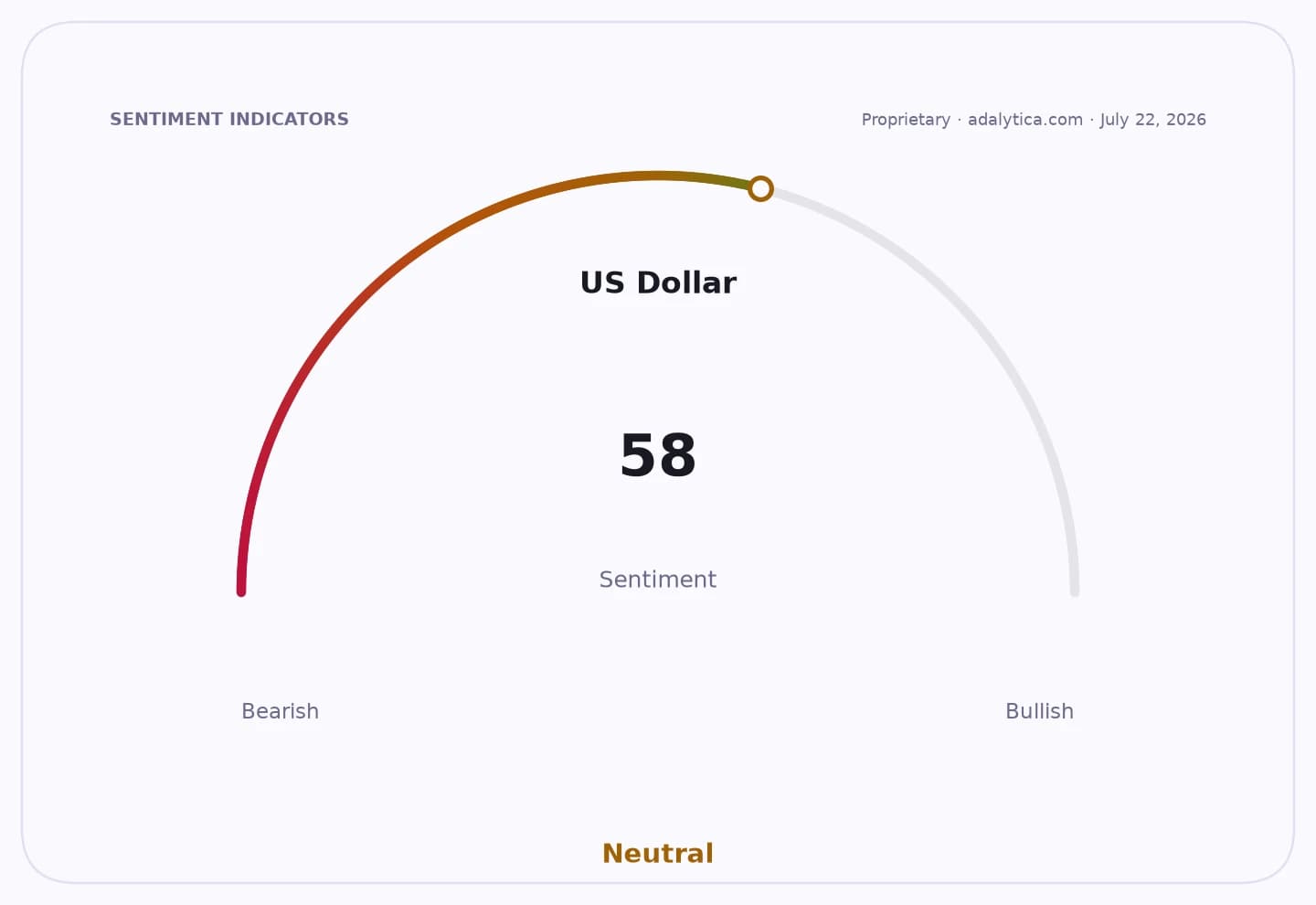
Adalytica.com’s U.S. dollar trade signals show sentiment at 58 and awareness at 46, both neutral, but the 1-day change jumped 25 points and the 7-day change rose 31 points, indicating a recent pickup in attention around the currency.
For investors, that keeps the focus on two linked tradeoffs: whether higher U.S. yields can keep supporting the dollar, and whether a softer euro starts feeding into fresh inflation pressure in Europe. The next catalyst is the latest round of central-bank commentary and U.S. economic data, which could extend the divergence in rate expectations and set the tone for dollar-euro pricing into late July.
| Entity | Gains | Losses |
|---|---|---|
| U.S. dollar | ▲Higher yield support | ▼Exporters with foreign sales |
| Euro | ▲None near-term | ▼Importers paying in dollars |
| U.S. Treasury holders | ▲Income advantage | ▼Borrowers facing higher funding costs |
| European consumers | ▲Weaker dollar-priced goods if euro steadies | ▼Higher dollar-import costs |