The ruble is rushing lower as a firmer dollar and elevated U.S. Treasury yields keep pressure on emerging-market currencies, underscoring how global rate expectations and risk appetite are still driving FX more than local sentiment.
Dollar strength pressures ruble and Russian policy
That matters economically because a weaker ruble raises import costs, complicates inflation management and can force policymakers to defend the currency with tighter liquidity or higher rates. For Russia, a fast move in the exchange rate also feeds through to fiscal planning and corporate cash flows, especially for import-dependent businesses and borrowers with foreign-currency exposure.
Sentiment IndicatorsⓘProprietary · adalytica.com · July 29, 2026
This is a snapshot — live sentiment, awareness and momentum for 130+ markets update continuously in the dashboard.Open AlphaPulse
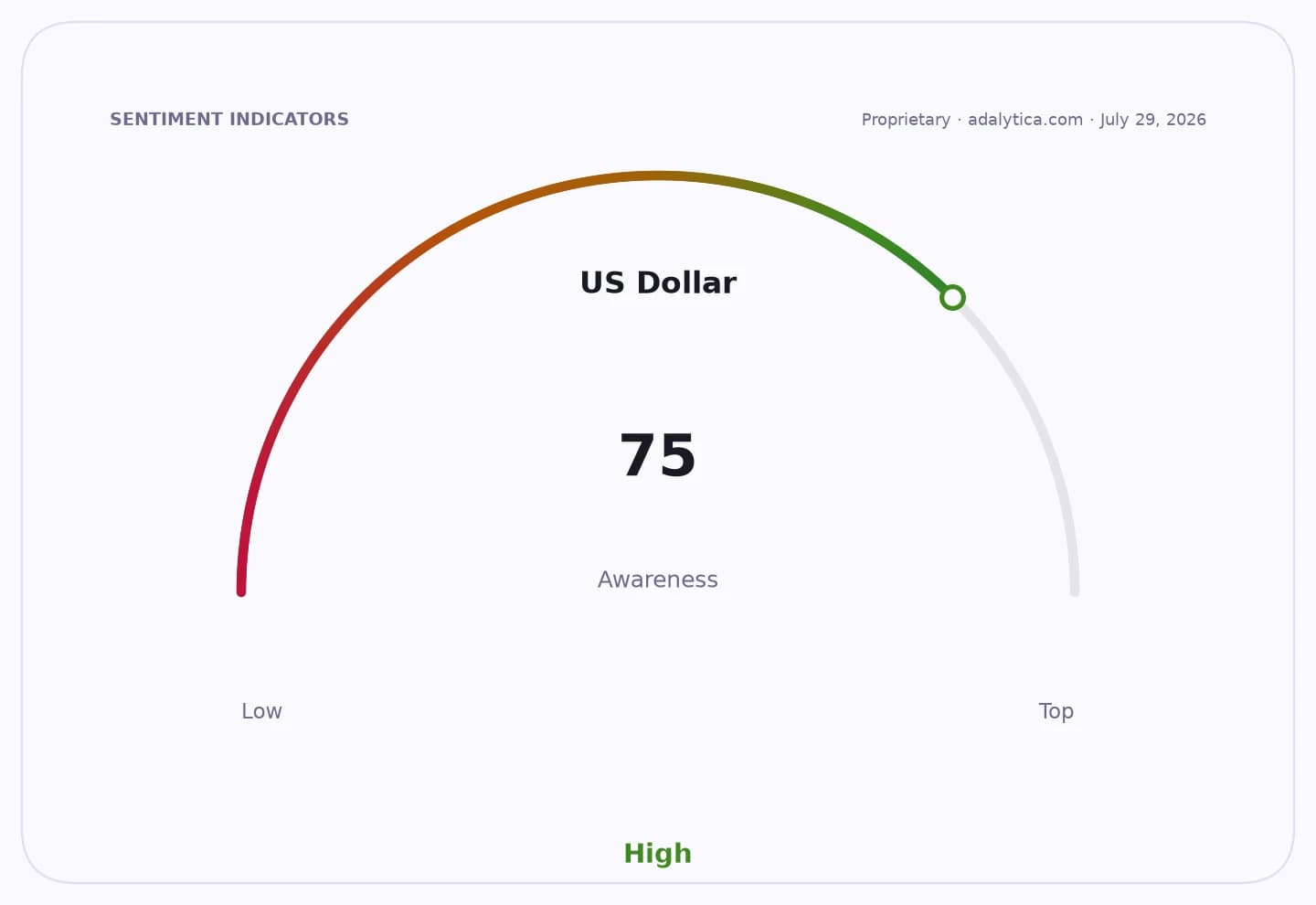
U.S. two-year Treasury yields were near 4.35% and the 10-year around 4.69% in the latest data, levels that continue to support the dollar by keeping carry attractive versus lower-yielding currencies. Adalytica’s US Dollar Trade Signals snapshot showed sentiment at 4, labeled “Extreme Fear,” even as awareness stayed high at 75, highlighting a market that is still crowded and volatile rather than calmly positioned.
The exchange-traded funds tracking major developed-market currencies also point to lingering pressure on foreign exchange rivals. The Japanese yen proxy FXY closed at 56.0 on July 28, below its 50-day moving average of 56.95 and 200-day average of 58.33, while the euro proxy FXE finished at 105.11, also under both its 50-day and 200-day averages. That setup reinforces a broad dollar-advantage trade rather than a ruble-specific shock.
Adalytica’s FX Carry Trade Trading Signals remain in greed territory at 71, suggesting investors are still willing to fund positions in higher-yielding currencies despite the recent wobble in risk sentiment. For the ruble, that means any rebound may be limited unless U.S. yields ease, the dollar rolls over or Russia-specific policy support becomes more forceful.
The next catalyst is the Federal Reserve outlook and any shift in Treasury yields, which will likely decide whether the dollar’s grip on FX weakens or the pressure on the ruble intensifies further.
| Entity | Gains | Losses |
|---|---|---|
| U.S. dollar | ▲Yield support, safe-haven demand | ▼— |
| Russian importers | ▲— | ▼Higher costs, weaker currency |
| Dollar bulls / carry traders | ▲Wider yield spread, momentum | ▼If risk aversion jumps |
| Russian policymakers | ▲— | ▼More FX pressure, tougher inflation fight |




