The dollar’s recent rally is losing momentum, while the euro is holding around PLN 4.32, a move that points to a broader cooling in the greenback’s advance and lower FX volatility across major pairs.
Dollar Rally Slows as FX Volatility Eases

That matters because currency swings feed directly into import costs, export competitiveness and cross-border investment returns. For European consumers and companies with dollar exposure, a firmer euro against the U.S. currency can ease pressure on dollar-priced imports, while a softer dollar can also improve conditions for emerging-market borrowers and commodity-linked economies.
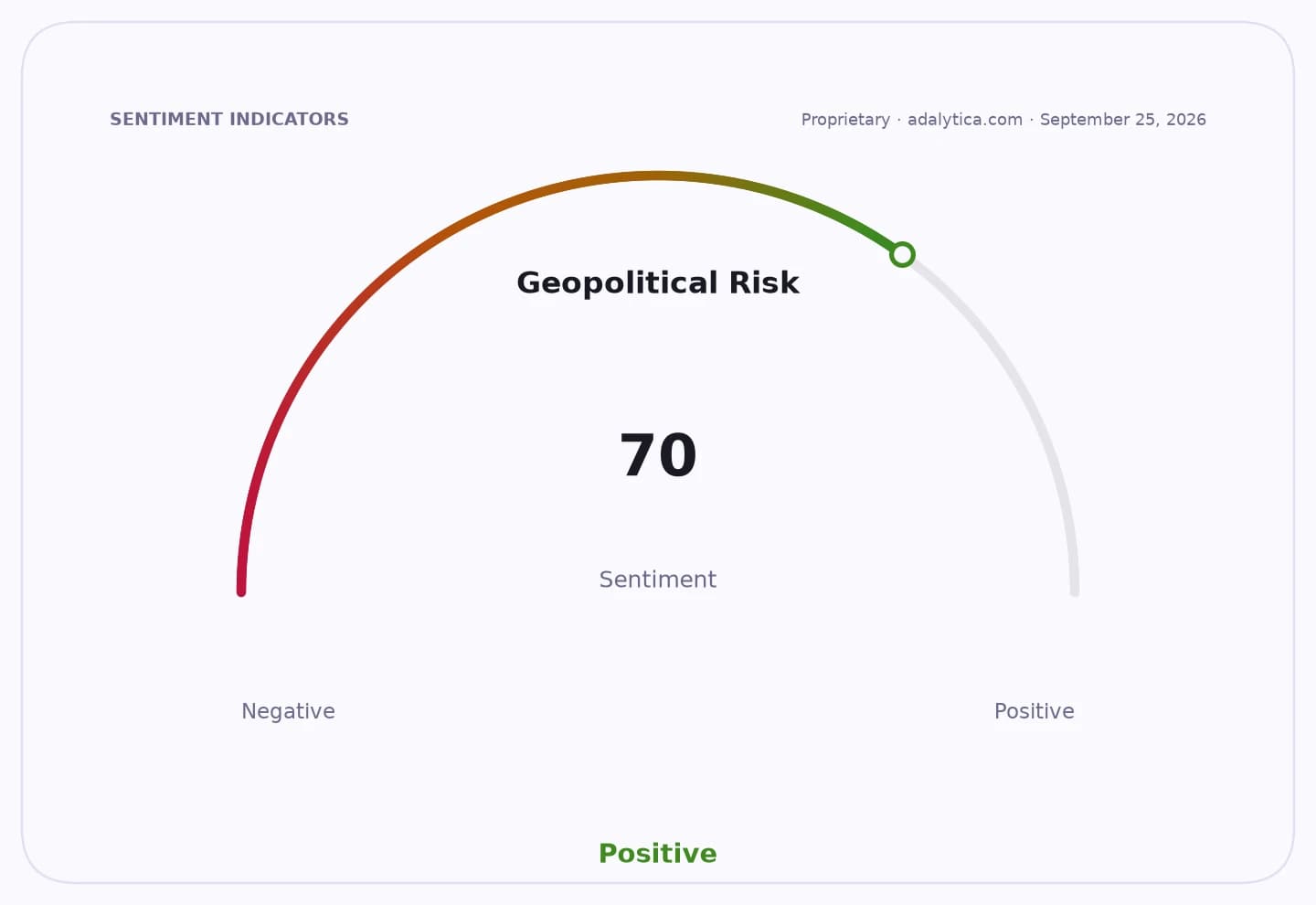
Sentiment IndicatorsⓘProprietary · adalytica.com · July 15, 2026
This is a snapshot — live sentiment, awareness and momentum for 130+ markets update continuously in the dashboard.Open AlphaPulse

In spot trading, the euro’s strength against the dollar is only modest, but it comes after a period of dollar gains that now looks stretched. The U.S. dollar trade signal from Adalytica.com sits at 22, in “Fear,” down 4 points on the day and 47 points over seven days, suggesting waning confidence in further dollar upside.
FX volatility is also fading. The Adalytica FX volatility signal is at 4, in “Extreme Fear,” after a 52-point drop over the past week, a sign that traders are pricing a quieter tape rather than a renewed break in major currencies. For investors, that usually means less opportunity from directional FX bets, but it can also reduce hedging costs for multinational companies and funds with large currency exposure.

The euro’s ability to stay close to PLN 4.32 also keeps the Polish zloty in focus. A stronger zloty tends to be a mixed blessing for local exporters but helps tame imported inflation, while the euro’s relative resilience may matter for rate expectations across central Europe.
The next catalyst is whether the dollar can regain traction on U.S. data or Federal Reserve guidance. If it cannot, the recent pause could turn into a broader consolidation in major FX pairs, with the euro, sterling and Swiss franc all likely to trade more on rate differentials than on momentum alone.
| Entity | Gains | Losses |
|---|---|---|
| Euro buyers/importers in Europe | ▲Cheaper dollar imports | ▼Weaker export pricing power |
| Polish consumers and borrowers | ▲Lower imported inflation pressure | ▼Exporters facing firmer zloty |
| Dollar bears / FX volatility sellers | ▲Less pressure from a runaway dollar | ▼Fewer trends to trade |
| U.S. multinationals with foreign sales | ▲Translation support from softer dollar | ▼Import-cost relief for rivals abroad |