The dollar’s slide below 3.75 zł against the Polish zloty matters because it is not just a one-day FX move — it is a sign that investors are starting to price a weaker U.S. currency regime, with implications for inflation, capital flows and the next leg of emerging-market performance.
Dollar slips below 3.75 zł as FX momentum weakens
For Polish households and companies that import energy, machinery or consumer goods priced in dollars, a weaker greenback lowers costs and can ease pressure on margins. For investors, it also shifts the return math across currencies: a softer dollar tends to support local assets in Central and Eastern Europe, while punishing positions that were built on persistent U.S. dollar strength.
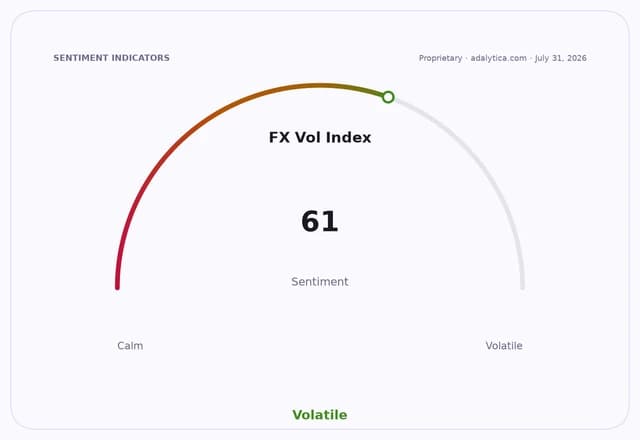
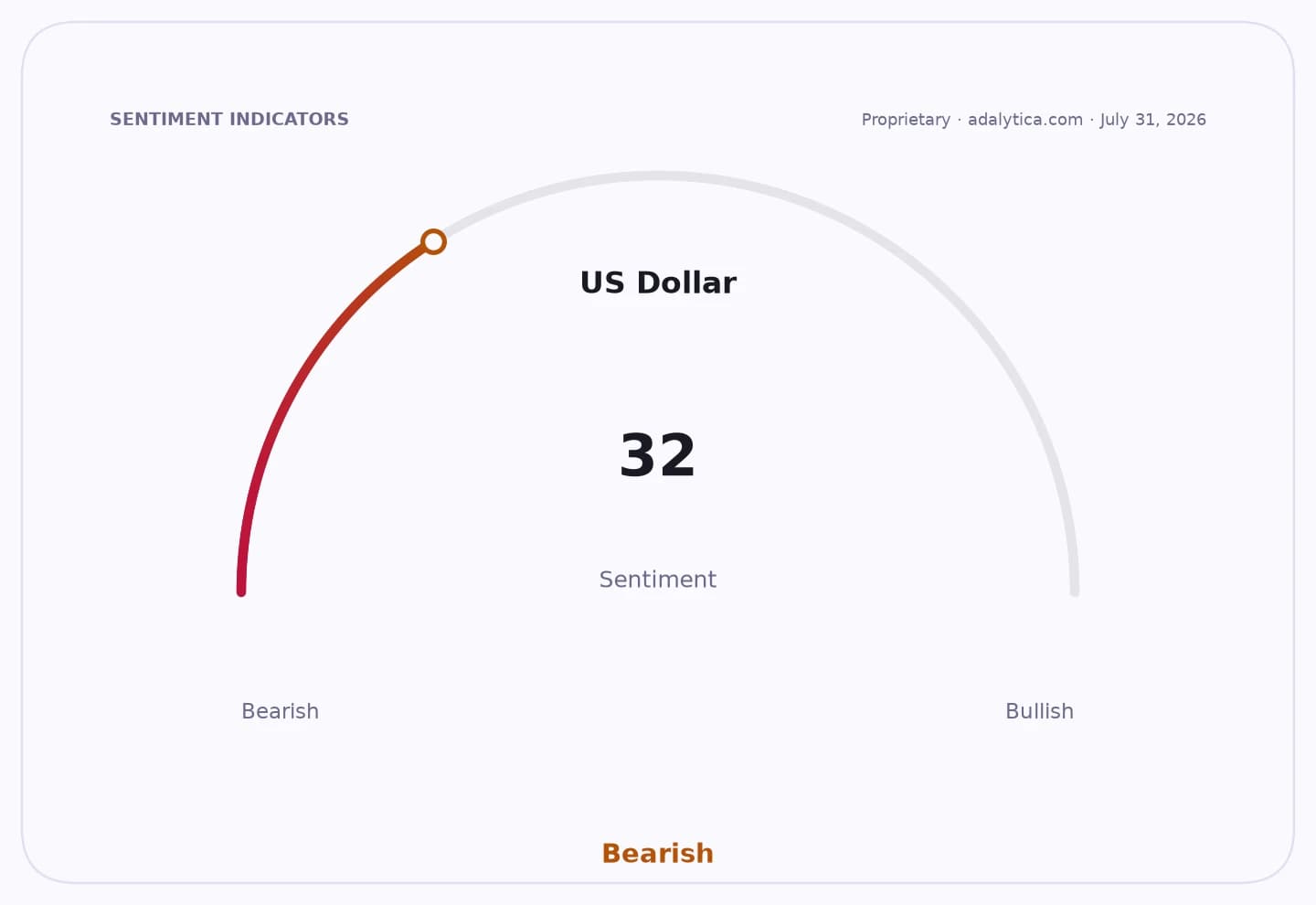
The move looks less like an isolated PLN story and more like a broader repricing of the dollar after a long advance. Adalytica’s U.S. dollar trade snapshot shows neutral sentiment at 32, but the 30-day change is sharply negative at minus 49, a sign that momentum has deteriorated even after a brief rebound. FX volatility signals have also picked up, suggesting traders are preparing for larger swings as the market tests whether the dollar’s long dominance is finally giving way.
Technicals in the related FXY Japanese yen ETF point in the same direction. The fund closed at 57.66 on July 31, well below its 200-day moving average of 58.28, while its RSI reading at 73.6 shows a recent burst of strength in the yen. That does not by itself make a trend, but it does reinforce the view that dollar bulls are losing control across major currency pairs.
The economic backdrop also matters. A softer dollar usually reflects expectations that U.S. rates will stop rising or eventually fall, reducing the carry advantage that has supported the currency for much of the cycle. If that narrative holds, the beneficiaries are not just PLN holders. It would also support risk assets, commodity-linked currencies and emerging-market equities that have been kept under pressure by dollar strength and tighter global financial conditions.
For investors, the key question is whether this is a temporary pullback or the beginning of a larger unwind. If the dollar continues to weaken, the most attractive trades may be in currencies and assets that were previously treated as funding markets or overlooked beneficiaries of a weaker U.S. unit. That argues for staying long selective emerging-market exposure, using dollar weakness as a tailwind rather than waiting for consensus to catch up.
| Entity | Gains | Losses |
|---|---|---|
| Polish zloty (PLN) | ▲Stronger FX level | ▼Dollar-based importers |
| Polish consumers and importers | ▲Lower dollar costs | ▼Exporters with USD revenue |
| Emerging-market assets | ▲Easier financial conditions | ▼Dollar longs |
| U.S. dollar bulls | ▲— | ▼Negative momentum, volatility |




