The US dollar’s climb in Libya’s parallel market is more than a local pricing anomaly: it is a warning flare that geopolitical stress, tighter global liquidity and fear of further Federal Reserve tightening are still pushing investors and households toward the world’s safest reserve currency.
Dollar Strength Signals Global Risk Stress

What matters economically is the speed and breadth of the move. In Libya, the dinar has weakened sharply in the black market, with the dollar trading above one dinar and demand accelerating as traders hoard hard currency. That kind of emergency buying is what happens when confidence in a domestic currency breaks down and people start treating the dollar not just as a trade medium but as a store of value.
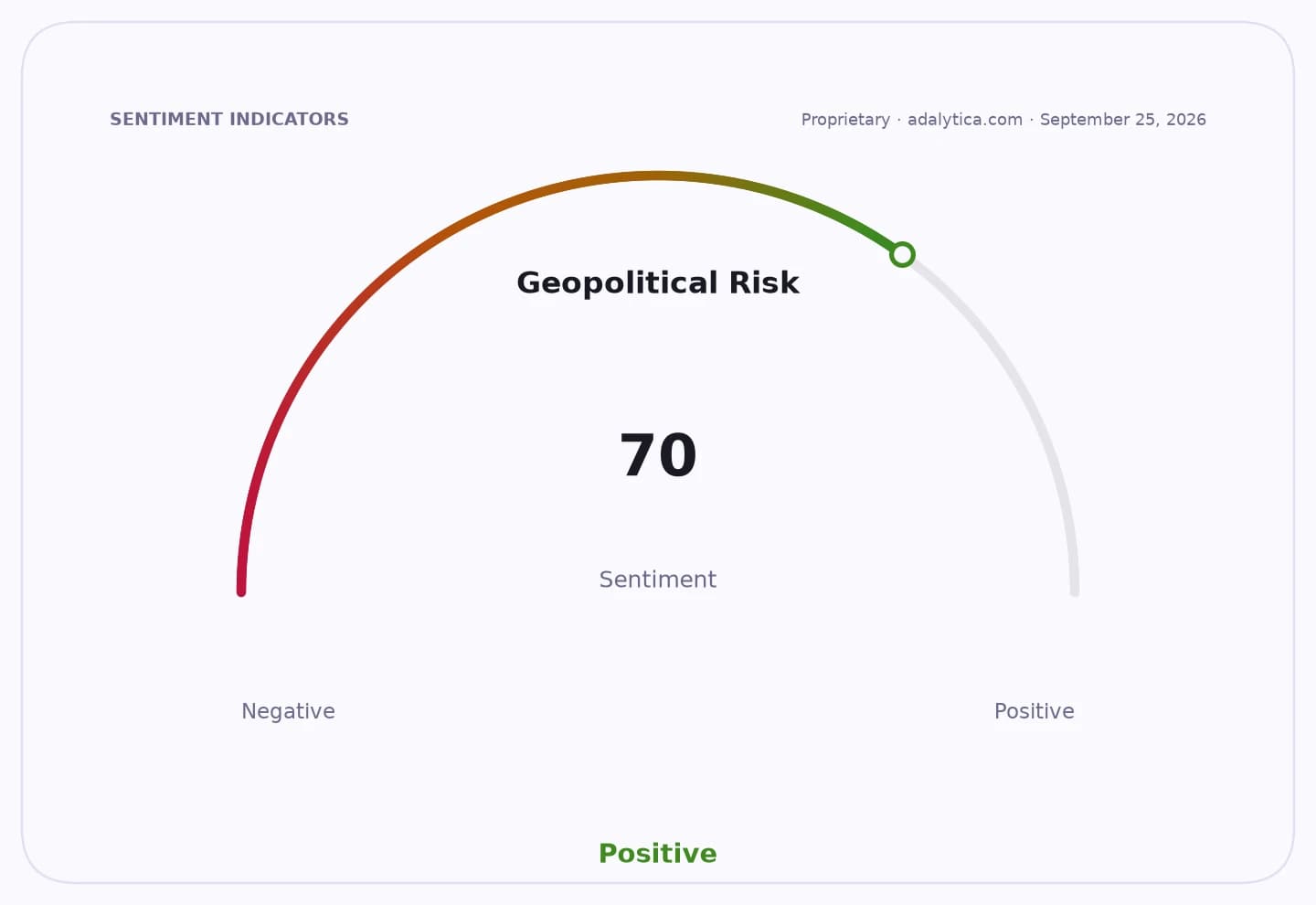
Sentiment IndicatorsⓘProprietary · adalytica.com · July 26, 2026
This is a snapshot — live sentiment, awareness and momentum for 130+ markets update continuously in the dashboard.Open AlphaPulse

The same risk-off impulse is showing up elsewhere. The yen has slid to its weakest level since 1986, a reminder that dollar strength is not confined to one frontier market. When the greenback rises against both stressed emerging-market currencies and major developed peers, it usually means capital is chasing safety, carry trades are under pressure and foreign-exchange volatility is becoming a macro force in its own right.
For investors, that creates a clear asymmetry. A stronger dollar tends to squeeze non-US borrowers with dollar debt, pressure commodity importers and tighten financial conditions globally even without another Fed hike. It also tends to reward US assets relative to foreign ones, especially in a flight-to-quality episode. The dollar has historically acted like a toll road in moments like this: when global risk rises, liquidity and pricing power migrate back to the US.
The market backdrop supports that thesis. Adalytica’s US Dollar Trade Signals show sentiment in “Extreme Fear,” while FX volatility readings are also flashing “Extreme Fear,” suggesting traders are bracing for more disorder rather than a quick mean reversion. On the price charts, the UUP dollar ETF remains above its 50-day and 200-day moving averages, with momentum still constructive, even after a brief pause. By contrast, the yen ETF FXY is still below both moving averages, underscoring the persistent underperformance of yen exposure.
The investable takeaway is straightforward: this is not just a story about Libya. It is a signal that the dollar’s role as the market’s pressure valve is reasserting itself. If geopolitical tensions stay elevated and the Fed keeps policy restrictive, dollar strength can keep feeding on itself through emergency hedging, reserve accumulation and capital repatriation. That argues for staying overweight dollar beneficiaries and underweight the currencies and sectors most vulnerable to imported inflation and funding stress.
| Entity | Gains | Losses |
|---|---|---|
| US dollar | ▲Safe-haven demand | ▼None in the near term |
| UUP / dollar bulls | ▲Momentum and inflows | ▼Short-dollar positions |
| Libyan importers/households | ▲Harder access to FX | ▼Local currency purchasing power |
| FXY / yen bulls | ▲— | ▼Persistent yen weakness |