The US dollar slid to a three-month low on Wednesday as Treasury yields fell after the US Treasury expanded bond buybacks, a move that briefly improved demand for government debt and weakened support for the currency.
Dollar Falls to 3-Month Low on Lower Treasury Yields
The drop matters because the dollar’s recent strength had been anchored in higher US rates and the view that American assets still offered the best risk-adjusted returns. When yields ease, that edge narrows quickly. In this case, the benchmark 10-year Treasury yield was seen around 4.729%, while the 2-year yield was near 4.186%, both little changed from the prior close but lower than recent peaks in a market that has been sensitive to shifts in supply and demand for government bonds.
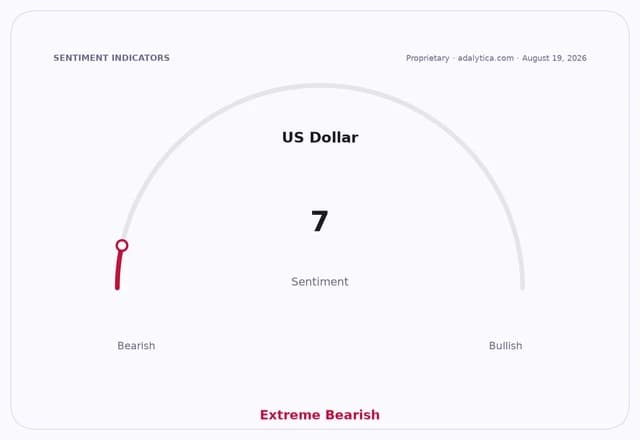
Sentiment IndicatorsⓘProprietary · adalytica.com · August 19, 2026
This is a snapshot — live sentiment, awareness and momentum for 130+ markets update continuously in the dashboard.Open AlphaPulse

A softer yield backdrop tends to hit the dollar through several channels. First, it reduces the carry advantage that had drawn capital into the US. Second, it boosts the case for non-dollar assets, especially when investors think Treasury supply can be absorbed more easily. Third, it feeds broader risk appetite, which often leaves the greenback vulnerable against developed-market peers and commodity-linked currencies.
That pattern was visible in exchange-traded funds tracking the currency. The Invesco U.S. Dollar Index Bullish Fund, UUP, fell to $27.88, down from $28.14 on Tuesday and below its 50-day moving average of $28.28, while its RSI reading of 34.9 pointed to a market that is still weak but not yet deeply oversold. By contrast, the euro-tracking FXE rose to 107.78, its strongest close in months, and the yen fund FXY gained to 58.02, reflecting a broad easing of dollar demand rather than a single-currency move.
The Treasury move also rippled through other markets. Lower yields supported gold, which rebounded more than 3% as investors looked for alternatives to dollar assets. At the same time, the easing in US rates came against a backdrop of rising European government bond yields, where inflation concerns tied to the Iran conflict have been pushing up borrowing costs and adding to global volatility.
For investors, the key question is whether this is a temporary relief rally in bonds and currencies or the start of a more durable shift. A lasting dollar retreat would ease financial conditions globally, help emerging-market borrowers and support commodities priced in dollars. But if inflation fears tied to energy supply disruptions intensify, the move could reverse quickly as markets demand a higher risk premium across rates and FX.
For now, the balance of forces favors a weaker dollar: Treasury buybacks, lower yields and softer demand for safe-haven exposure. The next catalyst will be whether energy prices and geopolitical tensions keep inflation expectations elevated enough to pull yields back up and restore some support for the greenback.
| Entity | Gains | Losses |
|---|---|---|
| Non-US currencies | ▲Easier relative-rate pressure | ▼Dollar bulls |
| Gold | ▲Lower yields, weaker dollar | ▼Cash holders |
| Treasury bond investors | ▲Buyback support | ▼New debt sellers |
| US importers | ▲Cheaper foreign-currency costs | ▼US exporters |