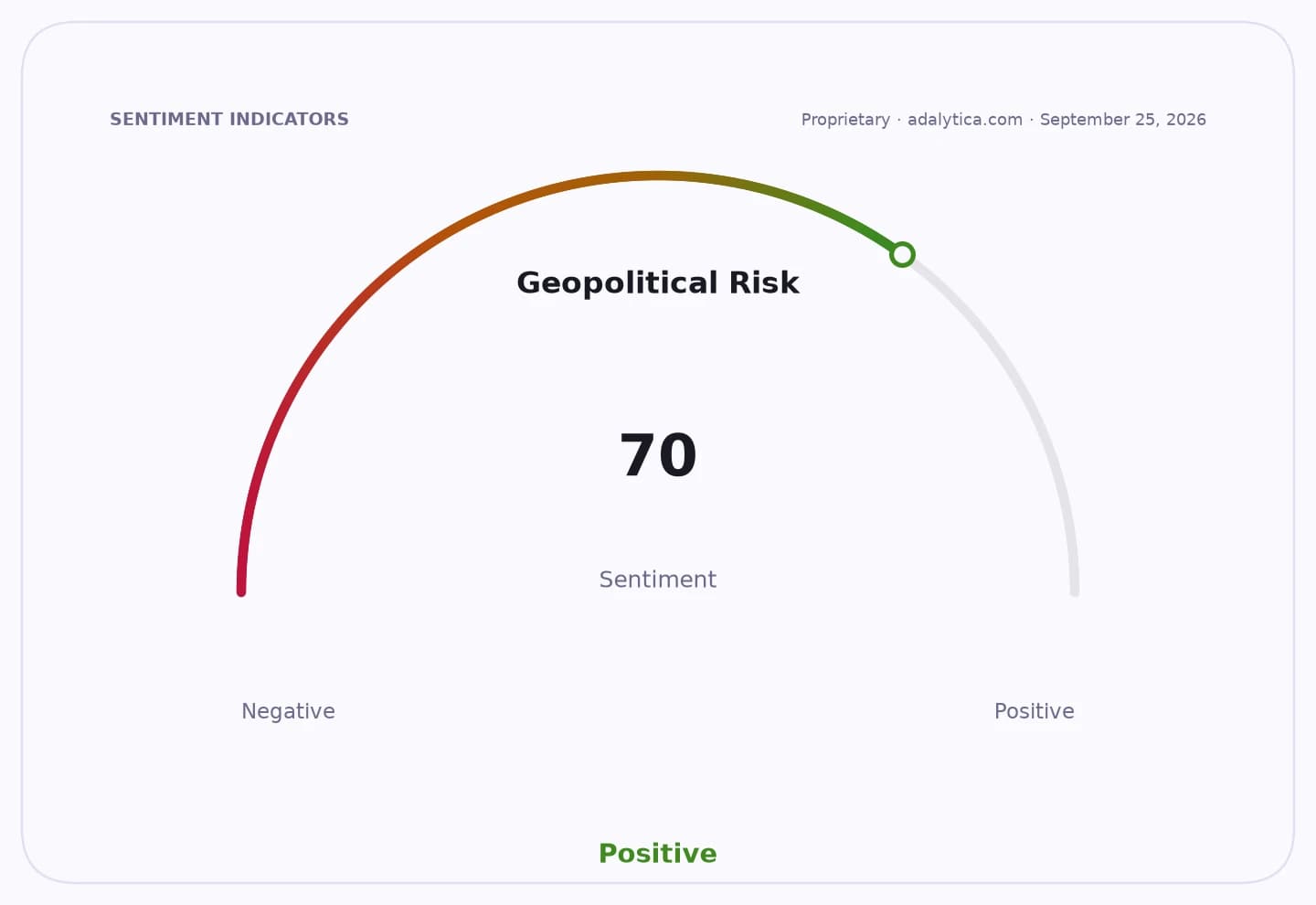
The ringgit is firmer against the U.S. dollar as weaker-than-expected U.S. price data and a softening labor backdrop reinforce bets that the Federal Reserve can keep policy on hold or eventually ease, pulling the greenback lower across Asian FX.
Dollar Weakness Lifts Ringgit and Asian FX
That matters because the dollar’s retreat eases pressure on Malaysia’s import bill, supports regional risk assets and gives emerging-market currencies room to recover after weeks of volatility tied to geopolitics and interest-rate uncertainty. It also reduces some of the imported inflation strain for economies that rely on dollar-priced commodities and trade.
Sentiment IndicatorsⓘProprietary · adalytica.com · July 16, 2026
This is a snapshot — live sentiment, awareness and momentum for 130+ markets update continuously in the dashboard.Open AlphaPulse

U.S. two-year and 10-year Treasury yields have been edging lower as traders digest a cooling inflation picture and signs of a softer labor market, with the latest unemployment rate at 4.2% and June consumer prices showing a 0.42% monthly decline in the context data. Those readings have weakened the case for another immediate dollar bid and helped push the U.S. dollar lower against a basket of currencies.
The move is feeding through to Asia-Pacific FX. The yen has also stabilized, with the FXY ETF inching higher to 56.53 on Wednesday after touching 56.46 earlier in the session, while the Australian dollar advanced to 69.39 cents from 68.48 in the prior session, reflecting a broader rebound in non-U.S. currencies as the dollar fades.
US Dollar — 30-day sentimentadalytica.com
Explore this data interactively — full history, time series and cross-market comparisons.Open AlphaPulse

Technical indicators on the dollar ETF point to a pullback rather than a clean trend reversal: the 50-day moving average sits above the latest close, RSI has slipped to 47.5 and MACD remains negative, signaling fading momentum after a sharp rally earlier in the year. Adalytica’s U.S. dollar trade signals also show “Extreme Fear,” with sentiment at 7 and a 93% drop over 30 days, underscoring how quickly positioning has turned.
For investors, the key question is whether the dollar’s drop becomes a durable repricing of Fed expectations or just a short-covering move. If U.S. data keep cooling and Treasury yields drift lower, Asian currencies including the ringgit could extend gains; if inflation or growth surprises reaccelerate, the dollar’s carry appeal could return fast.
| Entity | Gains | Losses |
|---|---|---|
| Malaysian ringgit | ▲Lower dollar pressure | ▼Import-cost strain if USD rebounds |
| Asian FX buyers | ▲Better risk sentiment | ▼Weakening if U.S. data firm up |
| U.S. dollar bulls | ▲Short-term pullback entry | ▼Momentum and yield support |
| Import-dependent EMs | ▲Softer pricing pressure | ▼Higher volatility if geopolitics flare |