DoValue’s move to refinance its borrowings with a €330 million term loan and revolving credit facility gives the Italian servicer breathing room at a time when Europe’s credit markets are being tested by higher-for-longer rates and rising stress among leveraged borrowers.
DoValue Refinancing Eases Near-Term Debt Pressure
The deal matters because debt servicing, not just debt size, has become the key constraint for companies that rely on borrowed money to fund operations or acquisitions. By extending maturities and replacing older funding with a new package, DoValue reduces near-term refinancing risk and preserves liquidity, even as lenders remain selective and pricing stays elevated. For investors, that makes the structure of the balance sheet almost as important as earnings momentum: a company can survive a period of weak cash generation if it avoids a wall of maturities.
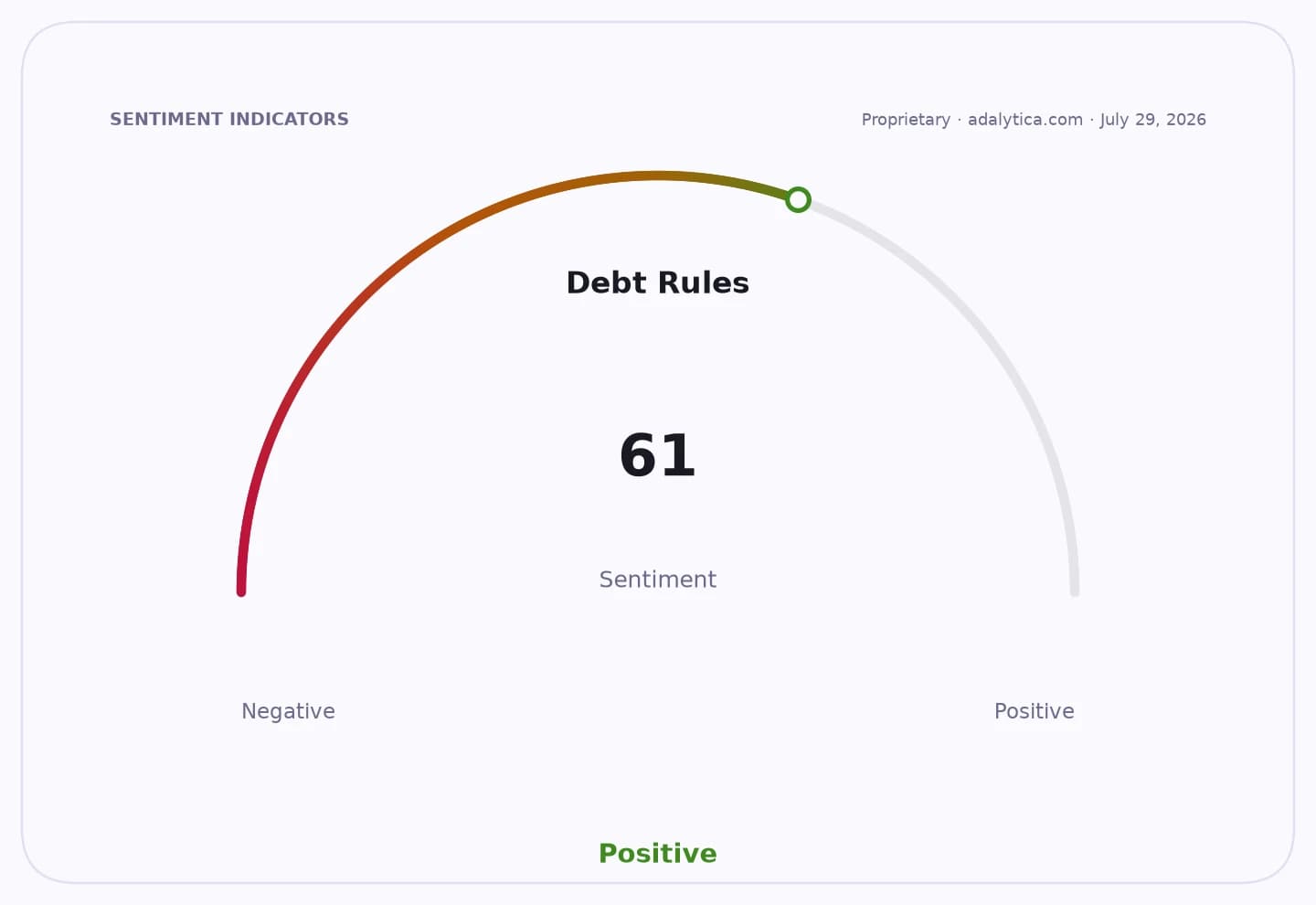
Sentiment IndicatorsⓘProprietary · adalytica.com · July 29, 2026
This is a snapshot — live sentiment, awareness and momentum for 130+ markets update continuously in the dashboard.Open AlphaPulse
The refinancing also fits a broader pattern across European corporate credit. The cost of capital has climbed sharply, and borrowers from industrial groups to property-linked businesses have been forced to secure fresh facilities or renegotiate existing ones. That backdrop has made refinancing execution a market signal in itself. A successful deal suggests banks are still willing to lend to borrowers with a credible asset base and operating cash flow, but often on tighter terms and with more emphasis on collateral, covenants and amortisation.
For DoValue, the immediate benefit is stability. The group, which manages and services non-performing loans and other distressed assets, operates in a segment that can be cyclical but is also exposed to periods of financial stress in the banking system. A cleaner capital structure should help the company keep investing in servicing platforms and handling portfolio flows without the distraction of looming debt deadlines. The risk is that refinancing only postpones pressure if asset recoveries slow or if funding costs remain high for longer than expected.
For creditors and equity investors, the transaction is best read as a balance-sheet reset rather than a growth catalyst. Bulls will argue that securing a €330 million package lowers default risk and may support valuation by improving visibility on cash uses. Bears will note that refinancing at this stage can also reflect the difficulty of accessing cheaper capital and may leave less room for shareholder returns if cash must continue to go toward debt service.
The broader takeaway is that Europe’s refinancing window is open, but not generous. Companies with recurring revenue and lender confidence can still roll debt, yet the market is increasingly discriminating. DoValue’s deal shows that access to funding remains possible for names that can tell a credible credit story, but it also underscores how much more expensive and fragile that access has become.
| Entity | Gains | Losses |
|---|---|---|
| DoValue | ▲Near-term liquidity | ▼Higher financing costs |
| Existing lenders | ▲Improved repayment visibility | ▼Lower upside on old debt |
| Equity holders | ▲Reduced refinancing risk | ▼Less cash for returns |
| Riskier borrowers | ▲Benchmark for market access | ▼Tougher lender scrutiny |