The Dow Jones Industrial Average is pressing into a major resistance zone just as earnings optimism and a defensive sector rotation run headlong into signs that momentum is fading.
Dow Jones Nears Resistance as Rotation Continues

That matters because this is not a simple pause in a rally. The Dow has climbed to 522.22 on the DIA ETF, after touching 527.89 a day earlier, while the 50-day moving average sits near 522 and the 200-day average is around 502. The index is still technically constructive, but it is now trying to hold above a band that has repeatedly capped advances. The latest push higher has come with fading follow-through: DIA’s relative strength index has slipped from 75.7 to 63.6 in two sessions, and the S&P 500 ETF has also backed away from recent highs, with RSI falling to 37.5 and a fresh downtick in its MACD. In other words, the market is no longer charging through the barrier; it is testing it.
Sentiment IndicatorsⓘProprietary · adalytica.com · October 23, 2026
This is a snapshot — live sentiment, awareness and momentum for 130+ markets update continuously in the dashboard.Open AlphaPulse
The economic backdrop is mixed enough to keep the Dow in the spotlight. The 10-year Treasury yield is around 5.145%, still elevated and close to recent highs, while the federal funds rate is forecast near 3.726% and unemployment at 4.09%. That combination — tighter-for-longer financing conditions, a still-resilient labor market and yields that remain far above pre-pandemic norms — tends to favor value, dividend and cash-generative names over long-duration growth. It also explains why the Dow has outperformed other major benchmarks at times: investors have rotated toward industrials, telecom and other mature businesses with visible earnings rather than betting heavily on rate-sensitive or richly valued tech.
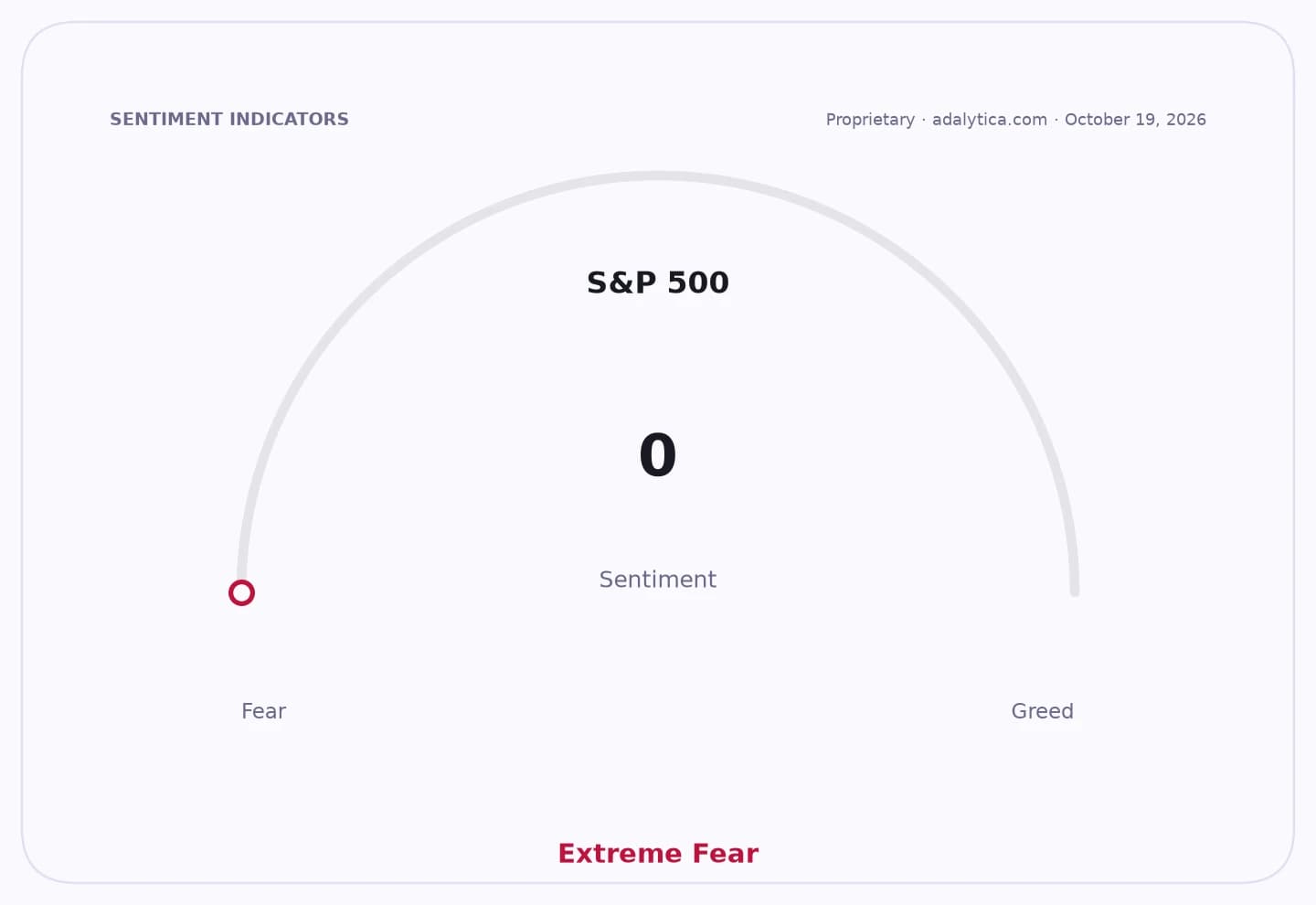
That rotation has given the bulls a credible story, but it is also what makes the current resistance level so important. The Dow’s advance has been helped by individual earnings beats and guidance hikes, including strength from companies such as Dow Chemical and AT&T. Those results reinforce the case that corporate America can still pass through costs, protect margins and reward shareholders even in a higher-rate economy. But market breadth and momentum are not confirming a clean breakout. The S&P 500 remains below its recent highs, the Russell 2000 has weakened sharply from its spring peak, and Adalytica’s S&P 500 trade snapshot shows sentiment at 2, or “Extreme Fear,” despite neutral awareness. That kind of emotional whiplash often appears when a market is stalling just under a key ceiling.
For investors, the message is straightforward: the Dow’s strength is real, but the easy part of the move may be over for now. A clean breakout would likely need either a further drop in yields or a fresh wave of earnings upgrades to overpower resistance. Until then, the more asymmetric trade may be in the sectors that benefit most from this setup — quality industrials, telecom, defense and other cash-rich names that can keep compounding even if the broader market loses altitude. The bulls are not out, but they are running into a wall, and the next move will tell us whether this is merely consolidation or the start of a sharper rotation beneath the surface.
| Entity | Gains | Losses |
|---|---|---|
| Dow dividend/value stocks | ▲Rotation inflows | ▼Growth leadership |
| Industrials and telecom | ▲Earnings multiple support | ▼Rate-sensitive sectors |
| Bondholders | ▲Higher yield income | ▼Equity bulls |
| Broad-market momentum traders | ▲Volatility opportunities | ▼Breakout chasers |