The Dow Jones Industrial Average climbed more than 500 points as falling oil prices gave consumers and many businesses a welcome break, while investors pared back exposure to high-flying chip stocks and shifted toward more cyclical, value-oriented corners of the market.
Dow Rallies as Falling Oil Spurs Sector Rotation

That matters because lower crude prices act like a tax cut for the broader economy. When energy costs ease, transportation, manufacturing, retail and a host of other industries can protect margins or pass along lower prices to customers. For long-term investors, that kind of relief often supports a healthier earnings backdrop outside the narrow group of megacap technology names that has dominated returns for much of the past year.
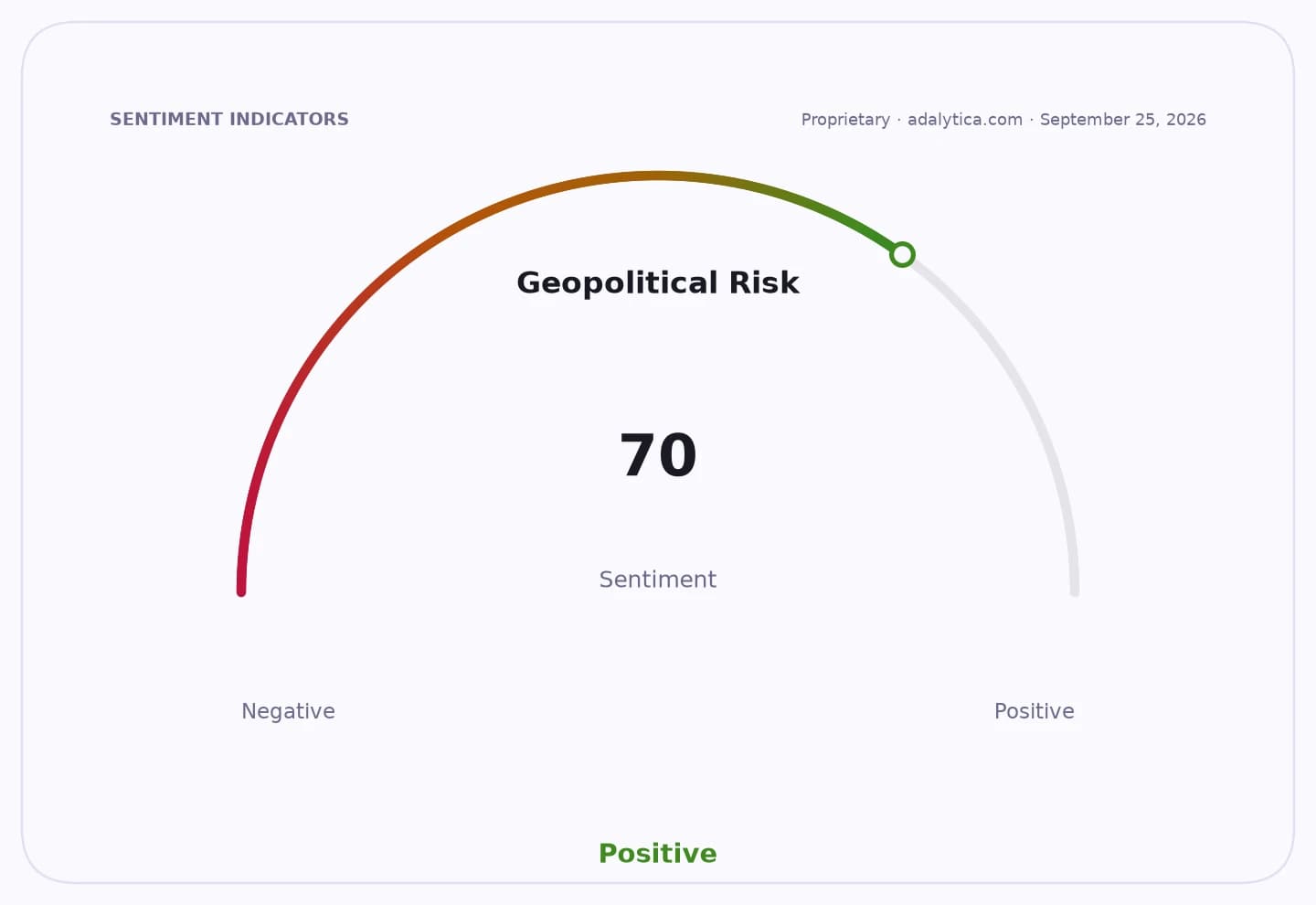
Sentiment IndicatorsⓘProprietary · adalytica.com · July 29, 2026
This is a snapshot — live sentiment, awareness and momentum for 130+ markets update continuously in the dashboard.Open AlphaPulse

Oil’s move lower stands out against a backdrop of earlier supply shocks and geopolitical anxiety. Crude had surged above $100 in the wake of attacks in the Red Sea, and that kind of spike tends to ripple through the economy by squeezing consumers and raising input costs for companies. Even after the recent decline, oil remains far above the levels seen during periods of calmer growth, but the direction matters most for markets: easing energy costs usually improves sentiment for the parts of the economy most sensitive to inflation.
That helps explain the broad market rotation. Energy shares were among the day’s weaker groups as oil prices softened, while the Dow — packed with industrial, financial and consumer names — benefited from the move. At the same time, technology stocks tied to artificial intelligence and chip demand lost some momentum, a reminder that even the strongest secular winners can face pauses when investors start looking for better near-term value. The Nasdaq-focused QQQ ETF has slipped below its 50-day moving average and remains well under its recent highs, signaling the kind of technical pressure that often accompanies sector rotation.
For investors, this is less about a single day’s point gain and more about what it says about market leadership. If oil stays contained and the economy avoids a fresh inflation shock, earnings breadth could improve beyond the handful of chipmakers that have carried the market. That would be a healthier setup for diversified portfolios, because it means more companies can compound profits instead of leaving index returns dependent on one trade.
There is still a clear split between winners and losers. Cheaper fuel helps airlines, retailers, shippers and many industrial companies, while it hurts oil producers and energy funds such as XLE, which pulled back even after a strong run. On the growth side, chip stocks remain long-term winners if AI spending keeps expanding, but their valuations leave less room for disappointment in the short run.
For patient investors, the takeaway is straightforward: rotations like this are normal, and they can create opportunity. The best long-term portfolios tend to own both secular growth leaders and the broader economy that benefits when inflation cools. If oil continues to ease and the market keeps broadening out, that could be a constructive sign for stocks over the next several years — especially for investors who stay diversified, stay invested and use volatility to add quality names on weakness.
| Entity | Gains | Losses |
|---|---|---|
| Consumers and non-energy businesses | ▲Lower input costs | ▼None directly |
| Dow industrials and cyclical stocks | ▲Broader earnings support | ▼Less hype premium |
| Energy stocks and XLE | ▲— | ▼Pressure from weaker crude |
| Chip stocks and QQQ | ▲Long-term AI demand story | ▼Near-term rotation out of momentum names |