Dhurakij Pundit University’s latest job fair put a hard number on a strategy that is becoming increasingly important for students, employers and Thailand’s labor market: get young workers matched with companies before they graduate.
DPU job fair links students to employers early
The DPU Job Fair: All You Can Match brought in partner firms from retail, finance, logistics, aviation, technology, media, property and beauty, with more than 1,000 vacancies on offer across full-time, part-time and internship roles. The university says the model is already producing results, with 55% of students receiving job offers during internships and 95% of graduates finding work within three months of finishing their degrees.
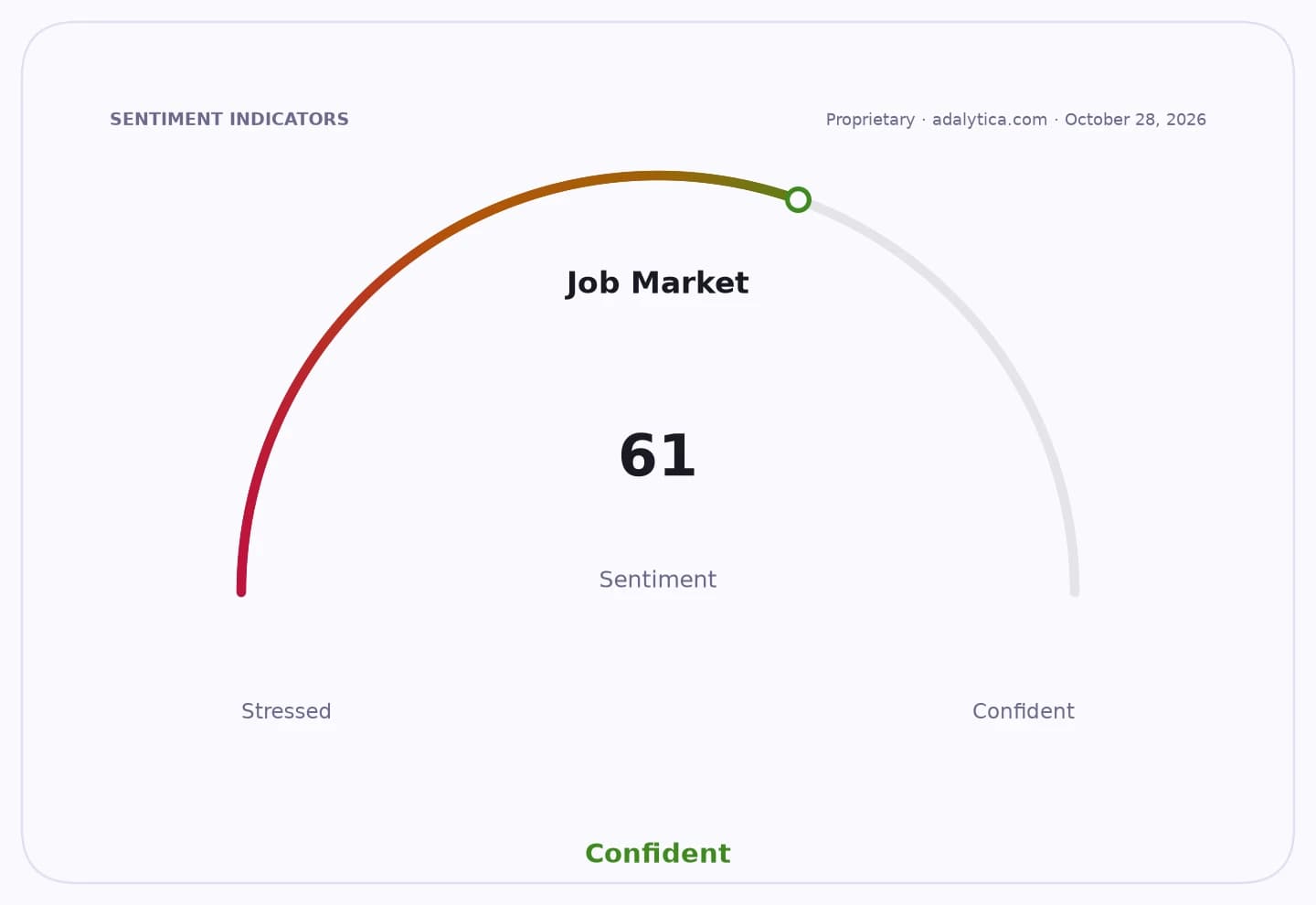
Sentiment IndicatorsⓘProprietary · adalytica.com · October 28, 2026
This is a snapshot — live sentiment, awareness and momentum for 130+ markets update continuously in the dashboard.Open AlphaPulse
That matters economically because it reduces the lag between education and employment, a costly gap for both households and employers. For students, earlier placement means faster income, lower search costs and less risk of entering a weak job market after graduation. For companies, it shortens recruitment cycles and gives employers access to workers already trained, screened and familiar with the company’s culture. In a labor market increasingly shaped by AI adoption, resume screening and faster skill turnover, those links are becoming more valuable than traditional campus recruiting alone.
The event also highlights how private universities are trying to strengthen their employment proposition as a selling point for prospective students. DPU said it has already placed 1,117 students in part-time jobs this year and works with more than 1,000 network companies for internships and cooperative education, covering nearly all third- and fourth-year students. That kind of pipeline can be a differentiator in a market where families are weighing the return on tuition and where students are looking for evidence that a degree leads directly to a job.
For employers, the appeal goes beyond filling open roles. Companies such as CP All, Central Retail, The Mall Group, BJC, Plus Property, Coffee Concepts Thailand, and Yves Rocher Thailand used the fair to reinforce brand awareness among Gen Z candidates while testing interest in specific fields such as beauty, digital, retail and services. DPU officials said participating firms increasingly value students who can work with AI tools, communicate clearly and show ownership, suggesting hiring criteria are shifting away from pure academic fit toward practical adaptability.
The broader narrative is straightforward: in a labor market where entry-level hiring is more competitive and skills are changing faster, universities are being judged not just on teaching quality but on employability outcomes. DPU is trying to position itself as a bridge between classroom and career, and the reported 95% graduate employment rate gives that pitch more weight than branding alone.
The test now is whether the model scales. If more universities build similar employer networks, students could get earlier access to jobs and firms could lower recruitment friction. If not, institutions with the strongest placement records may gain a durable advantage in attracting applicants who increasingly want a job outcome, not just a diploma.
| Entity | Gains | Losses |
|---|---|---|
| DPU students | ▲Earlier job offers | ▼Less post-graduation search time |
| DPU and partner firms | ▲Stronger employer links | ▼Higher recruiting burden if unfilled |
| Employers | ▲Access to pre-screened talent | ▼Wider talent pool outside the fair |
| Competing universities | ▲Pressure to improve placement | ▼Differentiation by employability |