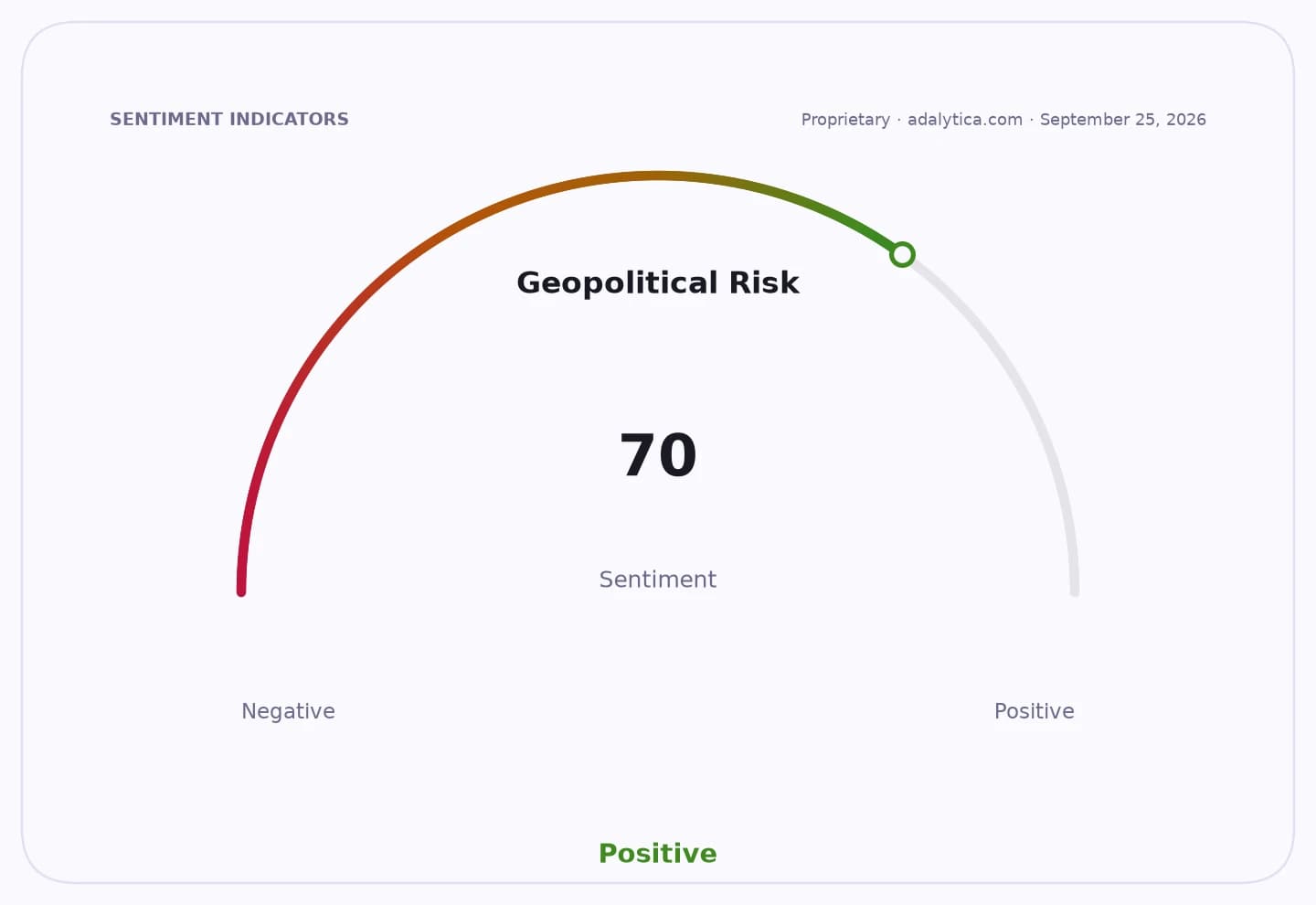
Ukraine’s largest drone attack on Moscow yet underscores a hardening war of attrition that is increasingly shaping markets, energy assumptions and the diplomatic calculus around the conflict.
Drone Escalation Supports Defense and Safe Havens
The overnight strike, which Kyiv said involved nearly 400 drones, damaged residential areas in the Russian capital at the same time that a Russian drone attack on Sumy killed at least two people, showing that neither side is close to exhausting its ability to hit deep behind the front line. That matters economically because a prolonged war of reciprocal strikes keeps pressure on infrastructure, insurance, logistics and reconstruction costs across eastern Europe, while raising the odds that sanctions, defense spending and energy-security measures remain elevated for longer.
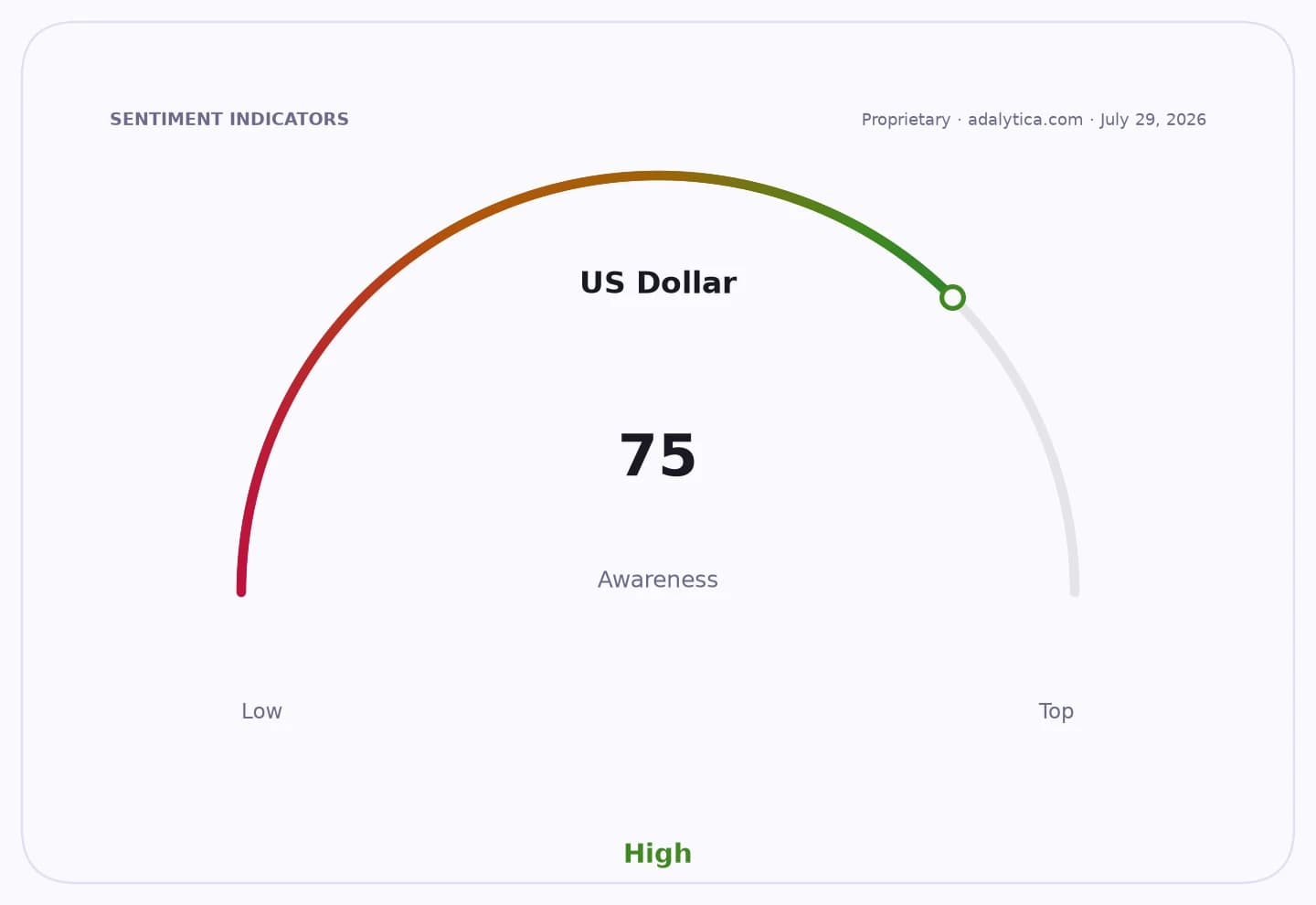
Sentiment IndicatorsⓘProprietary · adalytica.com · July 29, 2026
This is a snapshot — live sentiment, awareness and momentum for 130+ markets update continuously in the dashboard.Open AlphaPulse
For investors, the immediate relevance is in the persistence of risk rather than any single battlefield shift. The conflict is no longer just a land war; it is a contest of industrial capacity, air-defense inventory and endurance. A bigger drone war rewards firms tied to interception systems, electronic warfare and munitions replenishment, while keeping energy markets and defense budgets supported. It also reinforces the view that peace remains a distant base case, even as Ukraine demonstrates it can impose costs on Russia far from the front.
Market signals are consistent with that backdrop. The U.S. dollar has fallen sharply in Adalytica’s trade signals, with sentiment at “Extreme Fear,” while Treasury bonds show “Extreme Greed” awareness, a pattern that typically reflects investors hedging geopolitical uncertainty and slower global growth. Gold has also held near elevated levels, with conventional technical indicators still showing the metal above its 50-day moving average but below its 200-day average, suggesting the market is not pricing a clear de-escalation. Defense contractors such as Northrop Grumman, RTX and Lockheed Martin have already flagged the wider security environment in recent filings, and a conflict that keeps expanding into drone and air-defense warfare supports that narrative.
Russia’s refusal to signal meaningful concessions suggests the war may remain economically destructive without producing a decisive settlement. The bull case for Ukraine is that deeper strikes strain Russian logistics and raise domestic pressure on the Kremlin. The bear case is that each escalation invites retaliation, prolongs civilian harm and leaves both economies locked into higher military spending and weaker investment sentiment.
For investors, the key question is not whether the war produces another headline strike, but whether the conflict continues to reinforce a durable regime of higher defense demand, firmer safe-haven flows and persistent geopolitical risk premia.
| Entity | Gains | Losses |
|---|---|---|
| Ukraine | ▲Strikes deeper into Russia | ▼Faces retaliatory attacks |
| Russia | ▲Domestic rally-around-the-flag | ▼Infrastructure damage, pressure on Moscow |
| Defense contractors | ▲Higher weapons demand | ▼None in near term |
| Safe havens | ▲Treasury and gold support | ▼Risk assets and the dollar |