ECOWAS has effectively put West Africa’s biggest gas ambition on the map, endorsing the $25 billion Nigeria-Morocco pipeline and giving a long-delayed project the political cover it needs to move from concept toward execution.
ECOWAS backs Nigeria-Morocco gas corridor
That matters because the pipeline is not just another infrastructure plan. It is a strategic bid to rewire gas flows across West Africa and create a new route for Nigerian molecules toward Europe at a time when buyers are still hunting for non-Russian supply, energy security remains fragile and capital is being steered toward assets that can monetize geopolitical risk. If the project advances, it could become one of the region’s most consequential energy corridors, unlocking transit economies for multiple states while giving Europe another potential supply option.
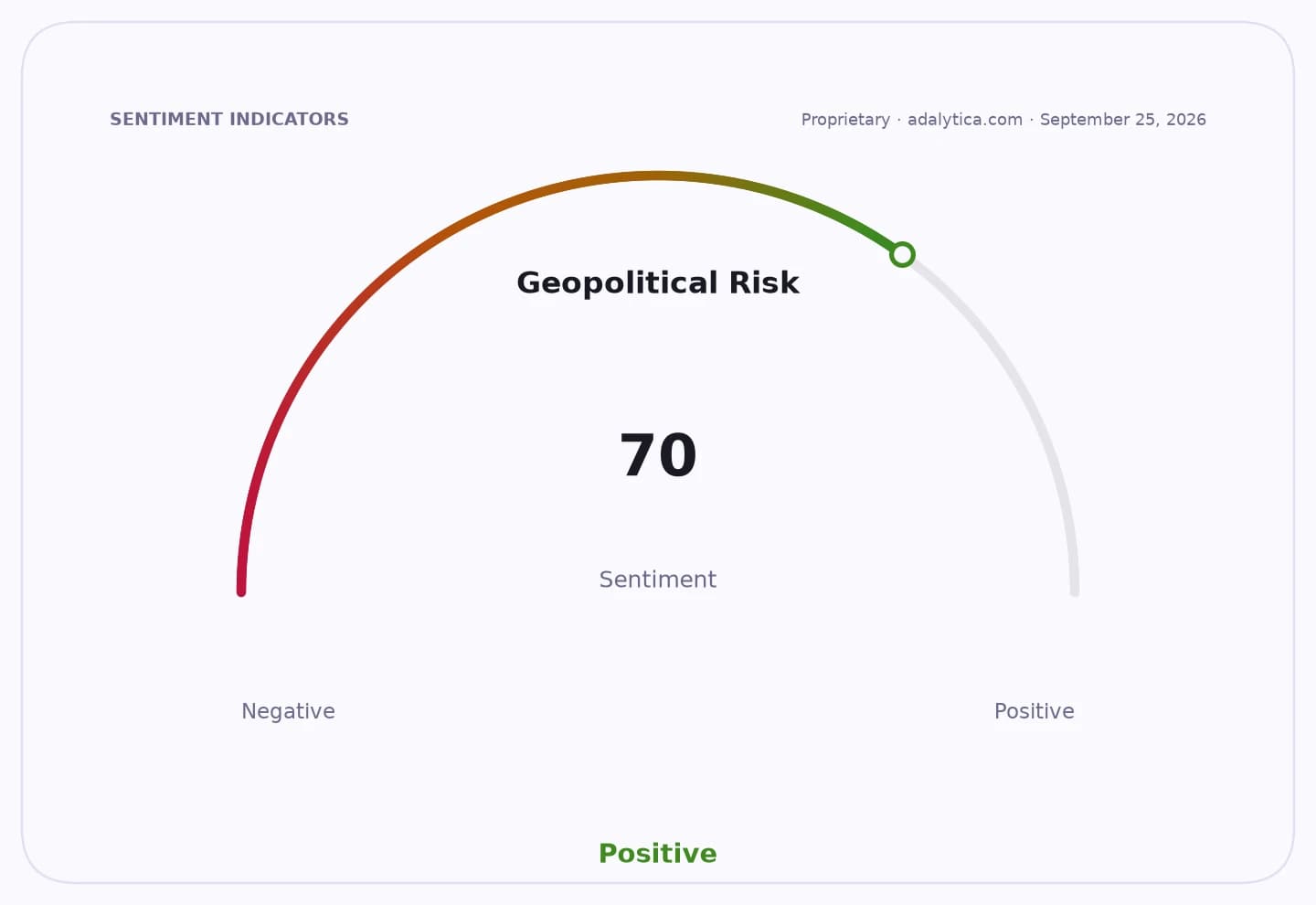
Sentiment IndicatorsⓘProprietary · adalytica.com · July 26, 2026
This is a snapshot — live sentiment, awareness and momentum for 130+ markets update continuously in the dashboard.Open AlphaPulse
For investors, the significance is less about next quarter’s cash flow and more about the optionality embedded in a multi-year buildout. Mega-pipelines of this scale pull through engineering, materials, compression, storage, port and services contracts long before first gas flows. They also tend to benefit the larger energy names with balance-sheet depth, project-management capability and commercial relationships across Africa and Europe. Shell and other global gas players stand to gain from a broader market that increasingly rewards long-duration gas infrastructure as a bridge fuel and a geopolitical hedge.
The market is already signaling that investors are willing to pay for that theme. Shell’s shares have been firm, with the stock recently trading above both its 50-day and 200-day moving averages, while Nigeria’s listing has been volatile but remains sensitive to energy and infrastructure headlines. That is consistent with a market that sees gas not as a legacy fossil asset, but as a strategic utility in an era of tightening supply, electrification strain and supply-chain rerouting.
The timing also matters. Adalytica’s Global Stability Sentiment gauge is showing elevated fear even as awareness of geopolitical risk remains high, a combination that typically supports investment in energy security and toll-road infrastructure rather than pure commodity beta. At the same time, the U.S. dollar trade signal has weakened sharply, which can ease financing pressure on dollar-linked projects and support commodity-linked assets outside the U.S.
The larger narrative is simple: the world is underbuilding the infrastructure needed to move gas from resource-rich regions to demand centers, and that scarcity is becoming investable. The Nigeria-Morocco pipeline fits squarely into that gap. It is a long-dated catalyst, but the first winners are already visible — the contractors, financiers, service providers and integrated energy groups positioned closest to the route.
If ECOWAS can convert approval into bankable milestones, this could become a defining West African energy trade corridor. For investors, the best way to play it now is not to chase the headline, but to look for the picks-and-shovels beneficiaries and the global gas names with the scale to win when geopolitics becomes infrastructure.
| Entity | Gains | Losses |
|---|---|---|
| ECOWAS / West African transit states | ▲Infrastructure investment, fees | ▼Delay if financing slips |
| Nigeria | ▲New export route, monetization | ▼Upfront capex burden |
| Shell / global gas majors | ▲Project optionality, LNG/gas upside | ▼Capital tied up in long-cycle assets |
| Europe gas importers | ▲Supply diversification | ▼Higher contract competition / pricing pressure |