Colleges are under growing pressure to stop training jobseekers and start producing job creators, a shift that matters because it goes to the heart of whether higher education can still justify its cost in a softening labor market.
Education providers face enrollment pressure
The argument is not just philosophical. It is increasingly economic. If universities and vocational schools continue to graduate students into crowded labor pools, they risk feeding frustration, underemployment and weaker wage outcomes. If they can instead build entrepreneurship, practical skills and employer formation, they can help create new income streams, broaden local business formation and reduce reliance on scarce salaried work. That makes the issue relevant to policymakers, employers and investors alike, especially as job-market anxiety deepens.
Sentiment Indicators
A social-media discussion in Swahili captured the pressure plainly: colleges should “produce employers rather than employees,” with calls for more hands-on training, measurable knowledge and research with commercial value. The language may be informal, but the economic message is direct. Students are questioning whether degrees that once promised upward mobility are still aligned with labor demand. For institutions that rely on enrollment, that skepticism is not abstract.
The market is already pricing in strain at education providers. Shares of Strayer Education Inc. have fallen sharply, with the stock dropping to $50.70 in the latest reading from $81.17 in December, while Lincoln Educational Services Corp. has slid to $20.12 from $23.31 earlier in the year after a much larger midyear swing. Both remain exposed to the same core risk: if students view education as poor value unless it leads to business creation or clear career returns, enrollment becomes harder to defend. EDUC, another small-cap education name in the data, fell to $0.81 from $1.29 late last year, underscoring how unforgiving the sector has become.
The fundamental backdrop reinforces that pressure. Strayer’s most recent filings showed North America enrollment down 9.1% in the third quarter from a year earlier, following a 5.2% decline in the second quarter. Its business model explicitly depends on employer relationships and education benefits programs, which helps explain why the company’s fate is tied to labor-market demand and corporate willingness to subsidize tuition. Lincoln, meanwhile, says it is pursuing career-oriented postsecondary education and expanding geographically, but its recent price action suggests investors remain skeptical that traditional workforce training alone will be enough to drive durable growth.
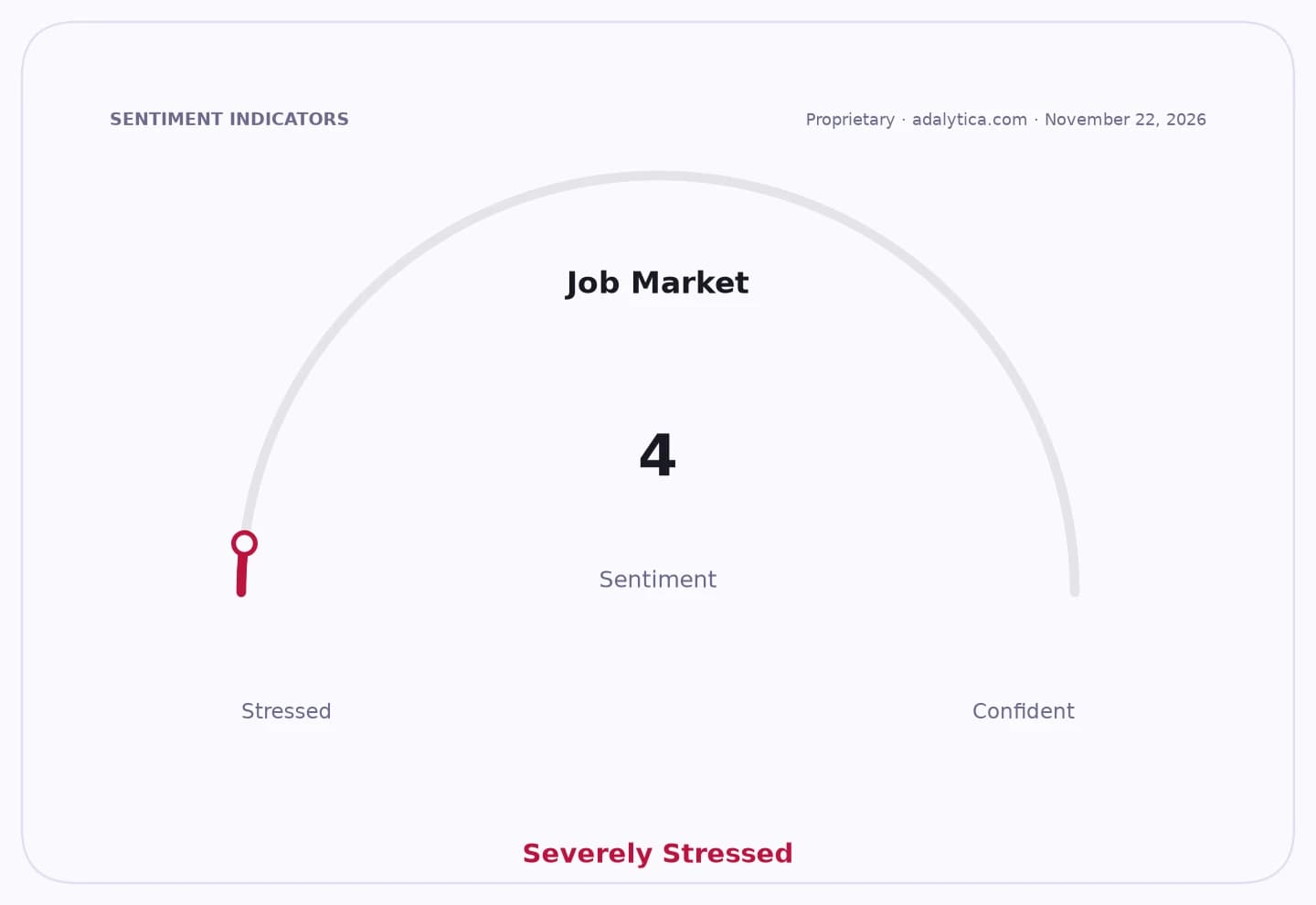
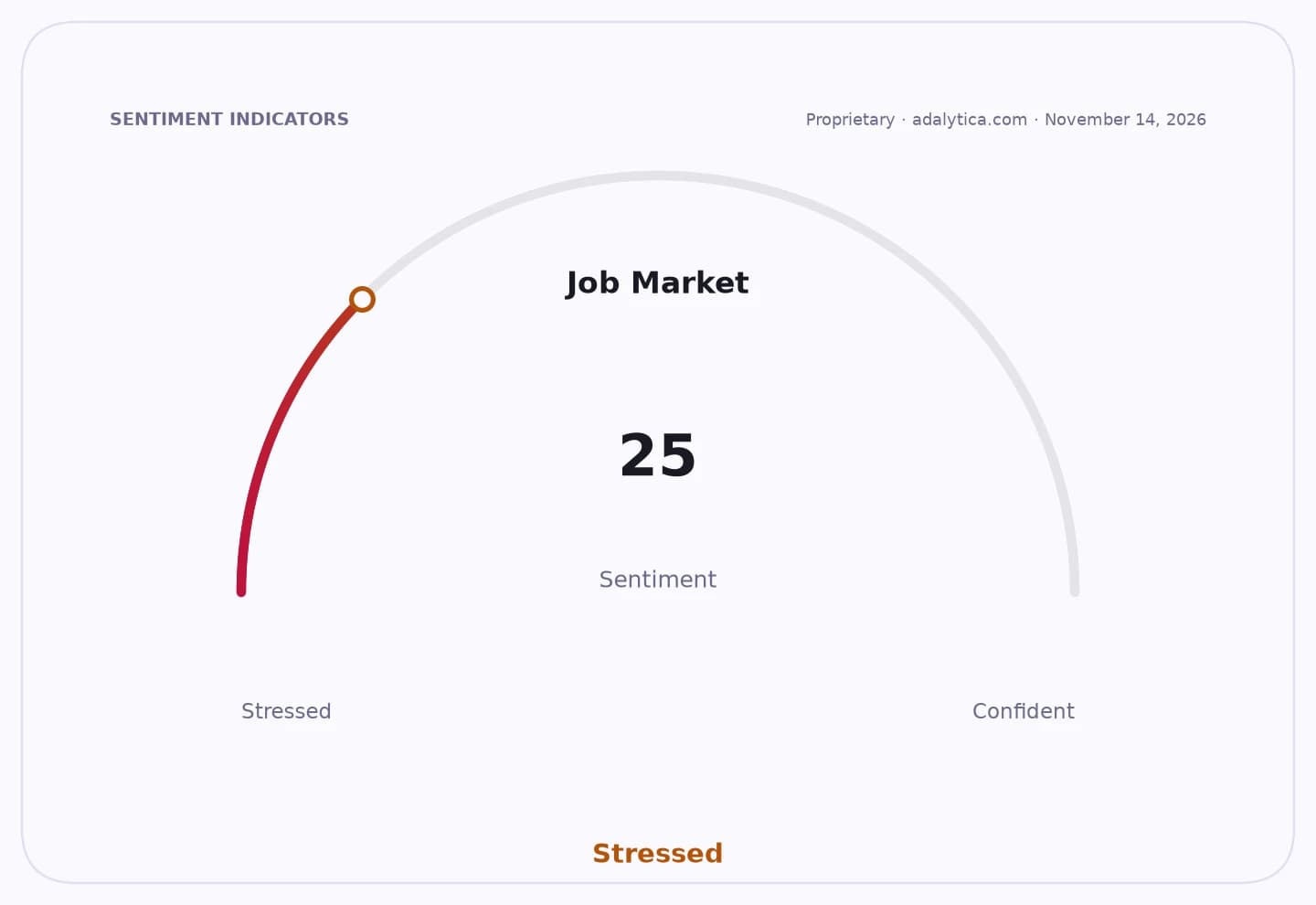
Adalytica’s Job Market Sentiment gauge is in “Extreme Fear,” while Consumer Confidence Recession Sentiment has weakened, suggesting a broader deterioration in how households view employment prospects. That matters for colleges because anxiety about jobs can cut two ways: it may increase demand for practical education, but it also makes students more selective and less willing to pay for programs that do not show a clear payoff. In that environment, schools that can incubate entrepreneurs, not just graduates, may gain a competitive advantage.
The bull case for education providers is that entrepreneurship is not a threat but an expansion opportunity. Universities that offer venture labs, applied research, incubators and industry-linked programs can position themselves as engines of local economic development rather than credential factories. The bear case is that most institutions lack the funding, faculty incentives and employer networks to make that transition at scale, leaving them vulnerable to persistent enrollment erosion.
For investors, the key question is whether colleges and training providers can turn the “jobs to businesses” argument into a measurable revenue model before falling enrollments and weak labor sentiment do more damage. Those that can demonstrate employability, startup formation and employer partnerships may defend pricing and stabilize admissions. Those that cannot are likely to keep losing students, and with them the market’s confidence.
| Entity | Gains | Losses |
|---|---|---|
| Colleges with startup programs | ▲Better student appeal | ▼Higher execution demands |
| Entrepreneurship-focused students | ▲More self-employment paths | ▼Less certainty than salaried jobs |
| Strayer Education (STRA) | ▲Employer partnerships | ▼Enrollment decline risk |
| Lincoln Educational Services (LINC) | ▲Career-training demand | ▼Value skepticism |