U.S. education stocks are being hit hard by a widening sense that repeated layoffs at schools and training providers are no longer a one-off cost-cutting move but a sign that the sector’s business model is under pressure from regulators, weaker demand and tighter funding.
StraighterLine stock falls on aid and compliance risks
That matters because schools depend on steady enrollment and federal aid to keep margins intact, while investors have long treated the for-profit education space as a turnaround trade tied to job training demand. When layoffs become a recurring feature across campuses and career colleges, it can point to more than temporary belt-tightening: it can signal shrinking student flows, falling tuition revenue and a higher risk of compliance problems.
Sentiment Indicators
STRA has been one of the clearest examples. The stock closed at 52.92 on Nov. 19, down sharply from 86.98 in late July and far below its 50-day moving average of 73.87 and 200-day average of 77.9. Its relative strength index of 19.1 suggests the shares are deeply oversold, while the MACD remains decisively negative, underscoring the force of the selloff. The move leaves the company near levels last seen after a rapid deterioration in market confidence.
The pressure is not just technical. In its latest filings, STRA warned that failure to comply with U.S. Department of Education gainful-employment rules and new accountability metrics could trigger heightened disclosure requirements and even loss of Title IV eligibility, the federal aid that is central to most schools’ economics. That is the kind of risk investors tend to punish early, because once access to aid is threatened, enrollment, cash flow and valuation can all re-rate at once.
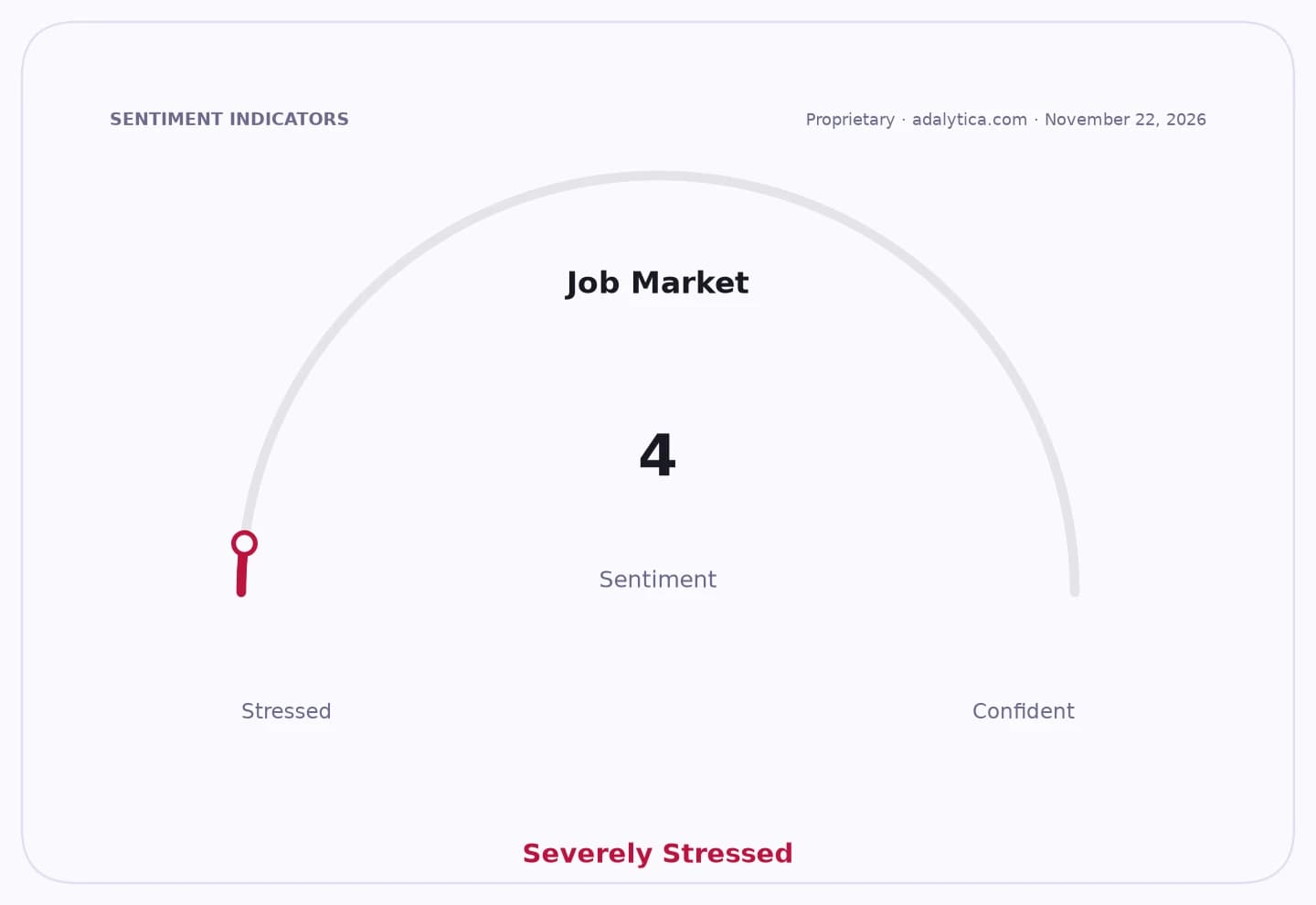
The broader backdrop is equally hostile. Adalytica’s Consumer Confidence Recession Sentiment gauge sits at an “Extreme Fear” reading of 4, while its Job Market Sentiment is only neutral at 36. That combination points to a labor market in which households may be less willing to borrow for education and more skeptical about the payoff from retraining, particularly if school operators are cutting staff and trimming programs.
For investors, the key question is whether the layoffs reflect a temporary response to compliance costs or the start of a more durable contraction in the sector. The bull case is that weaker sentiment and heavy selling have already priced in much of the bad news, leaving room for a rebound if enrollment stabilizes. The bear case is that regulatory scrutiny, funding pressure and a softer employment backdrop will continue to squeeze schools, making further layoffs and profit warnings more likely.
For now, the market is treating repeated layoffs not as efficiency, but as a warning that the education industry’s revenue model is being tested from several directions at once.
| Entity | Gains | Losses |
|---|---|---|
| STRA | ▲Cost savings, oversold rebound potential | ▼Enrollment, margins, valuation |
| Students / borrowers | ▲Fewer low-value programs | ▼Reduced services, less support |
| Regulators / Education Department | ▲More enforcement leverage | ▼Higher compliance burden |
| Sector peers | ▲Less direct scrutiny if stronger operators | ▼Wider investor skepticism |