The Central Bank’s sale of 115 billion pounds in treasury bills today underscores how heavily the government is leaning on the domestic market to fund itself while preserving control over borrowing costs.
Egypt Auction Demand Supports Short-Term Sovereign Debt

That matters because short-term sovereign paper remains the main pressure valve for fiscal financing in Egypt, where the state must refinance large volumes of debt without allowing interest costs to spiral. A successful auction can ease near-term funding stress, support bank balance sheets holding government securities and signal that local liquidity is still deep enough to absorb supply. A weak auction, by contrast, would have forced the government to pay up or accept less funding, both of which would feed straight into the deficit and the cost of debt service.
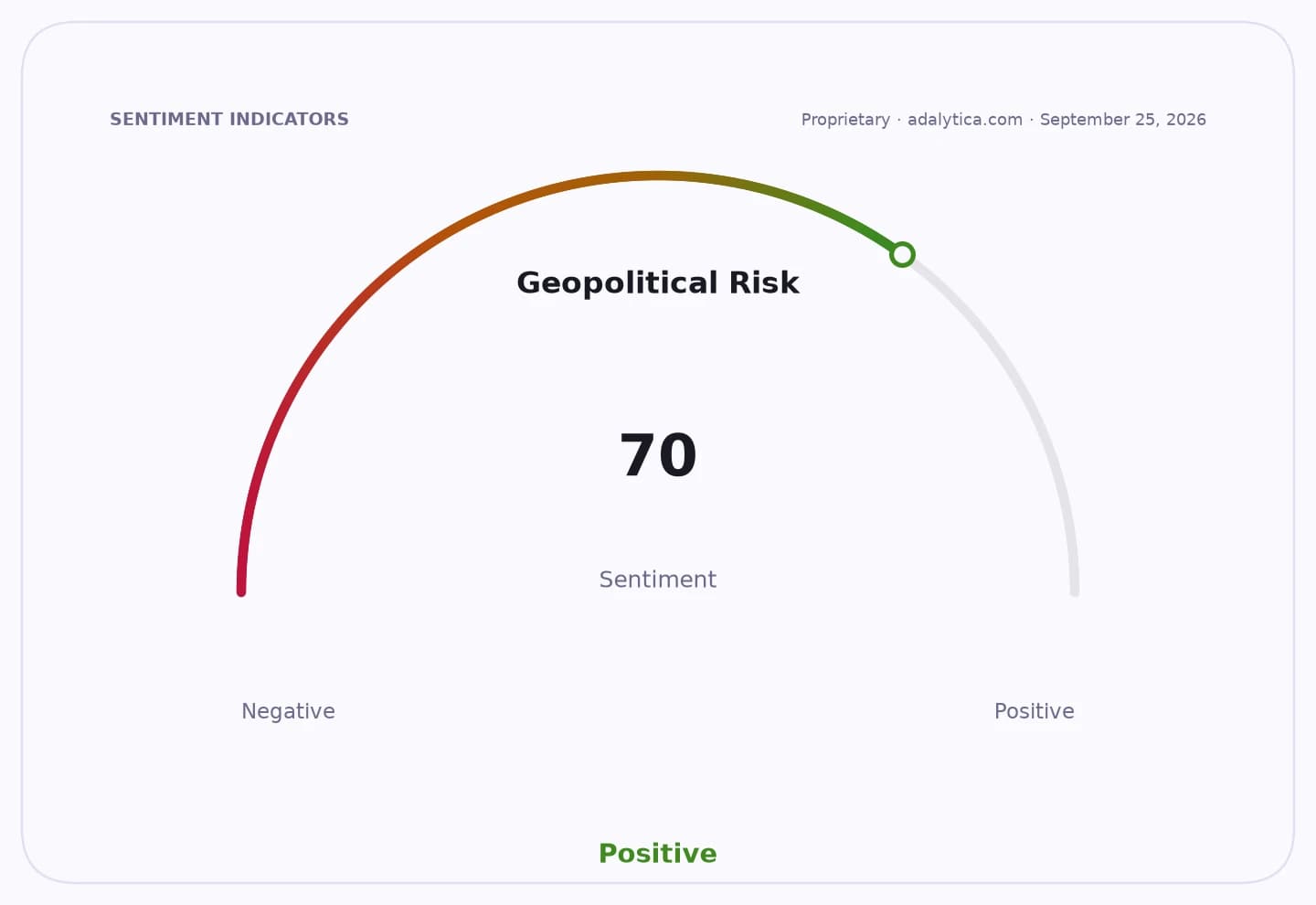
Sentiment IndicatorsⓘProprietary · adalytica.com · July 19, 2026
This is a snapshot — live sentiment, awareness and momentum for 130+ markets update continuously in the dashboard.Open AlphaPulse
The backdrop is still favorable for demand. The latest Treasury-bill sale was oversubscribed by 77%, with bids totaling 10.03 billion pounds, according to the news context, and authorities rejected higher-cost offers to limit the yield paid. That suggests officials are willing to favor debt efficiency over maximizing take-up, even as the banking system continues to channel funds into sovereign paper rather than private credit. In a system where deposit growth and capital mobilization lag loan demand, government bills remain a core liquidity placement for banks.
For investors, the key question is not just whether the auction clears, but at what price. A strong bid-to-cover ratio can point to stable domestic appetite and reduce pressure on the central bank to accept higher rates later. It also matters for the term structure: robust demand at the short end can help anchor expectations for bond pricing more broadly, especially when government bonds are already recovering on better global rate sentiment.
External conditions are also helping. U.S. Treasury yields have eased after softer inflation data reduced bets on aggressive Federal Reserve tightening, a tailwind for emerging-market fixed income and for Egypt’s domestic debt market through portfolio sentiment and benchmark effects. Bloomberg-style technical readings on the U.S. bond proxy TLT show the ETF still below its 200-day moving average but recovering from oversold levels, while the dollar has retreated from recent highs, both signs of a less punishing global funding backdrop. For Egypt, that does not solve local fiscal arithmetic, but it can improve the tone around sovereign debt and encourage buyers to extend duration.
The bullish case is that persistent demand for treasury bills shows banks still have liquidity and confidence in government paper, allowing Cairo to finance itself without sharp yield concessions. The bearish case is that such demand reflects a crowding-out dynamic: the state is absorbing scarce domestic savings, leaving less room for private-sector lending and embedding a high-cost rollover cycle that is difficult to break.
What to watch next is whether the government can keep auctions heavily subscribed without lifting yields materially, and whether the recovery in longer-dated bonds spreads beyond short-term bills. That will determine whether today’s sale is just another well-bid funding operation, or evidence that Egypt’s debt market is finding a more durable footing.
| Entity | Gains | Losses |
|---|---|---|
| Egyptian government | ▲Cheap rollover funding | ▼Higher debt-service risk |
| Domestic banks | ▲Safe yield on liquidity | ▼Less room for private credit |
| Bond investors | ▲High sovereign demand | ▼Limited upside if yields stay low |
| Private borrowers | ▲Possible spillover from calmer rates | ▼Crowding out by state borrowing |