Egypt’s government is pushing deeper into healthcare spending, with Health Minister Khaled Abdel Ghaffar saying the state now funds about 4 million treatment decisions a year at a cost of 33 billion pounds, a scale that underscores both the fiscal burden of universal access and the political priority the sector has been given.
Egypt boosts health spending despite fiscal strain
The number is important because it shows healthcare has become one of the clearest channels through which Cairo is translating social policy into budget outlays. In a country where inflation, currency weakness and elevated debt-service costs leave little fiscal room, a treatment system that absorbs tens of billions of pounds a year is not just a welfare issue. It is a claim on public finances that competes with infrastructure, subsidies and investment spending, while also serving as a pressure valve for household incomes.
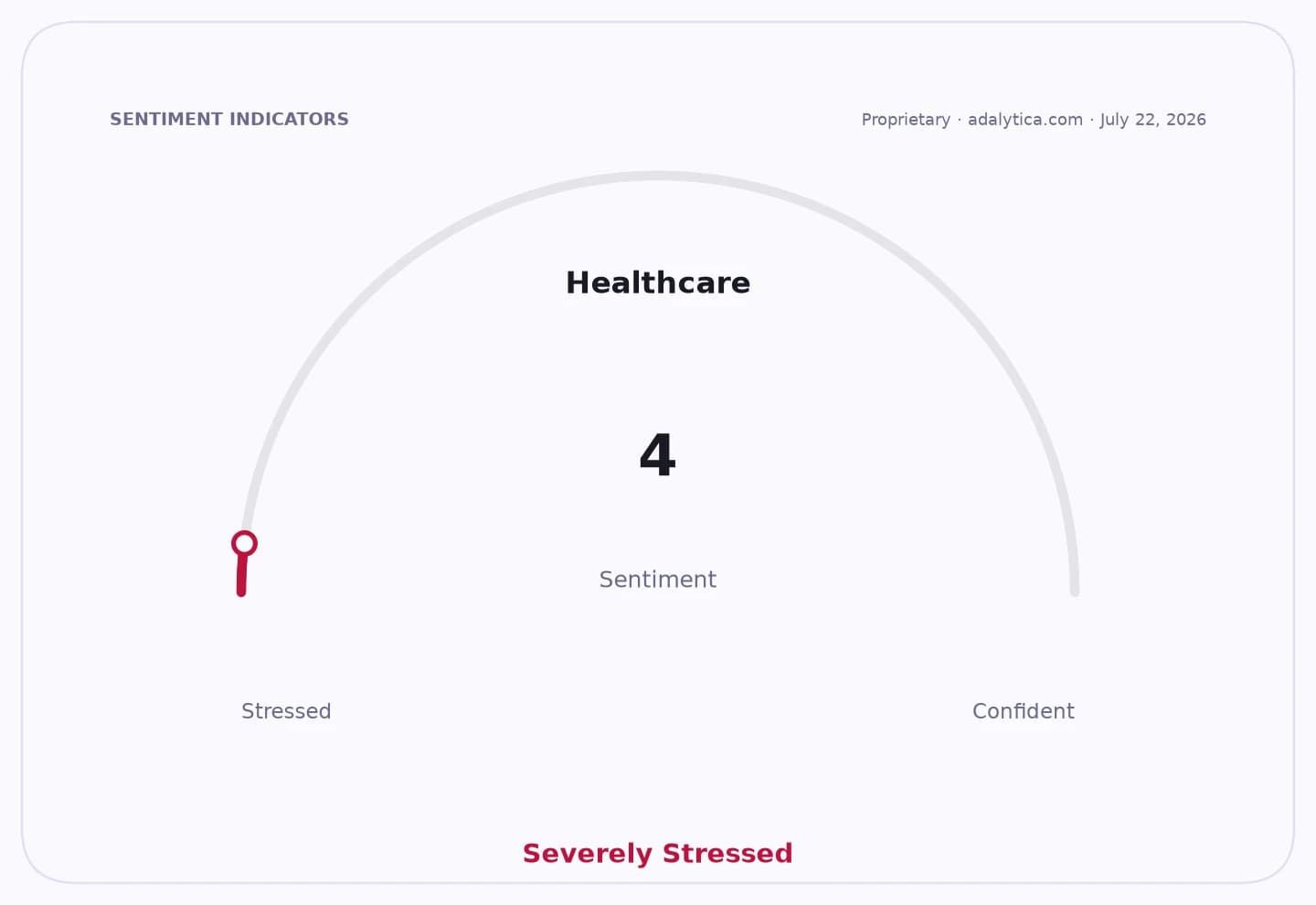
Sentiment IndicatorsⓘProprietary · adalytica.com · July 22, 2026
This is a snapshot — live sentiment, awareness and momentum for 130+ markets update continuously in the dashboard.Open AlphaPulse
Abdel Ghaffar’s comments fit into a broader policy push in which the state is tightening its oversight of long-term development projects and pairing that with stronger support for health services. The House of Representatives’ approval of the reorganization law for the Egypt Future Authority for Sustainable Development points to a more centralized model of project management, while the Central Bank’s support for national healthcare initiatives suggests policymakers are treating health expenditure as strategic rather than discretionary.
That matters for investors because it affects the outlook for Egypt’s healthcare ecosystem, from hospitals and managed-care providers to pharmaceutical distributors and insurers. Public spending at this level can support demand, improve payment visibility and encourage further private-sector participation, but it also raises questions about the durability of funding if macroeconomic conditions worsen. For listed healthcare and insurance groups, the key issue is whether state support translates into steadier claims flow and higher utilization or whether budget constraints eventually compress reimbursement and delay payments.
The market backdrop suggests investors are already debating that balance. U.S.-listed healthcare shares, tracked by the XLV exchange-traded fund, have recovered from earlier weakness and are trading above both their 50-day and 200-day moving averages, but recent moves have been choppier as the sector adjusts to shifting earnings expectations and policy risk. In Egypt, the same dynamic applies in a more acute form: healthcare is being protected, but protected spending can still become strained spending if revenues and financing conditions do not keep pace.
The bull case is that higher public health outlays improve access, support domestic demand for services and reinforce a reform narrative that could attract capital into hospitals, pharmaceuticals and related infrastructure. The bear case is that the 33 billion-pound bill becomes another pressure point in an already stretched fiscal system, limiting the state’s ability to scale coverage without either new financing or tougher rationing of services.
For investors, the message is that Egypt’s healthcare push is not a narrow social-policy announcement. It is part of a wider state-building effort that ties public health, development planning and fiscal management together, and the next question is whether that model can be funded sustainably without crowding out other priorities.
| Entity | Gains | Losses |
|---|---|---|
| Egyptian patients | ▲broader access to treatment | ▼limited if funding tightens |
| Hospitals and drug suppliers | ▲more public demand | ▼payment delays risk |
| Egyptian state | ▲social stability leverage | ▼heavier fiscal burden |
| Private insurers | ▲clearer role in care financing | ▼pricing pressure from state dominance |