Egypt’s discovery of a 200 billion cubic foot gas field in the Mediterranean adds a timely boost to its drive to cut import dependence and strengthen its role as a regional gas transit and liquefaction hub for Europe.
Egypt Nasim-1X gas discovery boosts LNG hub plans
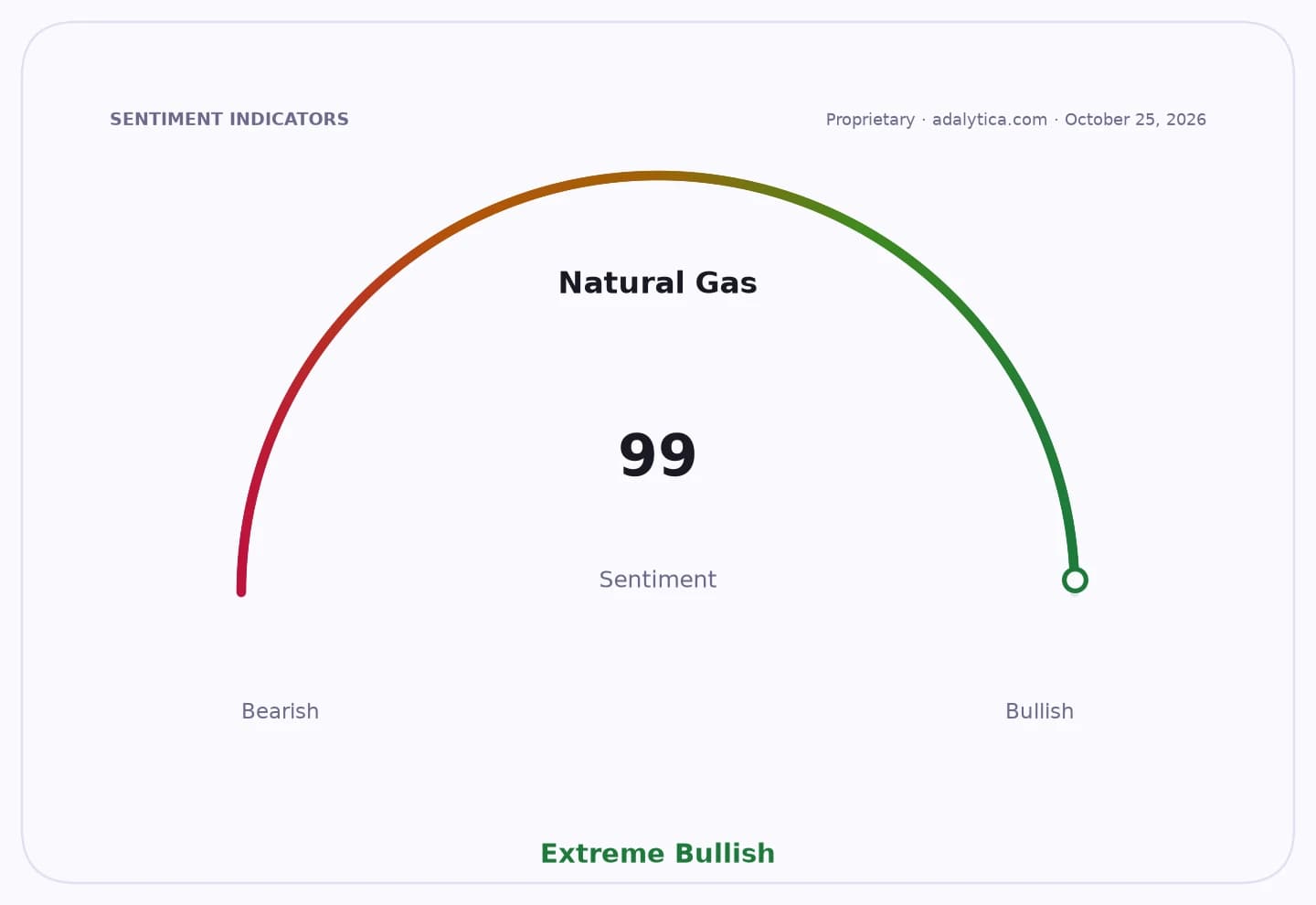
Natural Gas
The new find, Nasim-1X, is smaller than the giant Cronos field off Cyprus, but it may matter more in the near term because it can be tied into existing infrastructure through a 22-kilometer pipeline, making it quicker and cheaper to monetize. For Egypt, that is the economically important part: new supply that can be brought onstream without the long lead times and heavy capex usually associated with frontier gas developments.
Sentiment Indicators
The discovery comes as Egypt tries to balance two objectives that are increasingly linked across the eastern Mediterranean: meeting domestic demand and positioning itself as the processing center for gas from neighboring fields. That role has grown more important since Europe sought alternatives to Russian supply after the war in Ukraine. Egypt’s geography, existing LNG facilities and pipeline network give it a structural advantage if it can keep gas flowing into the system.
The broader regional plan is already taking shape around Cyprus. In July, Eni and TotalEnergies approved development of the Cronos field, estimated at more than 3 trillion cubic feet, with output expected to begin in 2028. Gas from Cronos is slated to be sent to Egypt for processing into LNG and then exported onward to Europe, underscoring Cairo’s ambition to become the eastern Mediterranean’s central gas conduit.
For investors, the immediate relevance is less about the size of Nasim-1X than about what it says on supply discipline and infrastructure optionality. Smaller discoveries that can be connected quickly can support domestic consumption, reduce the need for imports and preserve export capacity, which is important for a country trying to manage foreign-currency pressure. They also reinforce the investment case for companies with exposure to Mediterranean gas, midstream assets and LNG processing routes.
The market backdrop is mixed. Global oil prices have been volatile, and gas markets remain sensitive to weather, storage and geopolitical risks. But the strategic value of Mediterranean gas has not faded. Europe still wants diversified supply, and Egypt’s ability to aggregate, process and re-export gas could keep it relevant even if individual discoveries are modest.
Egypt’s challenge is execution. The country will need to sustain exploration success, keep development costs contained and ensure that domestic demand does not absorb too much of new output. If it does, the Nasim-1X find could be another incremental step toward a more durable energy balance — and another reason investors will keep watching the eastern Mediterranean.
| Entity | Gains | Losses |
|---|---|---|
| Egypt | ▲Lower import reliance; stronger LNG hub role | ▼Exposure to execution risk |
| European buyers | ▲More supply diversification | ▼Less leverage over pricing |
| Eni / TotalEnergies | ▲New regional export route | ▼Development and timing risk |
| Gas importers elsewhere | ▲Additional supply options | ▼Potentially tighter competition for volumes |