The dollar stayed pinned above 52 Egyptian pounds on Thursday, underscoring how little room the local currency still has to breathe even after recent stabilization.
Egypt pound holds above 52 per dollar
That matters because Egypt’s exchange rate remains one of the clearest barometers of external financing pressure, import costs and inflation risk. When banks are still quoting the greenback at 52.27 to 52.50 pounds, the message for households and companies is that foreign-currency demand remains firm and the pound is not yet back on secure footing.
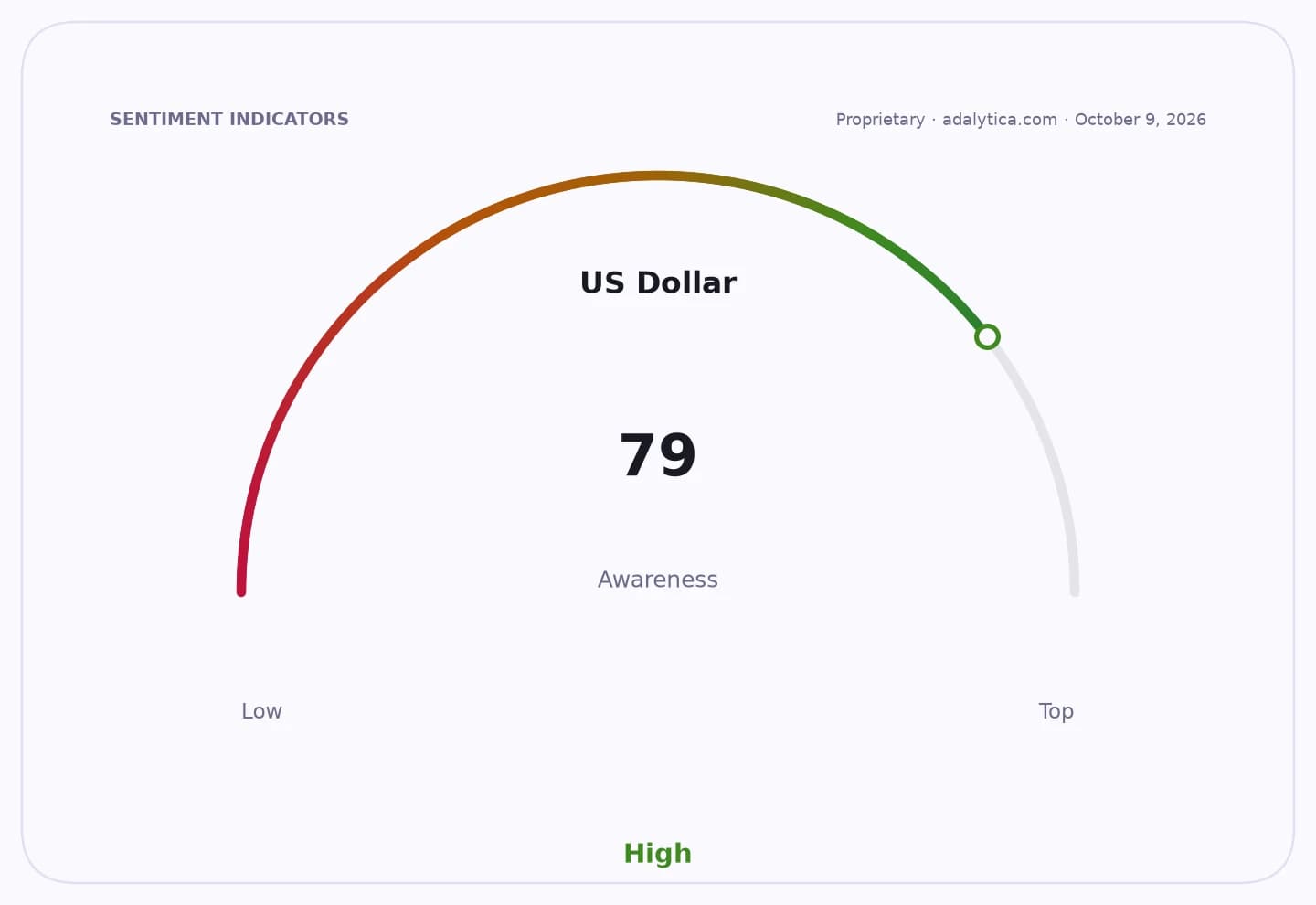
Sentiment IndicatorsⓘProprietary · adalytica.com · October 9, 2026
This is a snapshot — live sentiment, awareness and momentum for 130+ markets update continuously in the dashboard.Open AlphaPulse
The highest retail quote came from Abu Dhabi Islamic Bank at 52.40 pounds to buy and 52.50 pounds to sell, while Abu Dhabi Commercial Bank followed at 52.33 and 52.43. At the lower end, several lenders including the National Bank of Egypt and Banque Misr showed 52.27 to 52.37, leaving the day’s trading band narrow but still historically elevated.
For investors, the significance is straightforward: every sticky dollar quote keeps pressure on Egypt’s inflation outlook, raises the local-currency burden of imported goods and feeds risk premiums across Egyptian assets. It also reinforces the market’s focus on whether authorities can keep reserves, external funding and policy credibility aligned well enough to prevent another sharp move in the pound.
The broader picture is one of an economy still managing a fragile balance between currency stability and dollar scarcity. A calm day in bank screens is not the same as a lasting repricing of confidence. Until the market sees a sustained drop in dollar demand or a stronger inflow of hard currency, the pound’s ceiling is likely to remain under strain.
The investable takeaway is that Egypt-related assets remain highly sensitive to any shift in FX policy, reserve support or capital inflows. For now, the dollar’s hold above 52 pounds argues for caution on import-heavy businesses and continued attention to any beneficiary of a weaker pound, from exporters to companies with dollar revenues.
| Entity | Gains | Losses |
|---|---|---|
| Dollar | ▲Higher local pricing power | ▼None |
| Egyptian importers | ▲None | ▼Higher costs |
| Exporters with dollar revenue | ▲Stronger FX conversion | ▼None |
| Egyptian households | ▲None | ▼Purchasing power pressure |