Egypt’s parliament is pressing ahead with amendments to the Real Estate Property Law, a move that could reshape how property is priced, registered and enforced in one of the country’s most economically sensitive markets.
Egypt Parliament Amends Property Law Amid Pricing Scrutiny

The most important issue is not legislative housekeeping. It is whether lawmakers can tighten rules around property transactions enough to curb under-reporting of sale values, reduce disputes over ownership and seizures, and bring more legal certainty to a sector that sits at the intersection of household wealth, bank collateral and investment flows.
Sentiment IndicatorsⓘProprietary · adalytica.com · August 2, 2026
This is a snapshot — live sentiment, awareness and momentum for 130+ markets update continuously in the dashboard.Open AlphaPulse
That matters because real estate in Egypt is not just a retail market. It is a store of value for households facing inflation, a financing base for lenders, and a critical channel for domestic capital deployment. If notarized contracts can be used to declare prices far below actual transaction values, the result is lost tax revenue, distorted price discovery and weaker legal protection for both buyers and sellers. Investors typically price that uncertainty through higher risk premia, lower transaction volumes and slower institutional participation.
The amendment also lands as the broader property market remains under pressure from legal disputes over rent, inheritance deadlines, eviction procedures and company solvency. In that environment, clearer rules can support liquidity by reducing the probability that assets become trapped in litigation. But stricter enforcement can also be painful in the near term if it raises transaction costs or exposes past practices to challenge.
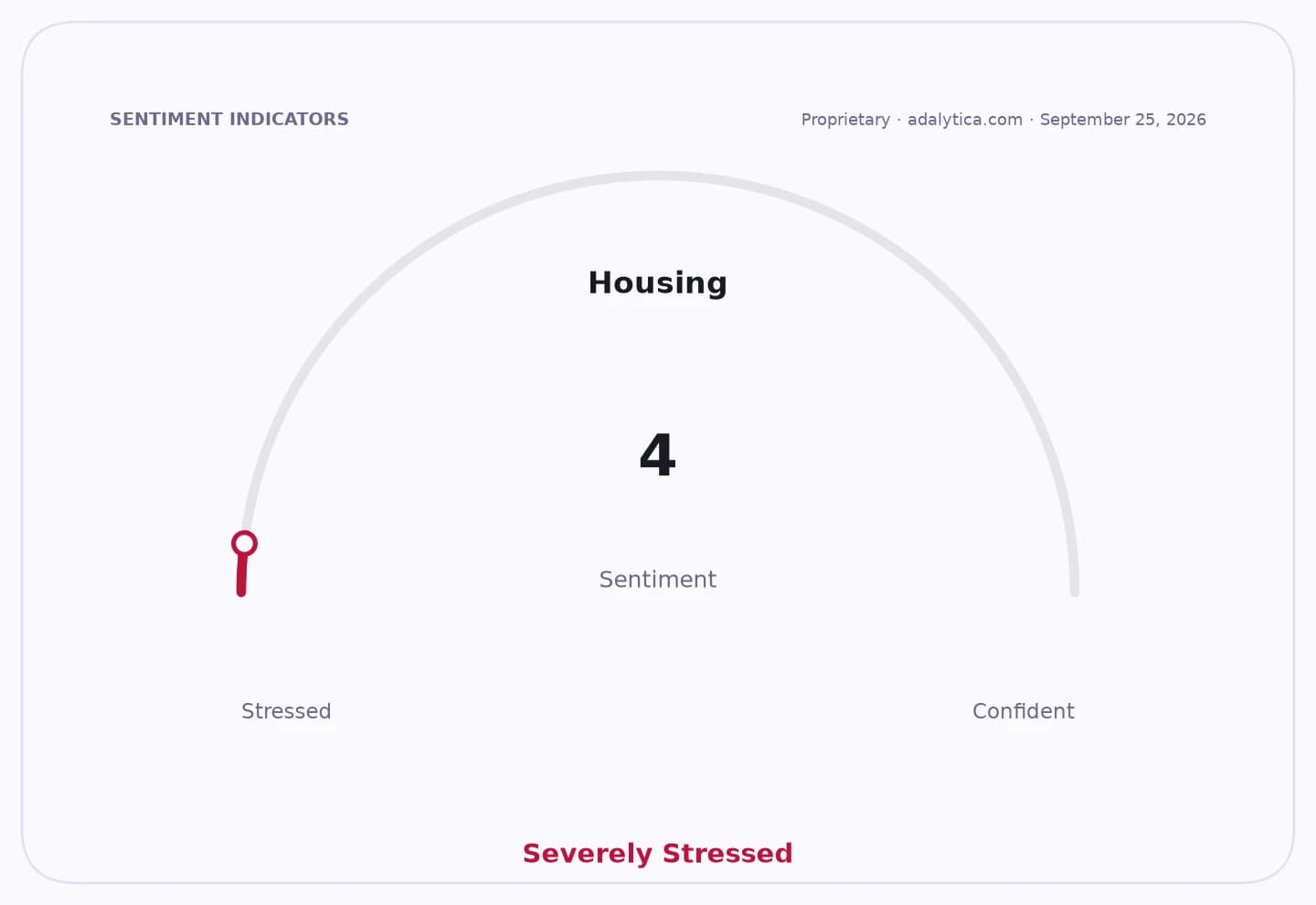
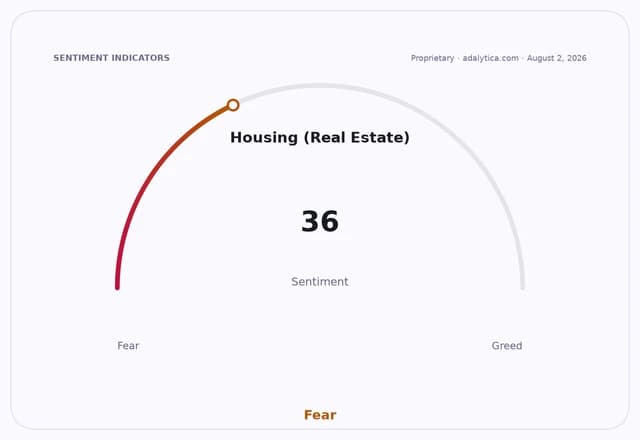
Market indicators suggest the sector is already fragile. The Adalytica Housing Fear & Greed Index for XHB sits at 36, in neutral territory but down sharply over the past week and month, while the housing and rent inflation gauge is in extreme fear. That combination points to caution around affordability and policy risk even as broader equity sentiment remains at extreme greed. The split is important: investors are willing to chase risk elsewhere, but housing-linked assets are not enjoying the same conviction.
Technical signals in U.S. homebuilder ETFs are also mixed. XHB has slipped to 103.69, roughly in line with its 50-day moving average and still below its 200-day average, suggesting the recent rebound has lost momentum. ITB has weakened further to 94.34, below both its 50-day and 200-day averages. Alexandria Real Estate Equities, while more of an office and life-sciences property play than a pure housing proxy, has also recovered only partially from a steep selloff and remains well below its longer-term average, underscoring how sensitive real estate equities remain to policy and rate risk.
The macro backdrop is not especially forgiving. The 10-year Treasury yield is near 4.66%-4.68%, a level that keeps financing costs elevated by historical standards and leaves little room for error in leveraged property markets. Higher yields tend to pressure valuations, especially where legal uncertainty already weighs on liquidity and exit assumptions.
The House debate, then, is really about whether Egypt is willing to use the legal system to formalize a market that has often operated with opaque pricing and uneven enforcement. A successful amendment could support better tax collection, cleaner title records and stronger investor confidence over time. But if the rules are seen as punitive or unevenly enforced, the likely result is the opposite: slower deal flow, more disputes and a wider gap between official and real market prices.
For investors, the key question is whether the changes improve transparency without choking activity. If lawmakers strike that balance, banks, developers and long-duration property holders could benefit from a more predictable operating environment. If not, the sector could remain stuck in a low-trust equilibrium where capital stays cautious and assets trade at a discount for legal risk as much as for fundamentals.
| Entity | Gains | Losses |
|---|---|---|
| Buyers and sellers with clear title | ▲Legal certainty | ▼Grey-market pricing |
| Banks and lenders | ▲Better collateral quality | ▼Higher dispute risk |
| Government/tax authorities | ▲Improved reporting | ▼Underdeclared transactions |
| Real estate investors | ▲More transparent market | ▼Near-term compliance costs |