Higher health insurance costs are set to hit EKU employees, and some workers may lose access altogether, adding another strain to household budgets just as coverage across the market is getting more expensive.
EKU employees face higher health insurance costs
That matters because health insurance is no longer a background expense. When premiums jump, employers either absorb the hit, pass it on through payroll deductions, or trim benefits. In practice, that means less take-home pay for workers and a larger labor-cost burden for the university, which can ripple through hiring, retention and wage negotiations.
The broader backdrop is not helping. State marketplace premiums are rising 14.1%, and overall premiums are projected to climb 20% to 30% in the near future, according to the data context. Employer health expenses are also forecast to grow 8% in 2026. For institutions like EKU, that turns benefits into a more serious budget line item, especially when employees are already facing a higher cost of living.
For investors, the story is a reminder that health-care inflation does not stay confined to insurers and hospitals. It touches every employer that offers coverage, from universities to manufacturers to retailers. That can be good for large managed-care firms and health insurers with pricing power, but it is usually a headwind for employers with tighter margins and for workers whose discretionary income gets squeezed.
The market angle is straightforward: rising premiums tend to support the economics of health insurers over the long run, even if they create public backlash. UnitedHealth Group, Elevance Health and Cigna have all seen the stock market respond sharply to expectations around pricing and medical costs, underscoring how sensitive the sector is to premium trends and utilization assumptions.
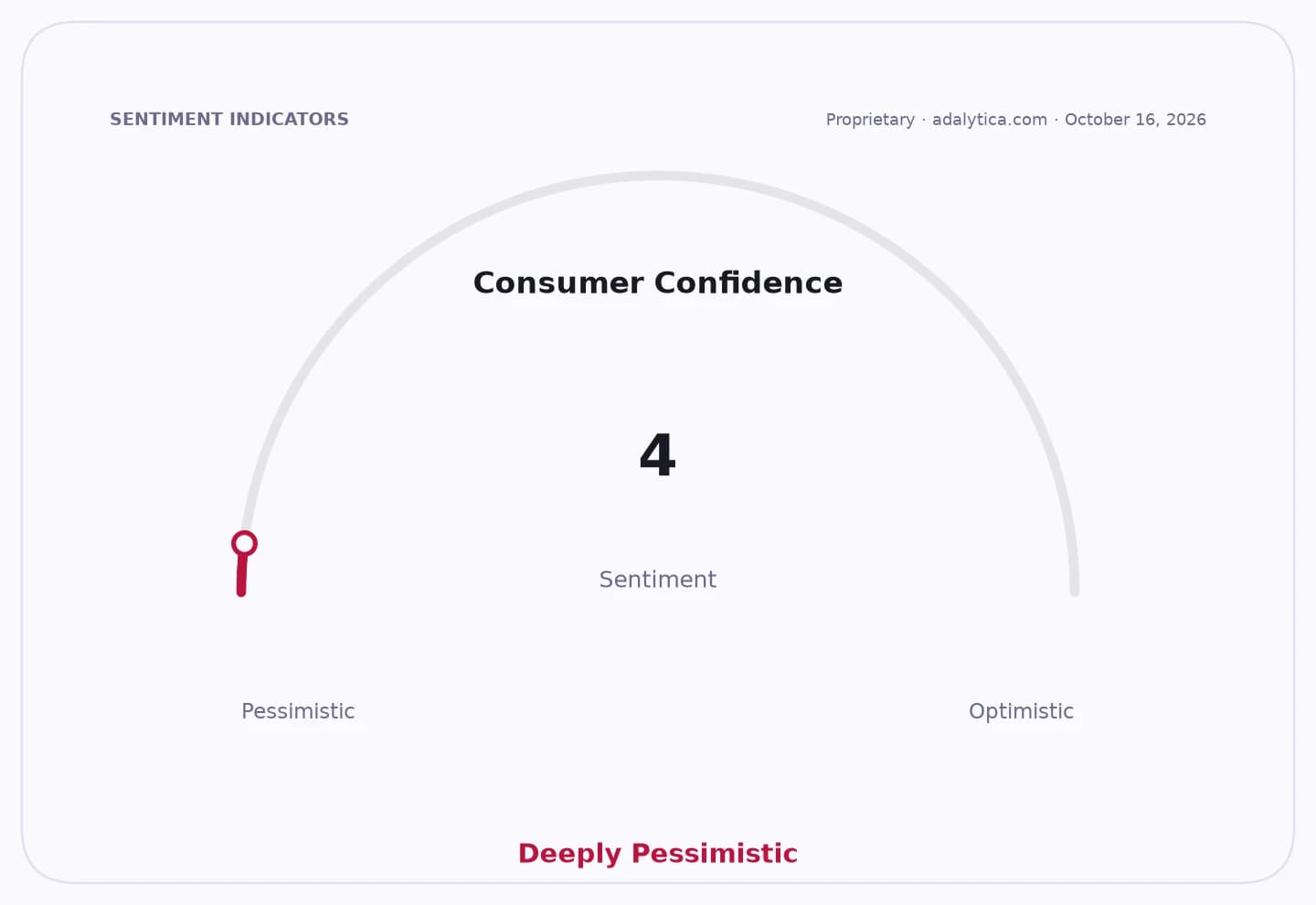
Adalytica’s consumer confidence recession sentiment gauge is flashing extreme fear, which fits the picture of households becoming more defensive as health costs climb. That does not make the trend good news for consumers, but it does reinforce why companies that can grow earnings through recurring premium revenue and disciplined underwriting remain attractive to long-term investors.
For now, the key takeaway is simple: higher health insurance rates are another sign that cost pressure is spreading through the economy, and investors should watch which businesses can raise prices, which can control claims and which are most exposed to rising benefits costs. In a world where coverage is getting pricier, resilience matters. Worth watching.
| Entity | Gains | Losses |
|---|---|---|
| Health insurers | ▲Higher premiums | ▼Customer backlash |
| Employers like EKU | ▲None | ▼Bigger benefit costs |
| Employees | ▲None | ▼Lower take-home pay |
| Long-term managed-care investors | ▲Pricing power | ▼Near-term volatility |