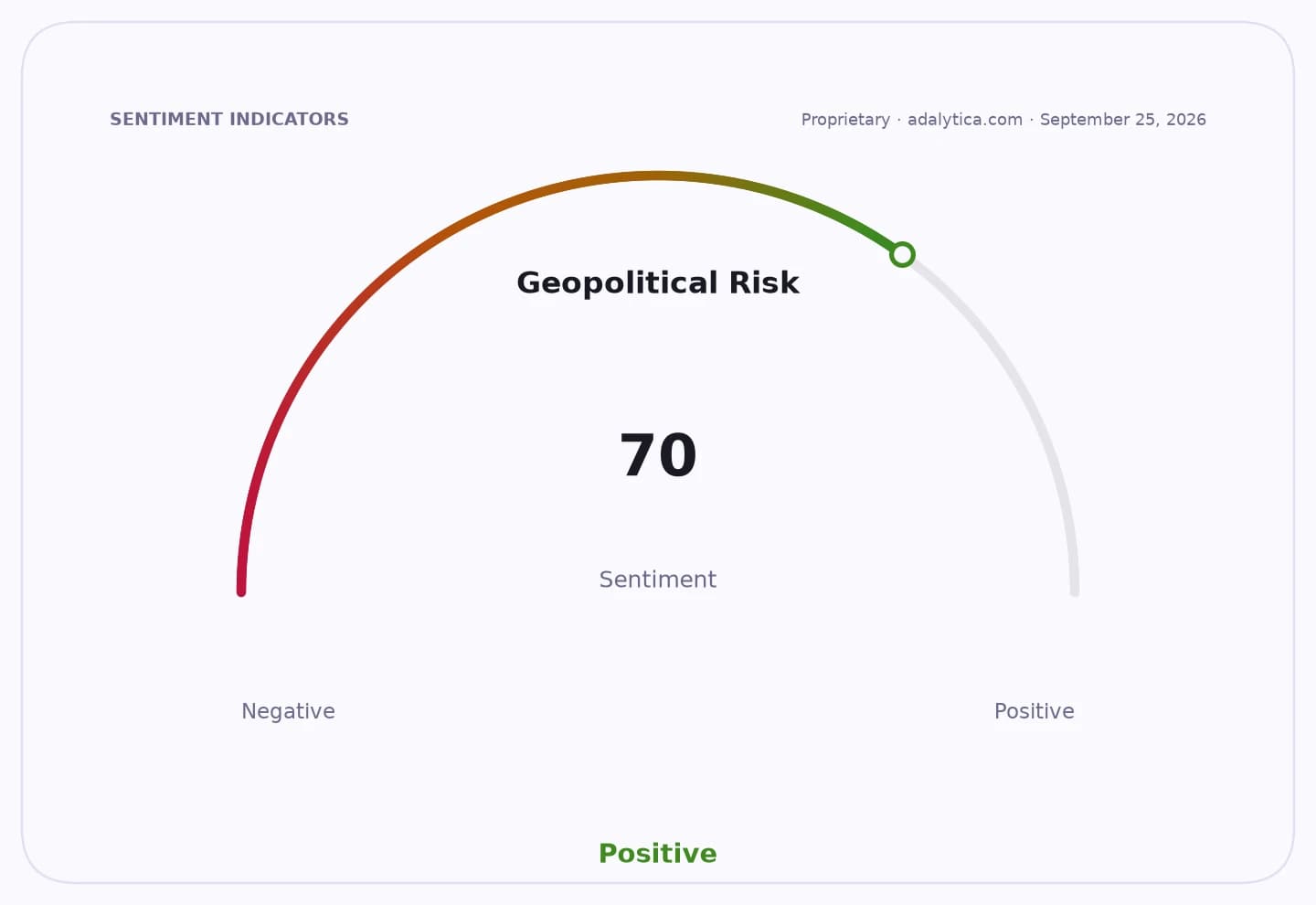
Easing geopolitical stress in the Middle East has pushed emerging-market currencies to a record and helped Asian equities recover, while keeping the dollar and oil from extending their recent surge.
Emerging-market currencies hit record as Middle East तनाव eases
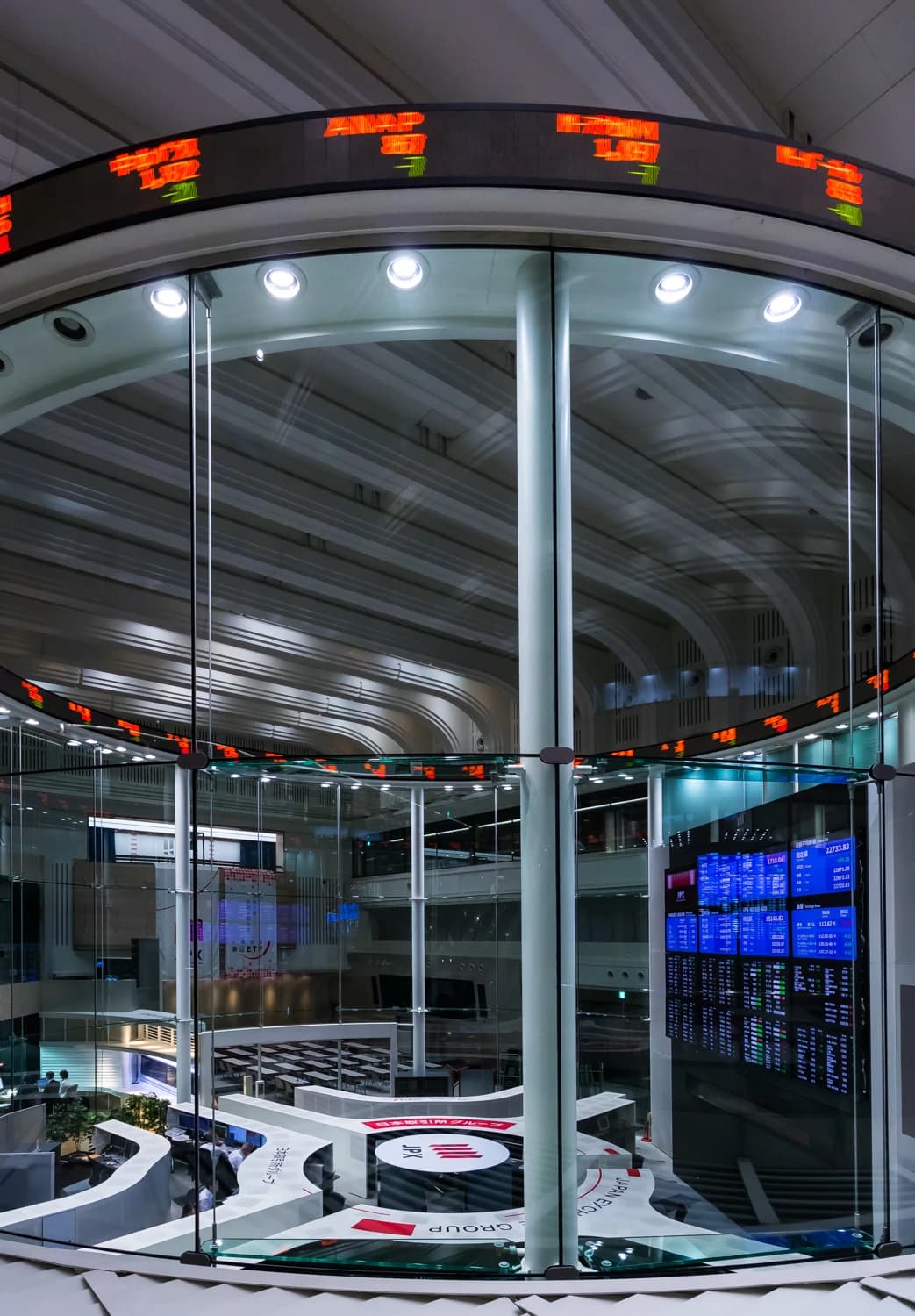
The move matters because it speaks to a broader shift in risk appetite: when investors expect fewer supply shocks, less inflation pressure and a lower chance of a regional escalation, they are more willing to rotate back into higher-yielding currencies and Asian risk assets. That dynamic is especially important for emerging markets, where cheaper financing conditions and a softer dollar can quickly ease pressure on balance sheets, imported inflation and capital flows.
Sentiment IndicatorsⓘProprietary · adalytica.com · August 5, 2026
This is a snapshot — live sentiment, awareness and momentum for 130+ markets update continuously in the dashboard.Open AlphaPulse

The clearest market expression of that turn is in the US dollar and oil. The dollar has been trading with extreme-greed readings in Adalytica’s trade-signal gauge, but the broader stability gauge has also jumped sharply, suggesting investors are leaning harder into the view that the worst of the geopolitical premium has faded. Brent-style crude remains far above pre-shock levels, but after recent swings the latest move lower in oil has removed some of the inflationary strain that had been hanging over importers across Asia.
That backdrop helped support the iShares MSCI Emerging Markets ETF, which has climbed back to 66.0 after a pullback earlier this summer. The fund remains close to its 50-day moving average, with its 200-day average still lower, showing the uptrend has not broken even after volatile trading. Technical indicators also show momentum recovering, with the RSI back above neutral and MACD improving, which suggests buyers are returning rather than simply covering shorts.
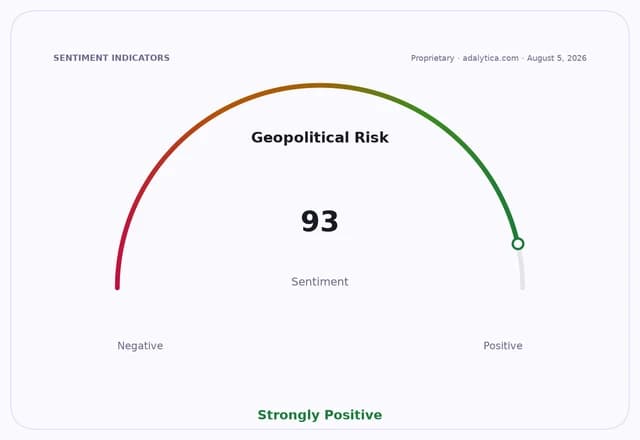
Geopolitical Risk vs CEWadalytica.com
Explore this data interactively — full history, time series and cross-market comparisons.Open AlphaPulse
The currency move is just as important for markets that are sensitive to external funding costs. A stronger emerging-market currency basket usually lowers the local-currency burden of dollar debt, improves imported purchasing power and gives central banks more room to avoid defensive tightening. That is particularly relevant in Asia, where equities often respond quickly to any sign that the dollar is no longer driving the session.
Asian stock exchanges also benefited from the same relief rally, though the gains are more a repricing of risk than a conviction call on growth. If tensions continue to ease, the trade should favor countries that import energy and rely on stable capital inflows. If the Middle East situation deteriorates again, those same markets could give back gains quickly, especially in higher-beta currencies and cyclicals.
The contrasting bull and bear cases are straightforward. Bulls see a classic de-escalation trade: lower oil, steadier inflation expectations and a weaker dollar could extend the rebound in emerging-market assets. Bears argue that the move is being driven more by headline relief than by a change in underlying growth fundamentals, leaving the rally vulnerable if safe-haven demand returns.
For investors, the key watchpoints are whether the stability in oil persists, whether the dollar retreats further and whether the emerging-market currency index can hold at record levels. If those conditions remain in place, Asian equities and EM assets could continue to outperform. If not, the rally may prove to be another short-lived response to geopolitics rather than the start of a more durable rotation.
| Entity | Gains | Losses |
|---|---|---|
| Emerging-market currencies | ▲Record highs | ▼Dollar-funded borrowers |
| Asian stock exchanges | ▲Risk-on inflows | ▼Safe-haven trades |
| Oil importers | ▲Lower input costs | ▼Energy producers |
| US dollar | ▲Safe-haven demand | ▼Carry trades |