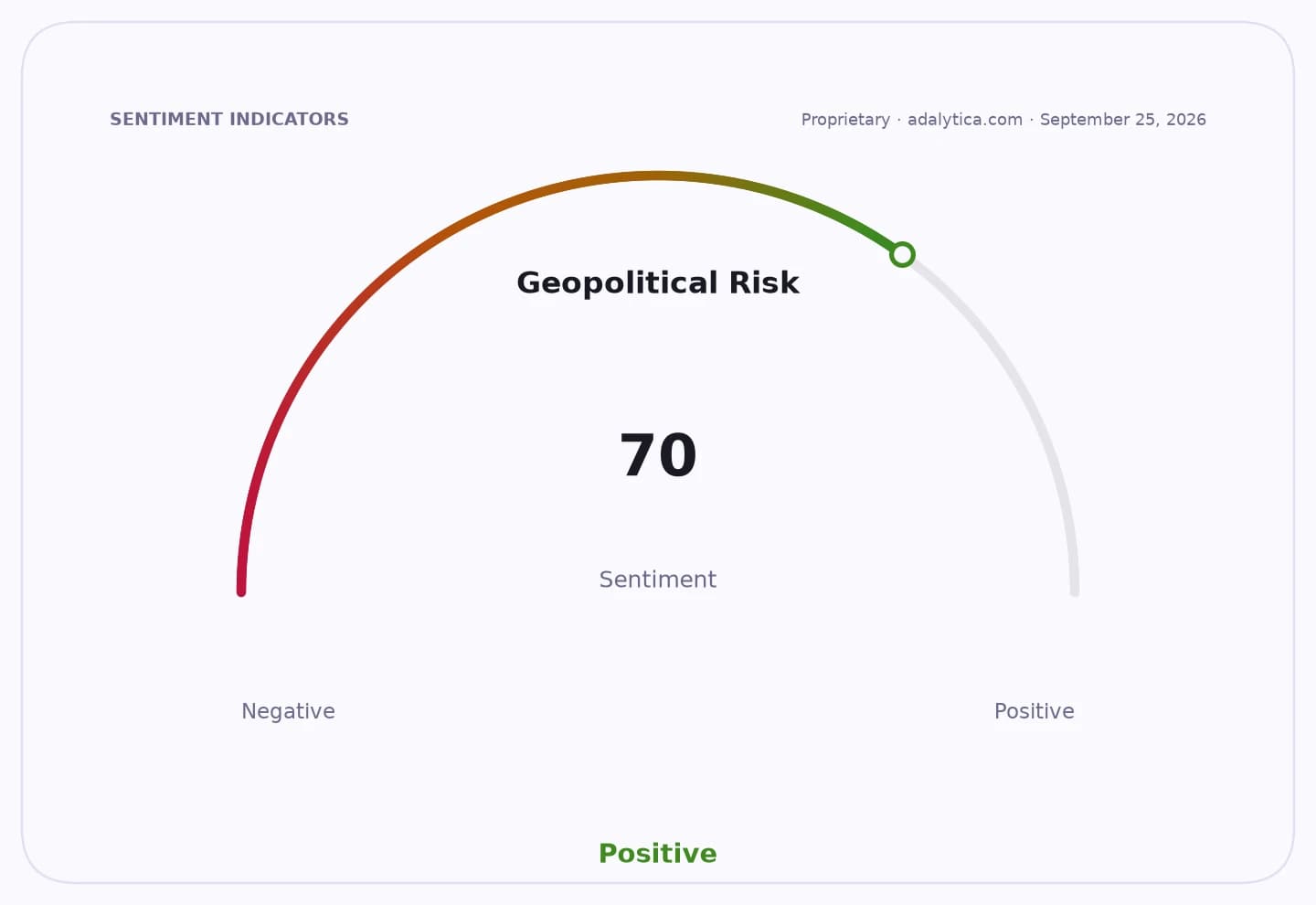
Successive shocks are forcing emerging markets to defend their currencies, market plumbing and policy credibility at the same time, with the US dollar flashing extreme greed and Chinese yuan sentiment collapsing to extreme fear.
Emerging markets under pressure as dollar sentiment hits 100
The combination matters because it tightens financial conditions well beyond the United States. A stronger dollar raises the cost of servicing hard-currency debt, pressures importers and commodity buyers, and can trigger outflows from riskier markets just as policy makers are trying to protect reserves and steady local funding markets. For investors, that backdrop usually favors the dollar, raises volatility across emerging-market FX and rates, and leaves the most externally funded economies vulnerable to abrupt repricing.
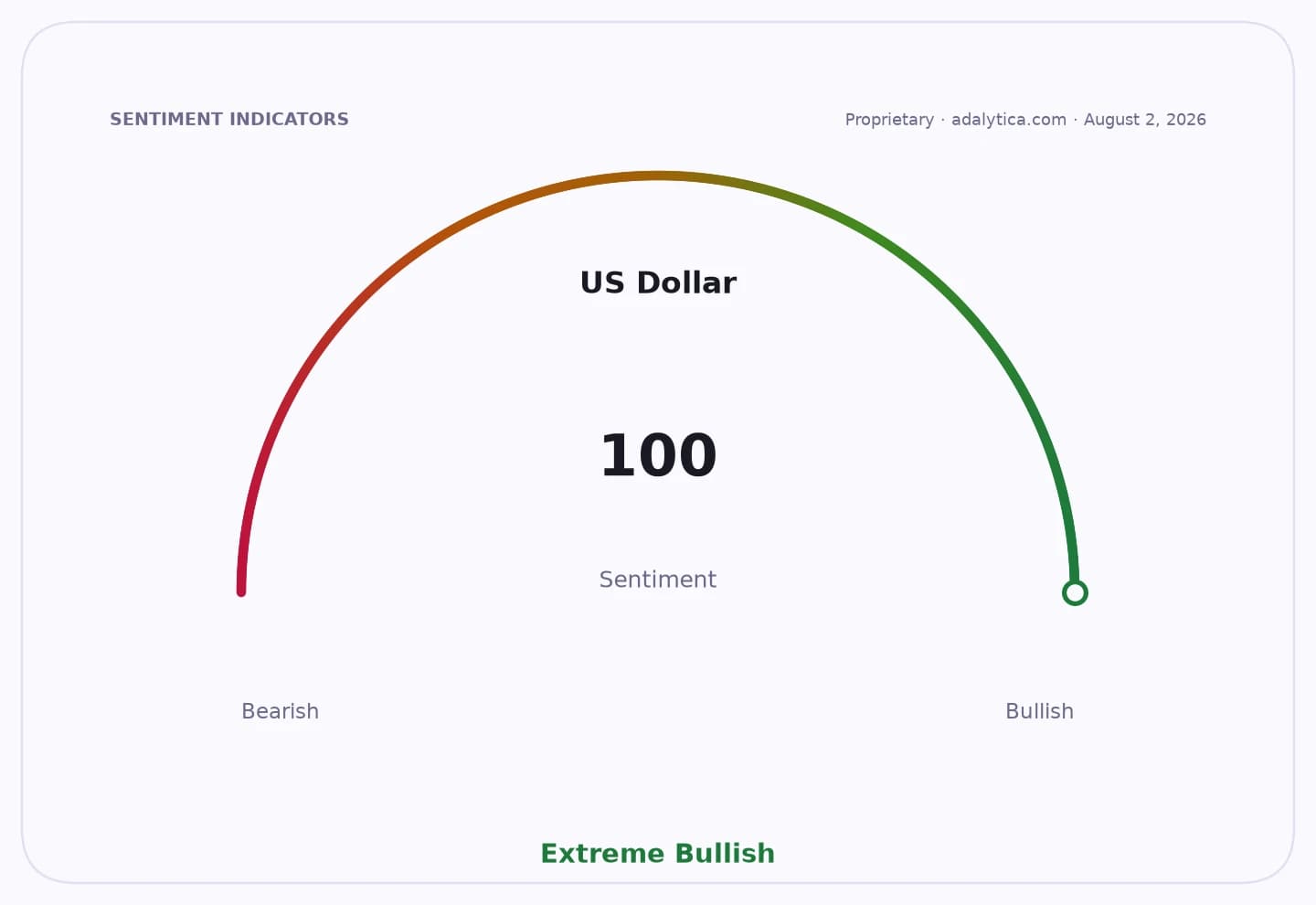
Sentiment IndicatorsⓘProprietary · adalytica.com · August 2, 2026
This is a snapshot — live sentiment, awareness and momentum for 130+ markets update continuously in the dashboard.Open AlphaPulse
The latest signals point to that stress building rather than easing. Adalytica’s US dollar trade snapshot shows sentiment at 100 and awareness at 99, both labeled extreme greed, while the Chinese yuan sits at sentiment 5, or extreme fear. The yuan signal has deteriorated sharply over the past month, even as China’s growth-target sentiment has slipped back to neutral, underscoring how quickly market confidence can turn when growth expectations and currency pressure collide.
That is showing up in asset prices. The iShares MSCI Emerging Markets ETF, EEM, has rebounded to 64.09 after dropping as low as 61.07 on July 29, but it remains below its 50-day moving average of 66.42 and its momentum readings are still soft, with RSI at 48.5 and MACD still negative. The iShares Core MSCI Emerging Markets ETF, VWO, has likewise recovered to 58.75 from 56.92, yet it is still under its 50-day average of 59.14 and its RSI is only 49.7. The Vanguard Emerging Markets Bond ETF, EMB, has held steadier at 94.66, but its recent drift below the 50-day average suggests investors are demanding a larger cushion before adding duration and sovereign risk.
Chinese Yuan — 30-day sentimentadalytica.com
Explore this data interactively — full history, time series and cross-market comparisons.Open AlphaPulse
The macro backdrop is unforgiving. The US federal funds rate is still around 3.63%-3.64%, and the 10-year Treasury yield is near 4.66%-4.68% — high enough to keep dollar assets attractive even without a fresh policy shock from the Federal Reserve. For emerging markets, that means less room to ease without risking capital flight. The problem is compounded when local currencies weaken, because central banks then face a trade-off between defending exchange rates and supporting domestic growth.
That is why the Bahrain and Libya developments matter beyond their local scope. Bahrain Clear Company’s updated rules are a reminder that some frontier and emerging-market authorities are still trying to strengthen market infrastructure and attract capital by improving transparency and settlement quality. Libya’s parallel-market dollar swings, by contrast, show how quickly currency instability can overwhelm informal markets when confidence is thin. Together they capture the two sides of the emerging-market story: policy buffers can help, but they are being tested by a global dollar squeeze and uneven domestic credibility.
For investors, the message is to separate countries with reserves, credible inflation management and deeper market institutions from those relying on administrative fixes or narrow FX buffers. If the dollar keeps rising and yuan stress persists, the winners are likely to be exporters with natural dollar revenues and markets with stronger external balances. The losers are importers, local-currency borrowers and frontier economies with limited policy room. The next catalyst is whether the dollar’s extreme positioning eases or whether renewed yuan weakness forces another round of defensive moves across emerging-market central banks.
| Entity | Gains | Losses |
|---|---|---|
| US dollar | ▲Safe-haven demand | ▼EM borrowers |
| Chinese yuan | ▲Exporters with hedges | ▼Mainland assets |
| EEM/VWO investors | ▲Selective dip buyers | ▼Broad EM longs |
| Frontier markets | ▲Regulators with reforms | ▼Weak-reserve economies |