Emerging-market stocks are headed for their worst week since the pandemic shock of 2020, after a sharp selloff in Asian technology shares and fresh pressure from higher-for-longer U.S. rates knocked the stuffing out of one of this year’s best-performing corners of global markets.
Emerging Markets Fall on Tech Selloff and Higher Yields
US Dollar
That matters because emerging markets are not falling in isolation. When investors dump Taiwan chips, Korean memory makers and broader EM ETFs at the same time, it usually means the market is pricing a more hostile mix for risk assets: weaker appetite for artificial intelligence trades, tighter dollar funding conditions and less room for central banks in developing economies to ease.
Sentiment Indicators
Taiwan’s benchmark plunged 6% and was on track for its steepest weekly loss since 1990, while South Korea’s Kospi fell more than 5%. Across Europe’s emerging markets, Poland’s WIG20 dropped almost 3% and Budapest’s market lost 2.3%. The MSCI index for emerging-market equities slid 3% and is now on course to give back much of its year-to-date gain after being nearly 29% higher in mid-June.
The selling tells a simple story: this year’s EM rally has been built on a narrow set of winners, especially Asia’s technology names tied to the AI supply chain. When that trade wobbles, the whole asset class feels it. Taiwan’s chip stocks have been especially vulnerable, while South Korean heavyweights Samsung Electronics and SK Hynix also came under heavy pressure. In Japan, SoftBank and other AI-linked names were caught in the downdraft as investors rotated out of the sector.
DGS10 vs DGS2 — macro contextadalytica.com
Explore this data interactively — full history, time series and cross-market comparisons.
The macro backdrop is making that rotation more painful. U.S. Treasury yields have been climbing, with the 10-year note near 5.0% and the 2-year around 4.8%, reinforcing the case for a stronger dollar and tighter global financial conditions. That is bad news for emerging markets because it raises the cost of capital, dents appetite for currencies and makes it harder for foreign investors to keep chasing higher-beta assets.
For investors, the key question is whether this is a healthy consolidation or the start of something deeper. The answer will depend on two things: whether the AI boom can regain its footing and whether U.S. policy expectations stop tightening. For now, neither is helping. The 50-day and 200-day moving averages on major EM ETFs are being tested, and readings from conventional technical indicators like RSI and MACD point to an asset class that has lost momentum quickly.
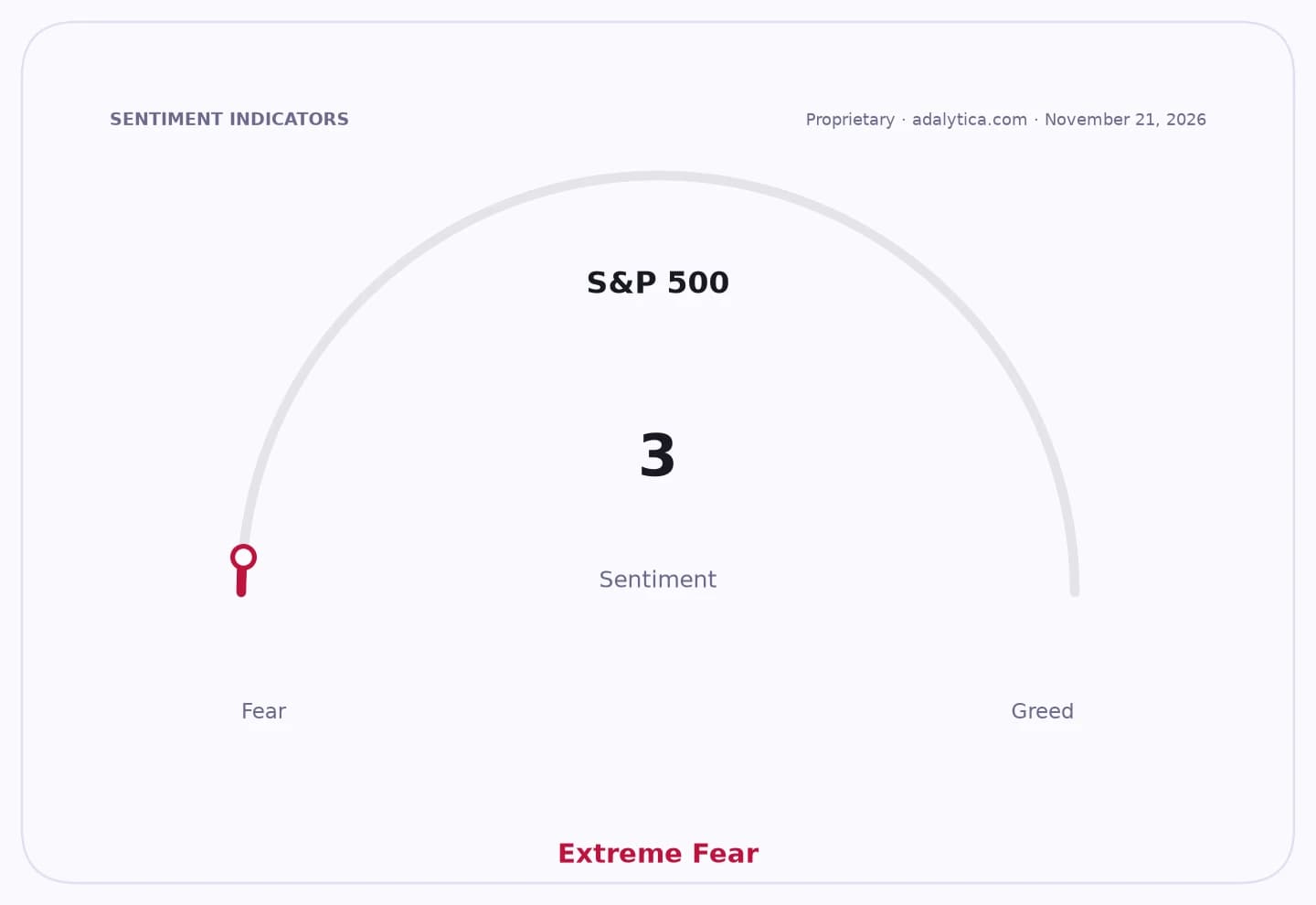
There is also a currency angle. A stronger dollar typically squeezes countries and companies with dollar funding needs, while weaker local currencies can force central banks to stay cautious. Adalytica’s trade signals for the U.S. dollar show extreme fear, but the broader market action says investors are still treating the greenback as a haven whenever equities wobble.
The important long-term lesson for investors is that emerging markets remain cyclical, not broken. The asset class can still benefit from secular growth, industrial upgrading and any broadening in AI spending beyond a handful of megacaps. But in the near term, the market is reminding investors that concentration risk cuts both ways: when the leadership is narrow, reversals can be brutal.
For patient investors, that argues for discipline rather than panic. Broad diversification across countries, sectors and styles matters more than trying to catch every turn in a volatile EM tape. This week’s drawdown may look ugly, but for long-term portfolios it is also a reminder to watch for better entry points rather than chase the rally after it has already run. Worth watching, not fleeing.
| Entity | Gains | Losses |
|---|---|---|
| U.S. dollar | ▲Safe-haven demand | ▼EM currencies |
| EM tech exporters | ▲Long-term AI demand | ▼Near-term valuation multiples |
| Bond markets | ▲Flight-to-safety inflows | ▼Equity allocators |
| Patient investors | ▲Better entry points | ▼Momentum traders |