The market is treating the latest escalation in the Iran conflict as a risk-off shock, but JPMorgan is making a more important point: geopolitically driven pullbacks in stocks are often the best entry points for investors who want exposure to the sectors most likely to benefit from sustained higher oil prices and heavier defense spending.
Geopolitical Risk Favors Energy and Defense Stocks

That matters because this is no longer just a headline-driven flare-up. U.S. strikes on Iran, Tehran’s retaliation in Syria and Kuwait, and the rising threat of a longer war of attrition have pushed the market toward a classic inflation-and-instability trade. JPMorgan’s message is that investors should look through the fear and focus on where capital flows next: into energy, defense and other hard-asset businesses that gain when geopolitical risk lifts commodity prices and forces governments to spend more on security.
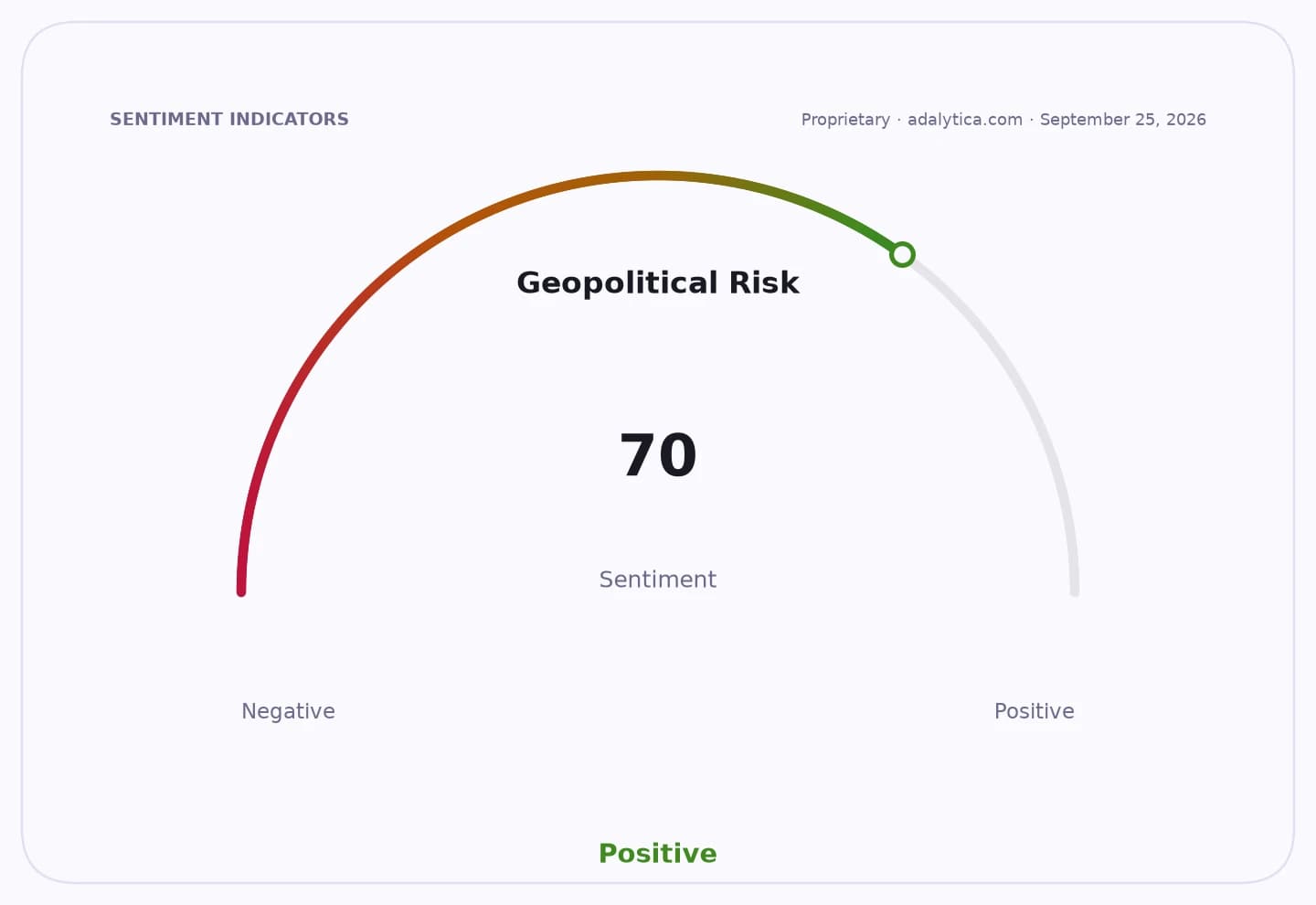
Sentiment IndicatorsⓘProprietary · adalytica.com · July 20, 2026
This is a snapshot — live sentiment, awareness and momentum for 130+ markets update continuously in the dashboard.Open AlphaPulse

Oil is already signaling the risk. WTI has jumped from the low-70s to nearly $80 a barrel in just days, a move that can feed directly into inflation expectations, corporate margins and central bank decision-making if the conflict keeps widening. The 10-year Treasury yield has stayed elevated around 4.56%, a reminder that markets are not pricing a clean return to calm. That combination is the backdrop JPMorgan is effectively buying into: higher strategic commodity risk, not a one-off spike.
The equity tape is starting to reflect that thesis. XLE, the Energy Select Sector SPDR, has climbed to 57.68, above its 50-day moving average of 56.27, with RSI readings at 72.5 and bullish momentum building after a sharp rebound from June weakness. Exxon Mobil and Chevron are also acting like stocks with a geopolitical premium again. Exxon closed at 147.36, above its 50-day average of 145.86, while Chevron ended at 187.38, well above its 50-day average of 181.56. Those are not just defensive trades; they are leveraged claims on a market that is underestimating how sticky Middle East risk can become.
For investors, the opportunity is bigger than a short-term oil trade. If the conflict stays contained but unresolved, energy producers and pipeline owners can keep extracting a higher margin on every barrel sold. If the situation escalates further, defense contractors, cybersecurity firms and military suppliers pick up a second tailwind as Washington and allies accelerate procurement. Either way, the losers are the same: oil importers, industrials with thin margins and duration-sensitive growth stocks that struggle when higher energy prices and a firmer dollar squeeze multiples.
That is why JPMorgan’s call matters. The bank is not simply saying “buy the dip”; it is saying the dip may be the market’s cheapest chance to position for a world where geopolitical fragmentation keeps lifting the value of energy security, strategic reserves and military readiness. In a market gripped by fear — Adalytica’s S&P 500 trade signal shows sentiment in fear territory — the best asymmetric setup may be in the stocks tied to real assets and national security. If you want to own the next leg of this cycle, I believe you should be looking at energy leaders, midstream infrastructure and defense names before the consensus fully catches up.
| Entity | Gains | Losses |
|---|---|---|
| Energy stocks | ▲Higher oil prices | ▼Demand slowdown risk |
| Defense contractors | ▲Bigger military budgets | ▼Peace dividend |
| Oil importers | ▲None | ▼Higher input costs |
| Growth stocks | ▲Safe-haven bid only | ▼Higher rates, lower multiples |