Electricity demand is forcing the world to run on every available fuel, and that is why coal production is climbing even as renewable energy keeps expanding. The market’s mistake is treating this as a simple fossil-fuel versus clean-energy contest; in reality, it is an energy-security race shaped by geopolitics, grid reliability and the sheer scale of power needed for industry, AI and electrification.
Energy Security Keeps Coal Relevant
Crude at about $85 a barrel and a 10-year U.S. Treasury yield above 4.6% underscore the macro backdrop: energy remains expensive to replace, and capital is still costly. That matters because higher financing costs do not kill power demand, but they do change which projects get built, which fuels get used and which companies can fund growth. In that environment, coal does not disappear. It becomes the backup valve for systems that cannot afford blackouts.
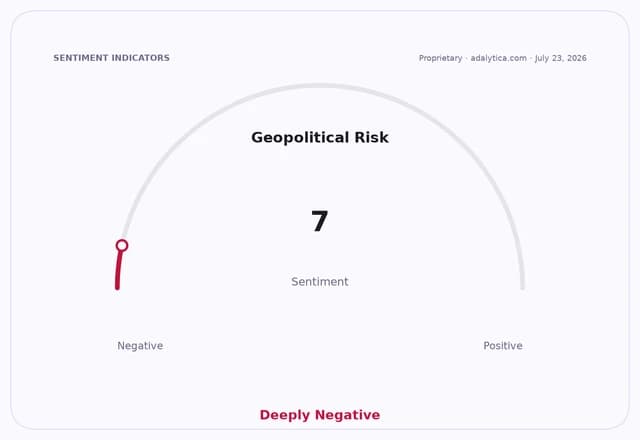
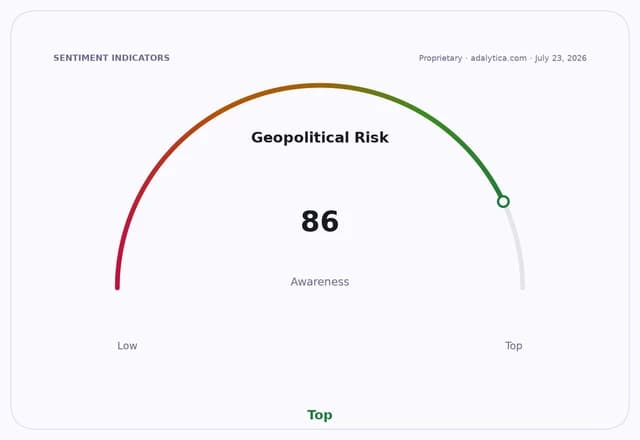
Sentiment IndicatorsⓘProprietary · adalytica.com · July 23, 2026
This is a snapshot — live sentiment, awareness and momentum for 130+ markets update continuously in the dashboard.Open AlphaPulse
That is exactly what the latest global signals point to. The IEA has highlighted rising coal-fired generation even as renewables continue to add capacity, while India is keeping coal stocks adequate and Indonesia’s PLN has locked in 152 million tons of coal supply to meet thermal needs. Add the Middle East conflict and the result is a familiar pattern: when supply chains tighten and grid demand rises, governments reach for dispatchable power first. Clean-energy capacity can grow at the same time, but it does not yet fully replace baseload.
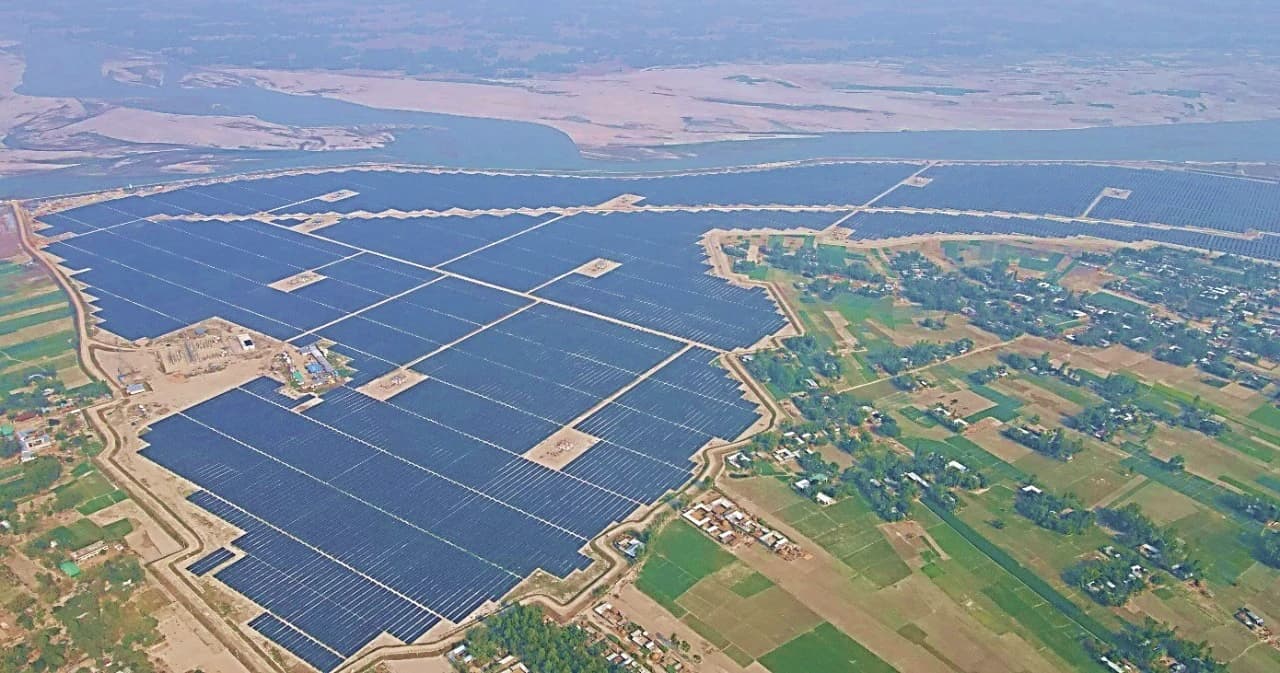
For investors, that creates a two-track trade. The secular winners are not only the obvious solar and wind developers, but the toll-road businesses of the energy transition: equipment makers, grid operators, storage, transmission and domestic manufacturers that get paid as demand rises regardless of the fuel mix. First Solar is a clear beneficiary of utility-scale solar demand and domestic manufacturing onshoring. On the other side, coal producers such as Peabody Energy remain relevant longer than consensus expects when utilities and state buyers prioritize reliability over purity.
Peabody’s own trading pattern reflects that tension. The stock has been volatile and remains below its 200-day moving average, but it has also shown repeated rebounds as investors rotate back into energy-security names. That is often what a transition inflection looks like: not a straight line higher, but a market that refuses to fully price in the persistence of old fuels.
The deeper thesis is that the world is entering an era of simultaneous buildout and redundancy. Renewables are winning the capacity race, but coal is winning enough of the reliability race to stay essential in many markets. That is bullish for anything tied to power demand, grid stability and domestic energy supply, and it argues for owning both the transition enablers and the legacy fuel providers that still anchor the system.
If you want the asymmetric opportunity, look beyond the headline debate. The best-positioned investors will own the companies that sell power certainty, not just clean-energy purity.
| Entity | Gains | Losses |
|---|---|---|
| Coal producers | ▲Higher utilization, pricing support | ▼Long-term decarbonization pressure |
| Renewable developers | ▲More capacity demand, policy support | ▼Grid bottlenecks, higher financing costs |
| Grid and equipment suppliers | ▲Spending on reliability and transmission | ▼N/A |
| Utilities and governments | ▲Energy security, fuel diversification | ▼Higher system complexity and capex |




