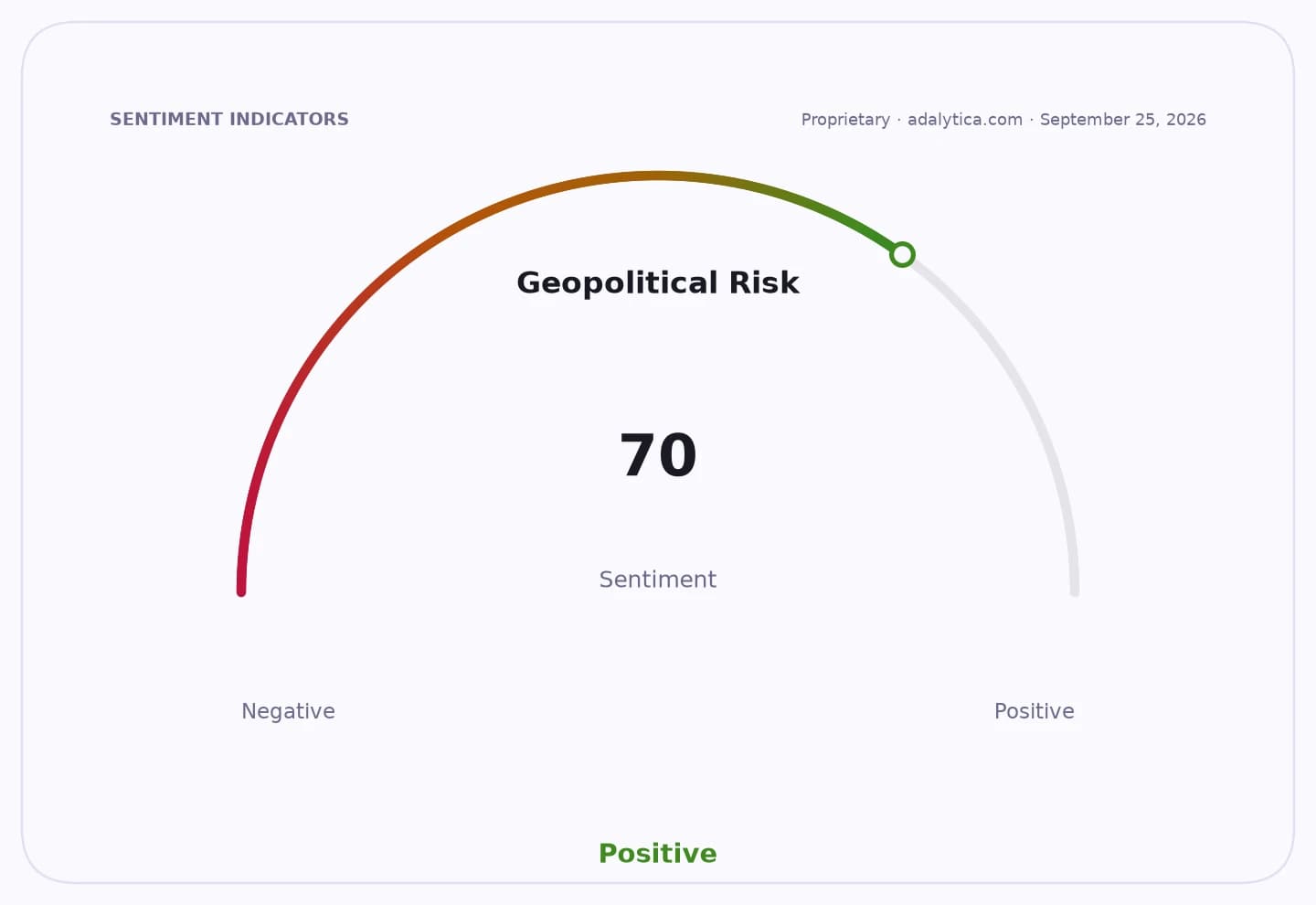
Energy stocks are breaking free from crude, and that matters because it suggests investors are starting to price in something bigger than the next move in oil: stronger sector earnings, a firmer macro backdrop and a market willing to pay up for cash flow even if commodity volatility stays elevated.
Energy Stocks Decouple From Crude Rally

The clearest signal is in the Energy Select Sector SPDR Fund, which has climbed to 57.68, up from 45.00 in mid-November and far above its 50-day moving average of 56.27. It also sits well above its 200-day moving average of 51.25, a classic sign that the longer-term trend remains intact. Momentum is still positive too, with RSI at 72.5 and MACD back above its signal line, even after a sharp run-up. In plain English, the market is saying energy shares can keep outperforming even if oil itself pauses.
Sentiment IndicatorsⓘProprietary · adalytica.com · July 18, 2026
This is a snapshot — live sentiment, awareness and momentum for 130+ markets update continuously in the dashboard.Open AlphaPulse
That is the key investment message for the next one to two quarters. The old trade was simple: buy energy when crude spikes, sell when crude rolls over. The new trade is more nuanced. Investors are beginning to treat energy equities less like a direct oil proxy and more like a leveraged claim on discipline, dividends and capital returns. That is why the stock response can override the oil move, at least for a stretch. If companies are reporting stronger results, free cash flow can support the group even while the commodity remains choppy.
The move is visible across the broader complex. The SPDR S&P Oil & Gas Exploration & Production ETF has surged to 170.18 from 121.97 in October and remains comfortably above both its 50-day and 200-day moving averages. The industrials ETF is also firm at 179.41, underscoring the broader market’s preference for cyclical exposure tied to real-economy demand and capex rather than just rate-sensitive growth names. Meanwhile, the S&P 500 is steady and the dollar’s trade signals remain neutral, suggesting this is not a panic bid for commodities so much as a selective re-rating of cash-generative sectors.
The macro setup still helps. Geopolitical tension around the Strait of Hormuz keeps a risk premium in crude, while recent commodity strength has pushed the broader materials and energy tape higher. At the same time, mixed U.S. inflation and production data reinforce the idea that the Fed is not dealing with a clean disinflationary glide path. That combination matters for investors because it supports upstream pricing power, keeps energy cash flows resilient and makes inflation hedges more attractive inside equity portfolios.
What the market appears to be missing is that this is not just an oil call; it is a capital-allocation call. If crude stays firm, the group benefits. If crude cools but earnings stay strong, the stocks can still work. That asymmetry is why energy remains one of the more compelling places to hide and compound in a market still whipsawed by AI volatility, supply shocks and geopolitical risk.
My thesis is simple: stay overweight energy equities, but favor the stocks and ETFs with the strongest balance sheets and buyback power rather than chasing the commodity itself. XLE and XOP both remain in clear uptrends, and as long as results keep confirming the story, investors may keep rewarding the sector even if oil pauses for breath.
| Entity | Gains | Losses |
|---|---|---|
| Energy stocks | ▲Higher multiples, cash flow rerating | ▼Less sensitive to spot oil dips |
| Oil producers | ▲Stronger earnings and buybacks | ▼Margin pressure if crude cools |
| Crude oil traders | ▲Volatility premiums | ▼Directional conviction gets crowded out |
| Consumers/importers | ▲— | ▼Higher input costs and fuel pressure |