Ethereum is trying to get in front of one of the most important long-term risks in digital assets: quantum computers that could one day break today’s cryptography. That matters because the second-largest blockchain cannot afford to wait until the threat is obvious in real time; by then, the cost of protecting wallets, validators and transaction data could be far higher.
Ethereum targets post-quantum upgrade by 2028

At Devcon 8 in Mumbai, Ethereum Foundation researcher Justin Drake said the network may be able to finish a full post-quantum transition by December 2028, a year earlier than the foundation’s current official target of December 2029. The plan is still tentative, but the message is clear: Ethereum wants to move sooner, not later, to preserve trust in the network’s core security model.
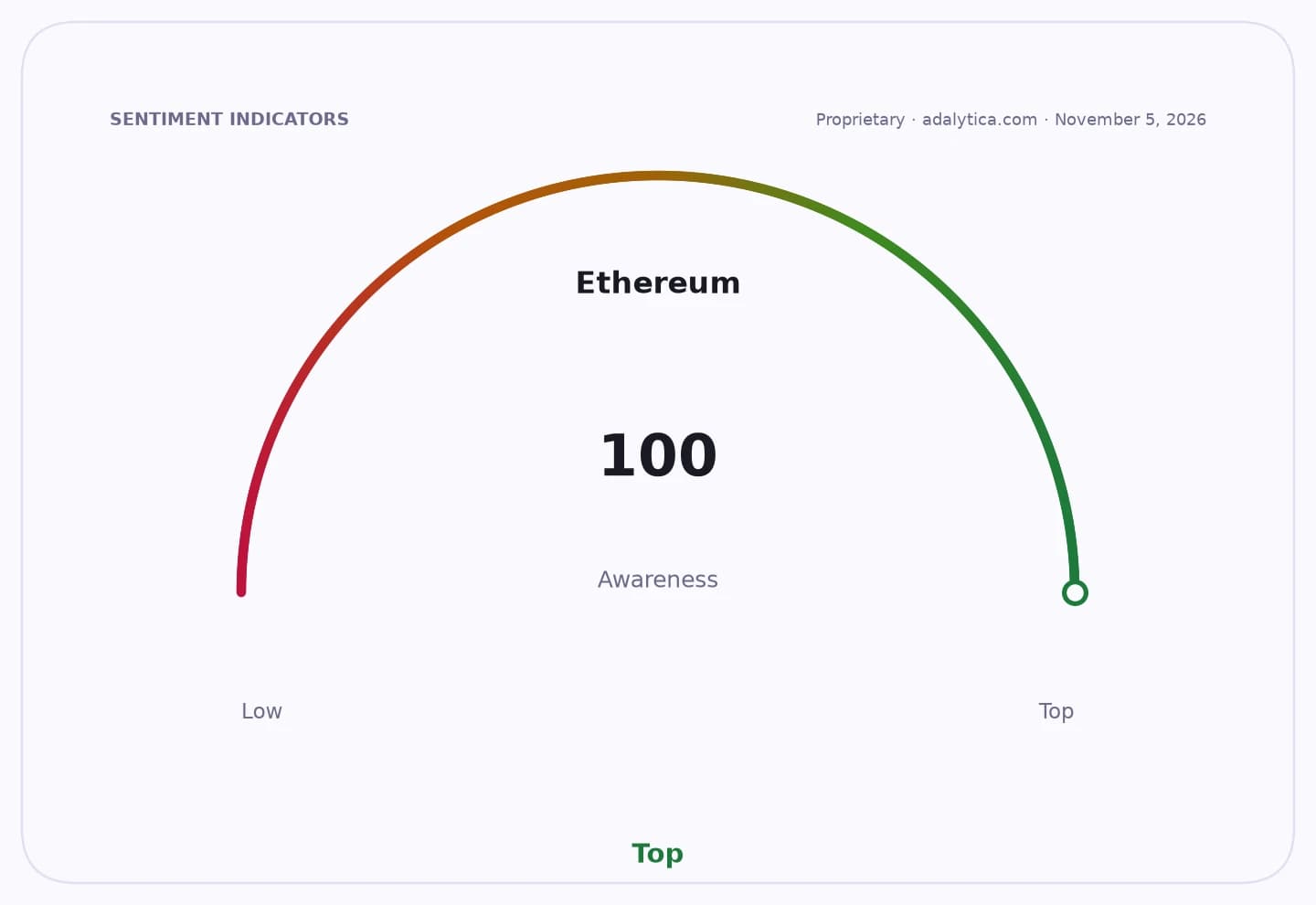
Sentiment Indicators
For investors, this is less about a near-term price catalyst for ETH and more about the durability of the ecosystem. Ethereum’s security rests in part on elliptic-curve cryptography, which future quantum machines could theoretically undermine using Shor’s algorithm. If that ever became practical, attackers could potentially derive private keys from public ones and sign unauthorized transactions. That is not a current threat, but it is the kind of structural risk that long-term holders should take seriously.
The upgrade would be broad, touching Ethereum’s execution layer, consensus layer and data layer. According to the foundation’s roadmap, the network would likely need three major upgrades over the next 24 months, plus new tools to help users migrate assets into wallets that support new signature standards. One possible replacement is a hash-based system such as leanXMSS, with leanVM designed to help the network handle the new cryptography without overwhelming performance.
That balance between security, speed and decentralization is the real investment story here. Ethereum cannot simply bolt on stronger math if it makes the network slower, heavier or more expensive to use. That is why this is a multi-year infrastructure project rather than a quick patch. It also explains why exchanges, wallet providers, staking operators and custodians could all face work and cost around the migration.
There is also a competitive angle. Other blockchain builders are already thinking along the same lines, and Ethereum does not want to be caught behind the curve on security. The fact that industry figures such as StarkWare’s Eli Ben-Sasson have already warned that a 2029 timetable may be too slow shows that the race is not just theoretical. In crypto, security leadership can matter as much as throughput or fees.
For now, the market should not read this as an immediate bullish signal for ETH. Even the source material says the accelerated schedule is not a direct reason to expect a higher token price. But over a three- to five-year horizon, the willingness to tackle quantum risk early is the kind of discipline that can strengthen a platform’s moat and keep institutional capital comfortable with it.
Ethereum still has to prove it can deliver the upgrades on time, and the foundation plans to reassess the schedule in January 2027. But if you are a long-term investor in the network, the key takeaway is simple: security upgrades like this are how a major blockchain earns the right to last. Worth watching, and worth holding with patience.
| Entity | Gains | Losses |
|---|---|---|
| Ethereum holders | ▲stronger long-term security | ▼near-term upgrade complexity |
| Ethereum Foundation | ▲credibility on risk management | ▼execution pressure |
| Wallets, exchanges, custodians | ▲clearer migration roadmap | ▼higher technical and compliance costs |
| Quantum-crypto competitors | ▲more demand for their tools | ▼slower adoption if Ethereum leads |