Ethiopia’s push to deepen economic ties with China matters because Beijing has become one of Addis Ababa’s most important sources of trade, capital and development finance at a time when emerging markets are under pressure to attract external funding and new export markets.
Ethiopia-China Trade and Financing Ties Deepen
The relationship is increasingly about economic resilience, not diplomacy alone. China is now among Ethiopia’s largest trading partners and a major provider of investment and assistance, giving Addis Ababa access to infrastructure financing, industrial know-how and a market that can absorb more Ethiopian exports if the relationship is translated into production and logistics gains.
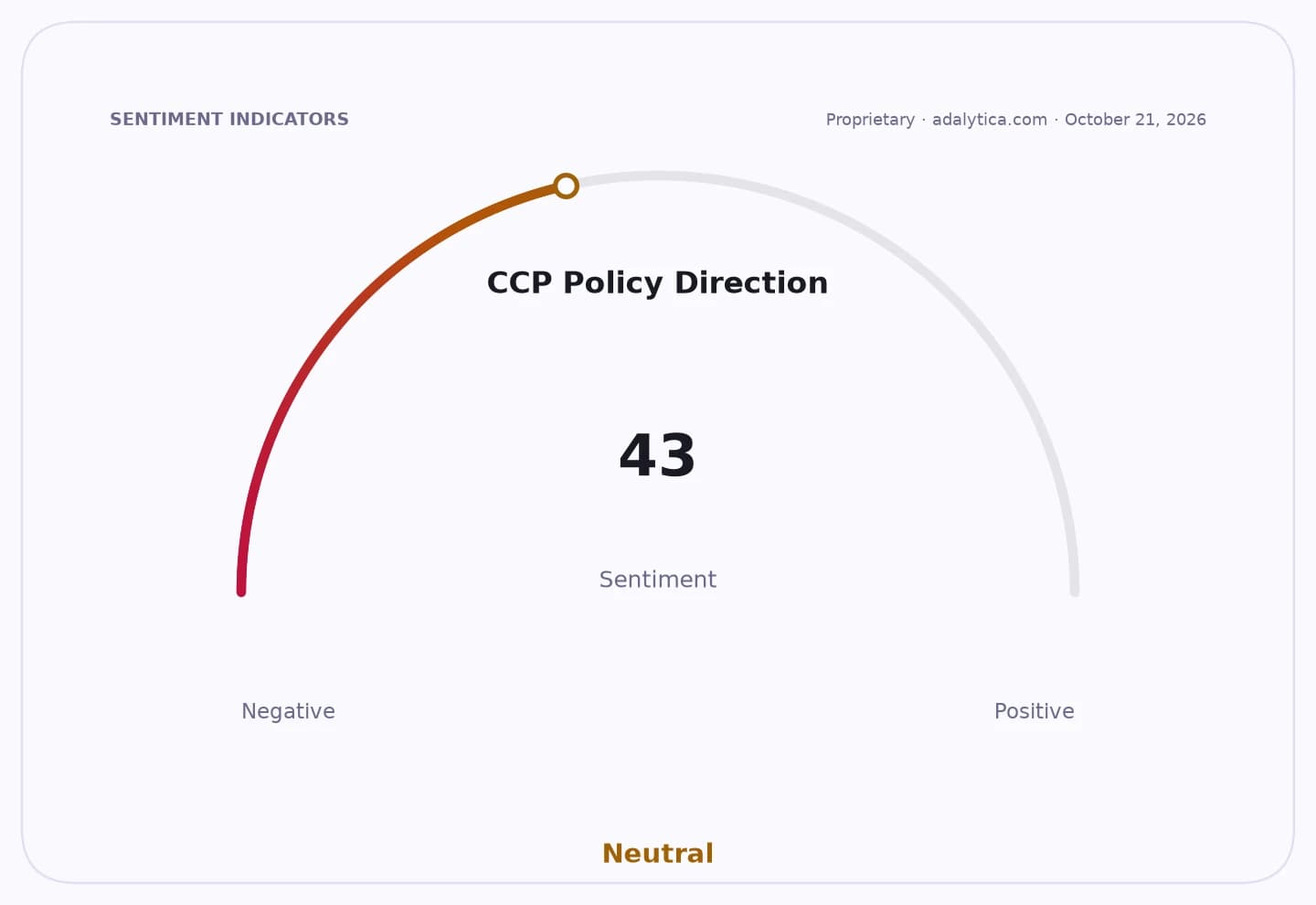
Sentiment IndicatorsⓘProprietary · adalytica.com · October 21, 2026
This is a snapshot — live sentiment, awareness and momentum for 130+ markets update continuously in the dashboard.Open AlphaPulse
That makes the bilateral corridor strategically important for both sides. Ethiopia, one of Africa’s fastest-growing but still capital-constrained economies, needs long-dated financing and industrial partners to support manufacturing, transport and energy development. China, meanwhile, has an interest in preserving a foothold in East Africa’s second-most populous country and in sustaining demand for its companies, equipment and construction services as its own export machine faces greater scrutiny abroad. Beijing’s trade surplus has been surging globally, and the pressure to find politically durable markets is rising.
For investors, the implication is that stronger Ethio-China collaboration can support sectors tied to infrastructure, telecoms, logistics and industrial parks, while also influencing the outlook for Ethiopia’s sovereign funding needs and currency stability. The tie-up is also relevant to Chinese lenders, contractors and exporters that rely on overseas projects to sustain earnings growth as domestic demand slows.
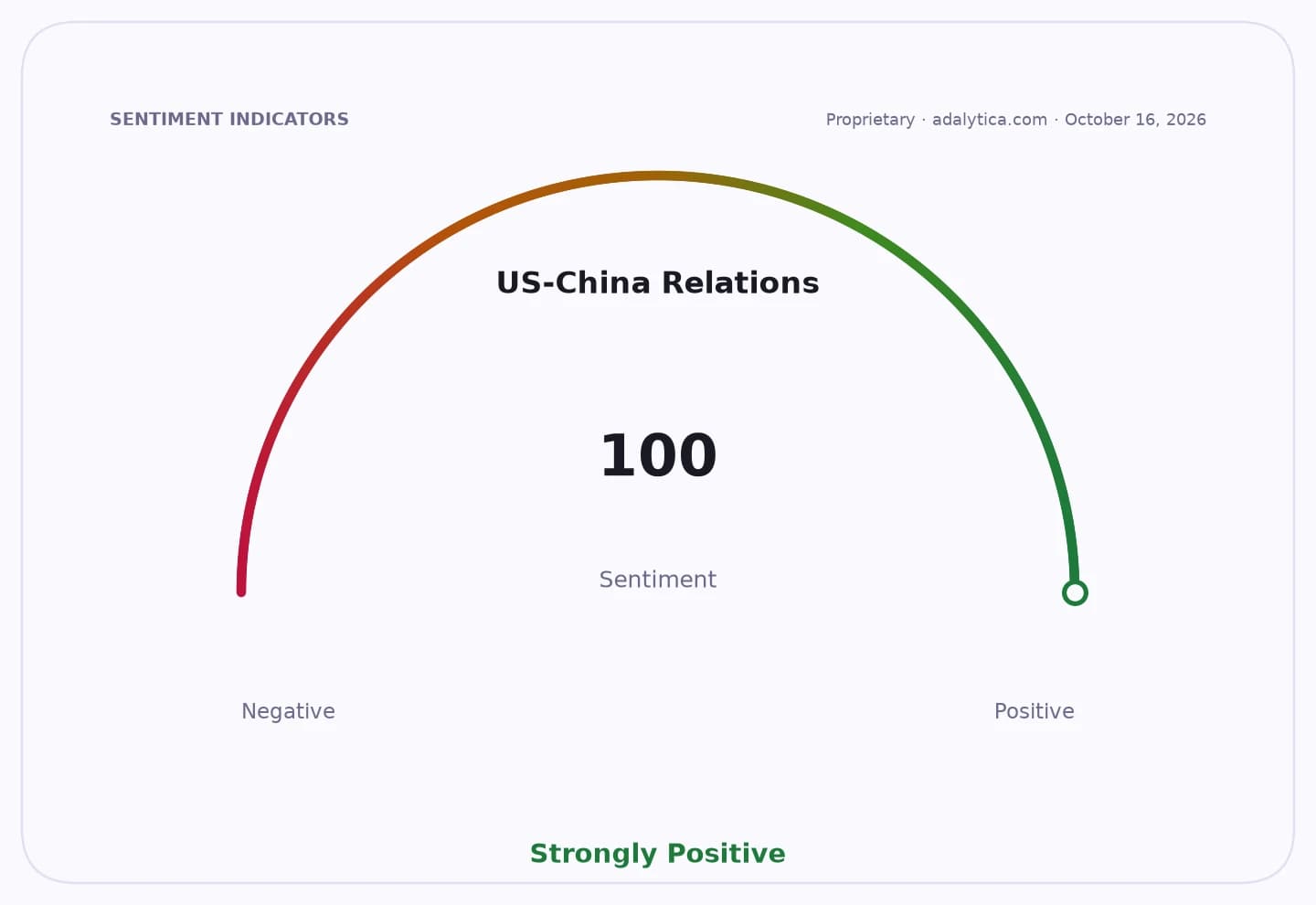
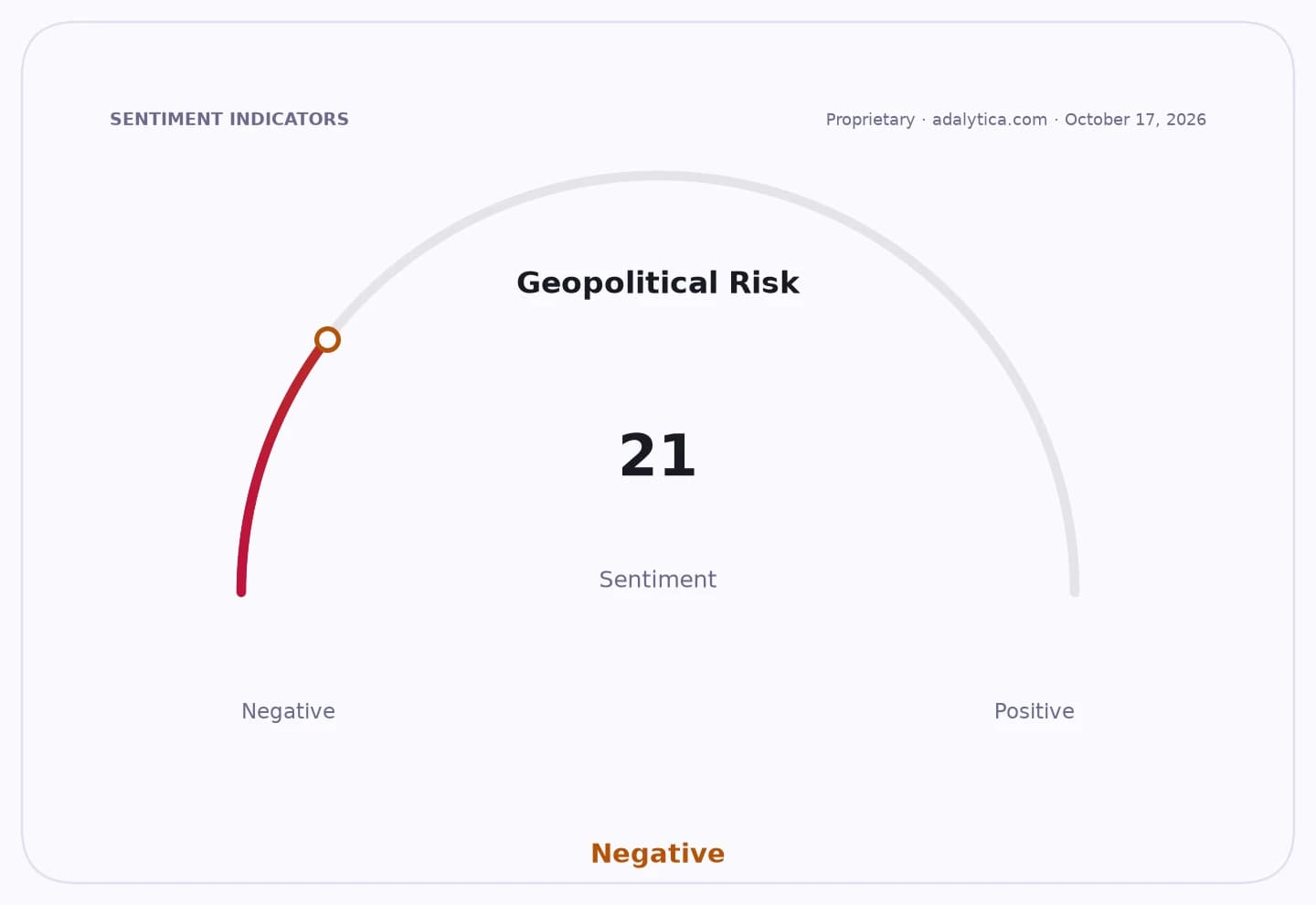
Market signals remain mixed, however. Broad emerging-market assets have not fully priced a clean improvement in Ethiopia’s external financing profile, and risk appetite in frontier markets remains fragile. Sentiment gauges tracked by Adalytica.com for global stability and US-China relations remain volatile, underscoring that geopolitical conditions can still overwhelm bilateral economic plans.
The key question is whether the relationship can move beyond headline cooperation into measurable trade diversification and investment inflows. If Ethiopia can use Chinese capital to expand export capacity and reduce bottlenecks, the partnership could become a growth lever. If not, it risks remaining a politically strong but economically uneven alignment.
| Entity | Gains | Losses |
|---|---|---|
| Ethiopia | ▲Capital, infrastructure, market access | ▼Financing dependence |
| China | ▲Export outlets, investment returns | ▼Geopolitical scrutiny |
| Ethiopian exporters | ▲Potential sales channels | ▼Competitive pressure |
| Western lenders | ▲Limited influence | ▼Share of financing influence |