Ethiopia’s most urgent risk is no longer just internal fragmentation; it is the way its domestic wars are now pulling Eritrea, Egypt, Somalia and Sudan into a more durable regional alignment that could harden the Horn of Africa into rival security blocs.
Ethiopia, Eritrea Tensions Raise Horn of Africa Risk
That matters economically because a country already weakened by years of conflict, civilian deaths and political fragmentation is losing the institutional capacity needed for recovery, trade and external financing. It also matters for investors because the Horn’s ports, corridors, currencies and infrastructure projects are increasingly being priced not as commercial assets but as strategic terrain, raising the odds of disrupted logistics, higher insurance costs and wider volatility across the Red Sea trade lane.
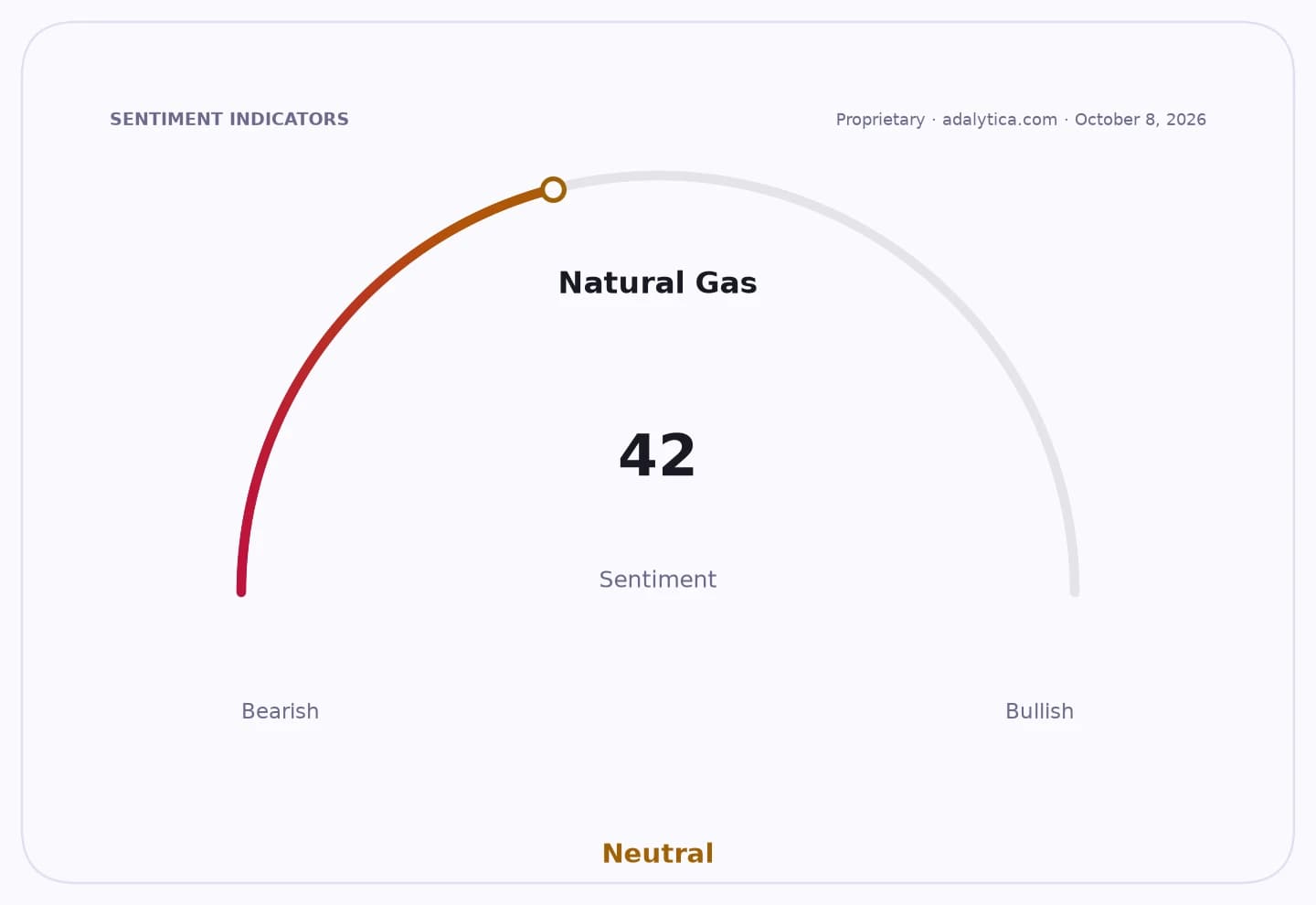
Sentiment IndicatorsⓘProprietary · adalytica.com · October 13, 2026
This is a snapshot — live sentiment, awareness and momentum for 130+ markets update continuously in the dashboard.Open AlphaPulse
The clearest immediate flashpoint is Tigray, where Eritrean forces are said to have moved deeper into Ethiopian territory after the post-Pretoria balance collapsed. Getachew Gebrekiros Temare, a lawyer and peace-building practitioner cited in The Reporter interview, argues that Eritrea’s presence is not simply a holdover from the 2020-2022 war but an active expansion tied to its need for strategic depth and its effort to shape Ethiopian politics from the borderlands. He says Eritrean troops in places such as Adigrat, Fatsi and the areas around Rama and Chila are inside Ethiopia under the 2002 boundary line, not on a disputed frontier.
The distinction is important. A frozen border dispute can be managed; a renewed military incursion cannot. If Eritrea is operating beyond the recognized line, the issue is not only legal but economic: it raises the risk of interstate escalation in a region that carries major trade flows between Asia, the Red Sea and Europe. Ethiopia’s landlocked dependence on external ports makes any widening conflict around its northern approaches more than a local security problem. It threatens transport reliability, corridor development and the cost of doing business across one of the world’s most sensitive maritime chokepoints.
Geopolitical Risk — 30-day sentimentadalytica.com
Explore this data interactively — full history, time series and cross-market comparisons.Open AlphaPulse
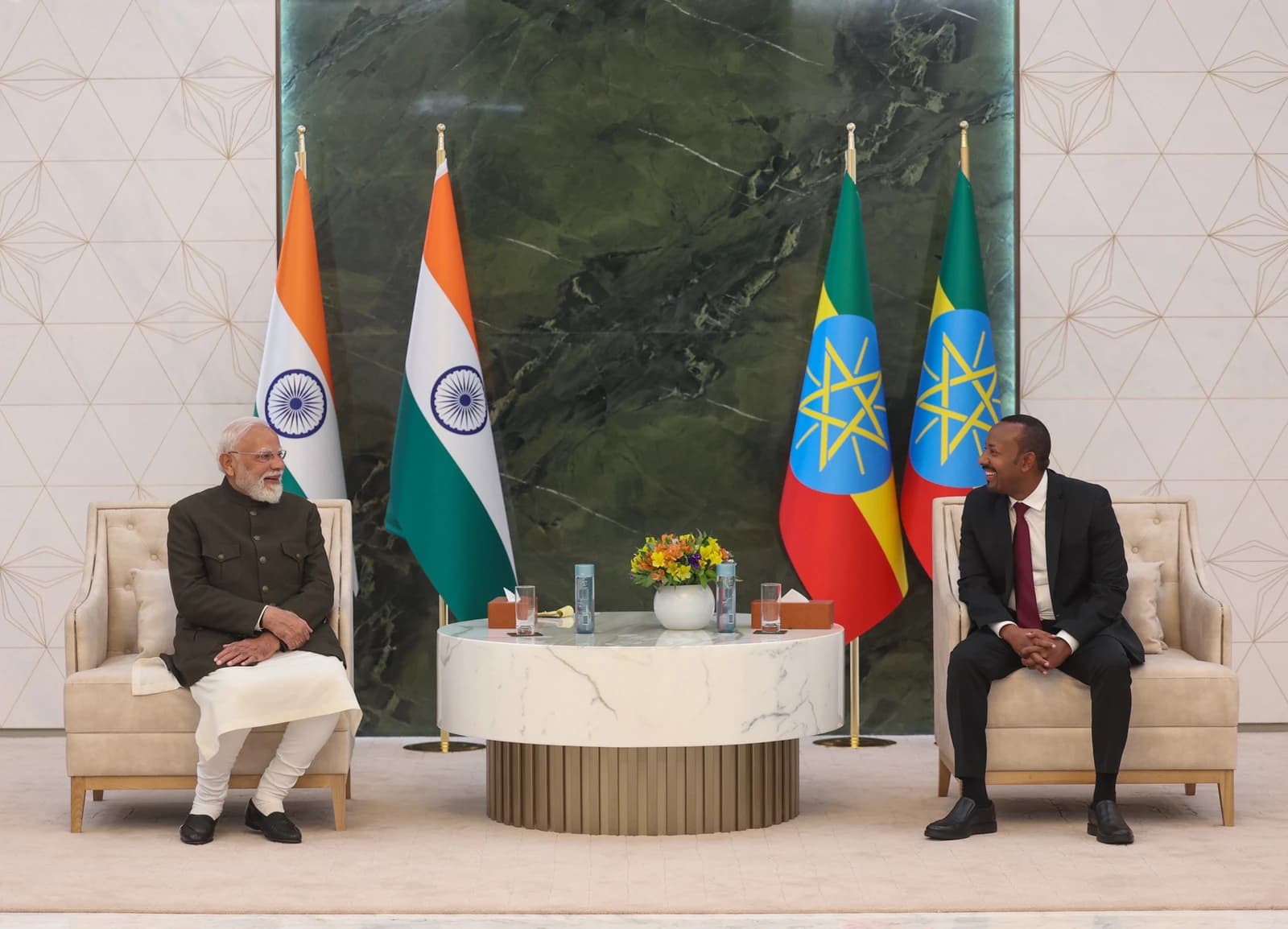
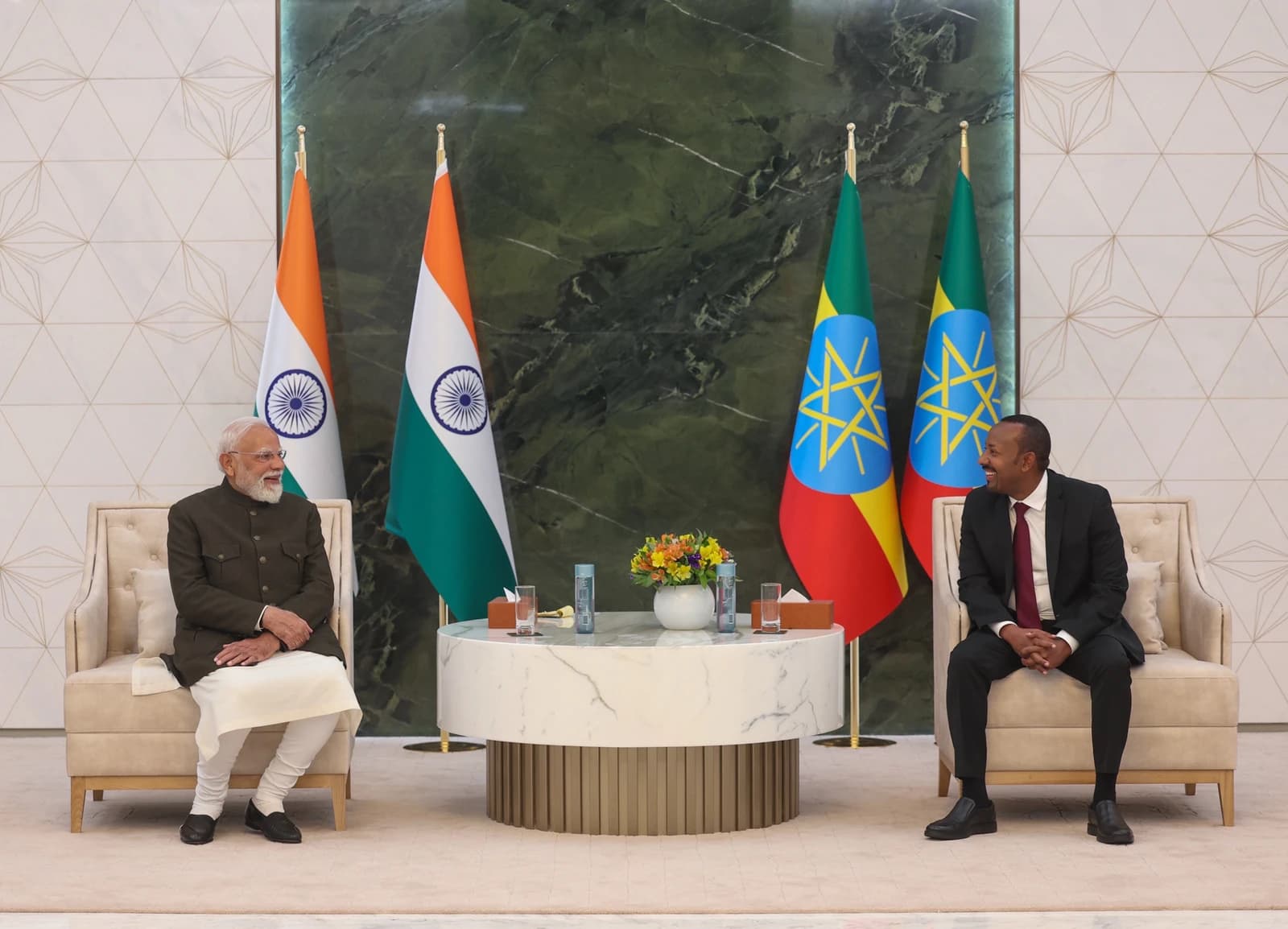
Temare’s broader argument is that the Horn’s crisis is being driven less by one confrontation than by overlapping ones. Ethiopia’s internal conflicts have created openings for outside actors, while outside alignments now feed back into those domestic fractures. Egypt, Eritrea, Somalia and Sudan’s New Alamein declaration reflects a convergence of interests, particularly around the Red Sea and the Nile, even if it stops short of a formal military alliance. For Addis Ababa, that means the old diplomatic balance is slipping: the country that once convened the region is increasingly being convened about.
For markets, the immediate read-through is higher geopolitical risk premia across East Africa and the Red Sea corridor. The Adalytica GEORISK gauge shows global stability sentiment at 93, or “Extreme Greed,” but awareness remains at just 4, suggesting a disconnect between complacent positioning and low attention to escalation risk. By contrast, FX volatility signals are in “Fear” territory, with awareness at “Extreme Fear,” indicating that currency traders are already discounting the possibility of sharper moves if the confrontation widens or disrupts trade routes.
The economic logic of the standoff is straightforward. Ethiopia needs commercial access to ports, diversified logistics and a calmer neighborhood to stabilise growth. Eritrea needs leverage and a way to preserve a security doctrine built on permanent mobilization. Egypt sees strategic benefit in a more constrained Ethiopia, especially as the Nile dispute becomes linked to Red Sea and Horn security questions. Sudan’s war makes it the region’s hinge state, while Somalia has become another arena where sovereignty and access disputes can quickly turn commercial talks into strategic conflict.
Temare’s warning is that the region is moving toward a point where infrastructure, trade and military strategy are becoming inseparable. Ports and corridors are no longer neutral economic assets; they are instruments of leverage. Ethiopia’s push for Red Sea access is therefore not just a policy debate but a political test of whether Addis Ababa can secure commercial routes without trying to impose sovereignty on a neighboring coast.
The near-term investor risk is that a conflict framed as border politics spills into shipping, fuel costs, aid flows and bilateral relations across the region. The longer-term risk is that the Horn’s competing alignments become institutionalized before any durable settlement is reached in Tigray, between Ethiopia and Eritrea, or across the Sudan and Somalia theatres. Unless those disputes are contained through negotiation, the region’s economic geography will remain hostage to its military one.
| Entity | Gains | Losses |
|---|---|---|
| Eritrea hardliners | ▲Strategic leverage | ▼Sanctions risk if escalation widens |
| Ethiopia’s economy | ▲Potential port diversification if deal holds | ▼Trade stability, recovery prospects |
| Egypt and aligned states | ▲More leverage over Addis Ababa | ▼Higher regional instability |
| Importers/shippers | ▲Predictable routes if diplomacy prevails | ▼Higher freight and insurance costs if conflict deepens |