Europe’s defense buildup is emerging as one of the most consequential budget shifts of the decade, with the European Union on track to surpass the US in defense spending by 2030 if current plans hold.
EU defense spending may surpass US by 2030

That would mark a structural change in how security is funded across the Atlantic and would ripple through bond markets, industrial policy, and defense equities. For investors, the key point is not just that spending is rising, but that Europe is moving from a supplemental role in Western security to a far larger and more autonomous buyer of military hardware, ammunition, air defense and command systems.
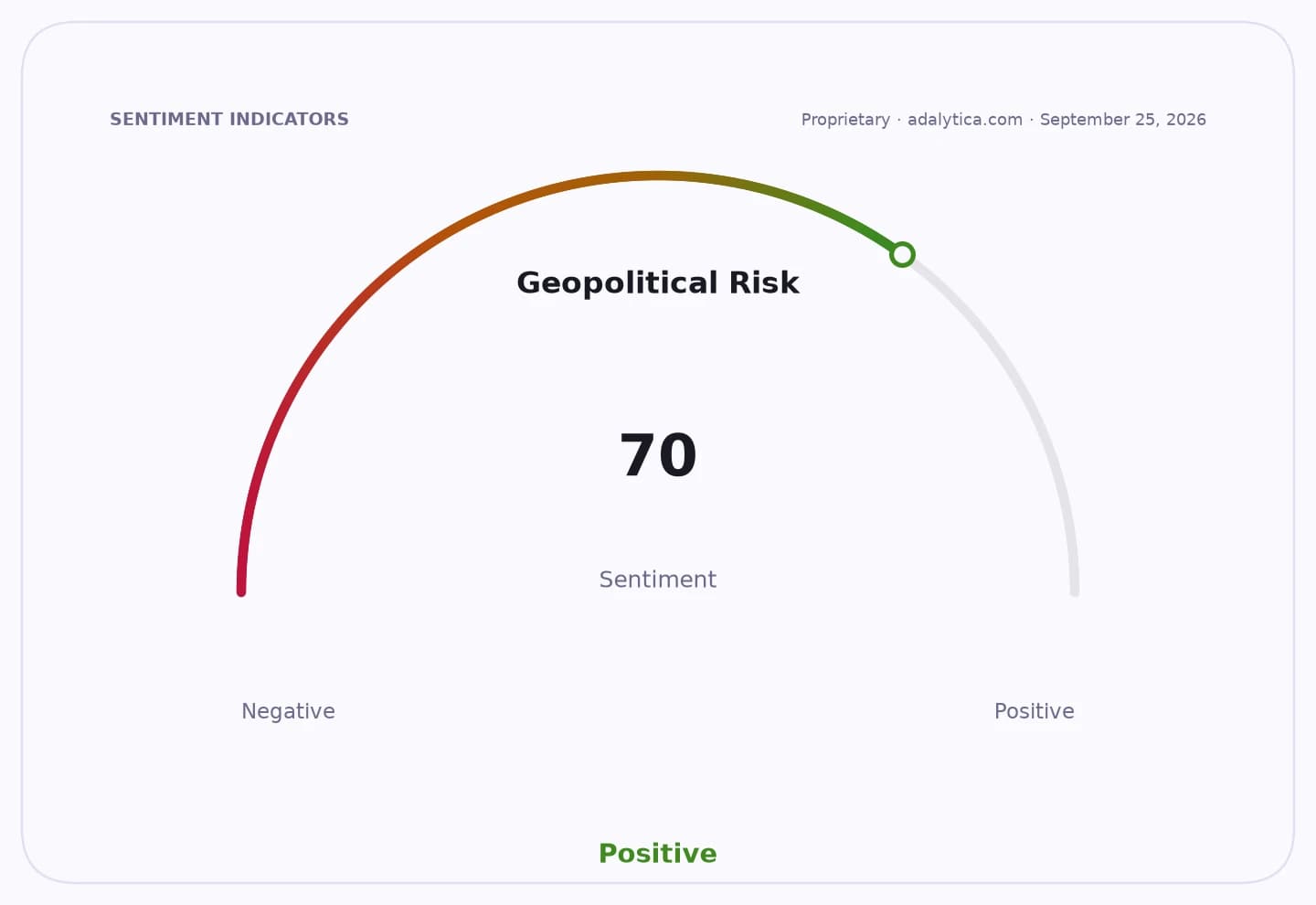
Sentiment IndicatorsⓘProprietary · adalytica.com · August 3, 2026
This is a snapshot — live sentiment, awareness and momentum for 130+ markets update continuously in the dashboard.Open AlphaPulse

The shift is being driven by a more hostile geopolitical environment, sustained pressure to rebuild inventories after years of underinvestment, and a political willingness in Europe to expand procurement at a pace that would have been hard to imagine before Russia’s invasion of Ukraine. The scale is large enough to matter to fiscal planning as well. Defense outlays compete with welfare, infrastructure and debt service at a time when the macro backdrop remains unforgiving, even as the US economy avoids recession and the Federal Reserve holds rates around 3.63% with the 10-year Treasury yield near 4.66%.
For European governments, the trade-off is becoming clearer: higher defense spending may support industrial capacity and strategic autonomy, but it also means more issuance and tighter room for other spending priorities. That matters because Europe is financing this buildup in a period when borrowing costs remain materially above the post-financial-crisis average, making each incremental euro of defense spending more expensive than it was a few years ago.
For defense contractors, the opportunity set is broadening. Lockheed Martin, RTX and Northrop Grumman have already been rewarded by the market, with shares of all three climbing sharply in recent sessions and technical readings showing strong momentum. Lockheed closed at $582.74 on July 31, up from $491.64 a month earlier, while RTX ended at $215.22 and Northrop at $542.48, both near recent highs. The moves reflect expectations that Europe will become a steadier source of long-duration demand for missiles, sensors, air defense systems and munitions.
The bull case is straightforward: Europe’s rearmament should extend visibility for prime contractors, deepen backlog and support pricing power in high-demand categories. The bear case is that procurement cycles remain slow, politics can delay orders, and Europe’s push for strategic sovereignty could favor local suppliers over US groups over time. That mix suggests the near-term winners are likely to be established Western primes with existing production lines and NATO-scale certifications, even if the long-run market share battle shifts toward European champions.
The US remains the world’s largest defense spender today, but the bigger story for investors is that Europe is no longer content to rely on American power alone. If the spending trajectory continues, 2030 could be remembered as the year Europe became a more important defense market than the US — a change that would reshape supply chains, equity valuations and the balance of influence in the global arms industry.
| Entity | Gains | Losses |
|---|---|---|
| EU governments | ▲Greater security capacity | ▼Higher fiscal strain |
| US defense primes | ▲Larger export demand | ▼Potential local-content pressure |
| European contractors | ▲Bigger procurement budgets | ▼More competition for production capacity |
| Taxpayers/bondholders | ▲Stronger defense posture | ▼More borrowing and trade-offs |