Romania’s dependence on European Union money is becoming a bigger political and economic risk as allies in Central Europe turn more reluctant to bankroll Brussels-led spending, a shift that could leave poorer member states facing tougher competition for scarce funds.
EU Funding Backlash Raises Romania Risk

The warning, captured in remarks by Romanian commentator Anca Alexandrescu that “we are the last fools left,” speaks to a broader political narrative in the region: voters and governments in some net-contributing or fiscally conservative EU states are increasingly questioning open-ended transfers, just as the bloc is pushing ahead with large, strategic allocations in sectors such as semiconductors, green transition and crisis support.
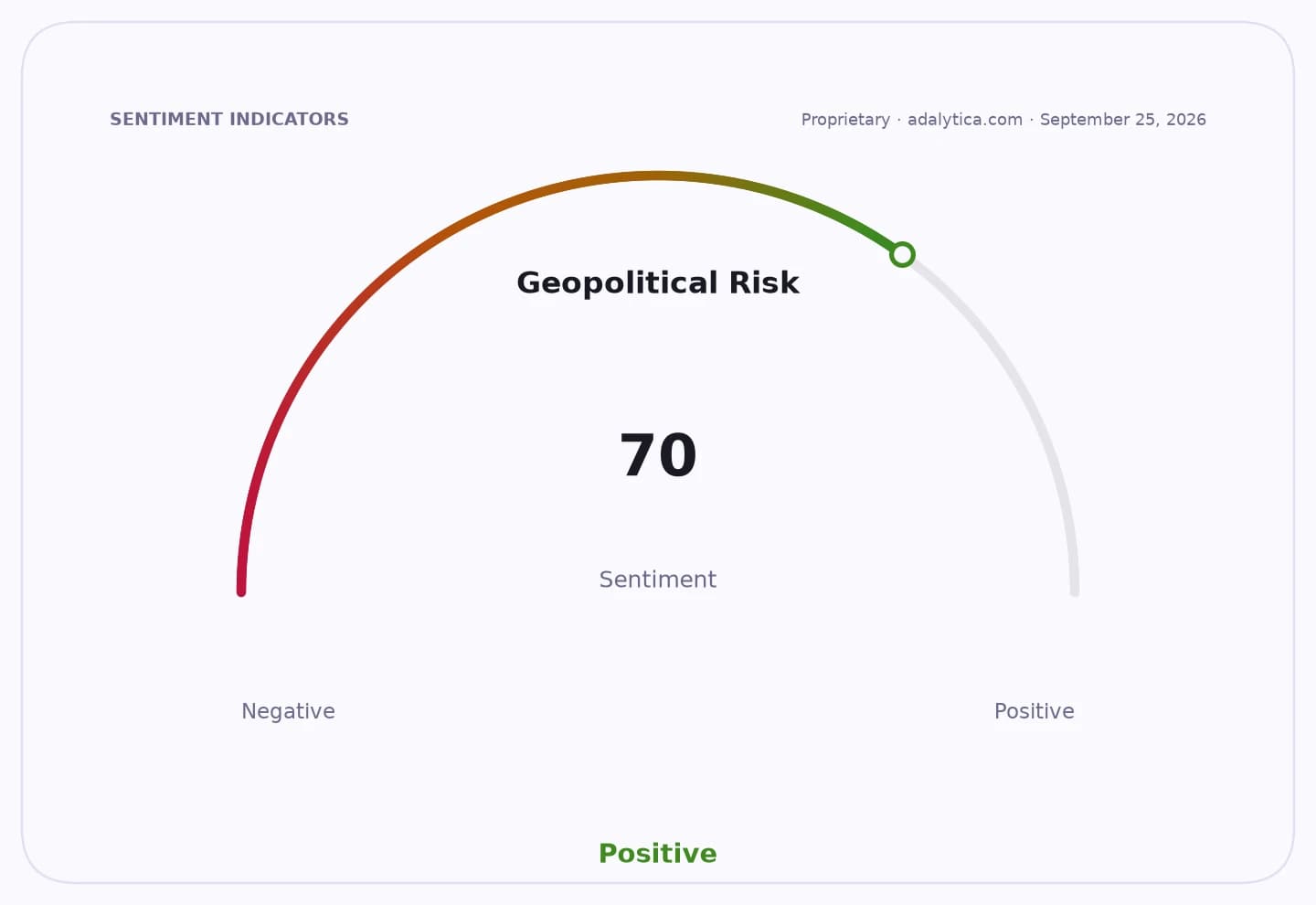
Sentiment IndicatorsⓘProprietary · adalytica.com · July 16, 2026
This is a snapshot — live sentiment, awareness and momentum for 130+ markets update continuously in the dashboard.Open AlphaPulse
That matters because EU funding has long been one of the main growth engines for countries like Romania, underpinning public investment, infrastructure upgrades and regional development. If resistance to transfers hardens in Poland, Hungary and elsewhere, the politics around the next EU budget, cohesion allocations and conditional funding could become more contentious, forcing beneficiary states to defend not just the size of their receipts but the credibility of how they spend them.
Investors are already signalling that the market sees the issue as more than a talking point. The iShares MSCI Poland ETF, EWW, has climbed to 75.39, near its 50-day moving average of 76.33 and well above its 200-day average of 72.19, while the VGK Europe ETF has risen to 89.12, also close to its 50-day average and above its 200-day line. That points to resilience in European assets even as political debate around fiscal transfers and regional fairness intensifies.
The contrast is striking. On one side, the European Commission is still approving large state-aid packages, including €659 million for semiconductor projects in Germany, and continuing to channel money into research, green and digital projects. On the other, there is growing scrutiny over whether EU funds are being allocated transparently and effectively, including calls from nine member states to strip the International Olympic Committee of EU funding. That mix suggests the era of automatic political support for Brussels spending is ending.
For Romania, the immediate issue is not a funding stop, but a rising political cost of dependence. Any harder line from net contributors or fiscal hawks could slow disbursements, increase conditionality and weaken the pace of public investment just as the economy needs external capital to sustain convergence with western Europe.
For investors, the key question is whether this evolves into a broader budget dispute that affects cohesion flows, construction activity, banking demand and local-currency assets across eastern Europe. The bulls argue that EU money remains politically necessary and economically sticky. The bears say the combination of voter fatigue, anti-Brussels rhetoric and tighter oversight could make future funding less generous and more unevenly distributed.
What to watch next is whether the rhetoric hardens into concrete budget constraints in the next round of EU negotiations. If it does, the winners are likely to be stricter contributors and better-governed recipients; the losers would be the member states most reliant on transfers and least prepared to absorb a slower, more conditional flow of European cash.
| Entity | Gains | Losses |
|---|---|---|
| Net contributors in EU | ▲Greater budget control | ▼Pressure to fund transfers |
| Romania and other cohesion recipients | ▲Continued access to funds | ▼Higher conditionality |
| Brussels budget hawks | ▲Stronger oversight | ▼Less political flexibility |
| EU asset investors | ▲Stability if funding persists | ▼Risk if budget fights escalate |