Consumers across the European Union now have a stronger legal right to demand appliance repairs after warranty, a change that could extend product lifecycles, pressure replacement sales and reshape margins for makers of washers, dryers, water heaters and other household goods. The new obligations for producers, which take effect on July 31, are designed to curb planned obsolescence and could force manufacturers and retailers to adapt to a market where repair is cheaper, easier and in some cases mandatory.
EU Repair Rules Pressure Appliance Replacement Sales
For investors, the biggest issue is not the legal wording but the economics: more repair activity can support parts, service and technician revenues, yet it also risks delaying full-unit replacements and cutting into new appliance demand. That matters for companies with meaningful exposure to Europe and to the replacement cycle, where a longer-lived product can mean fewer high-margin sales of new equipment.
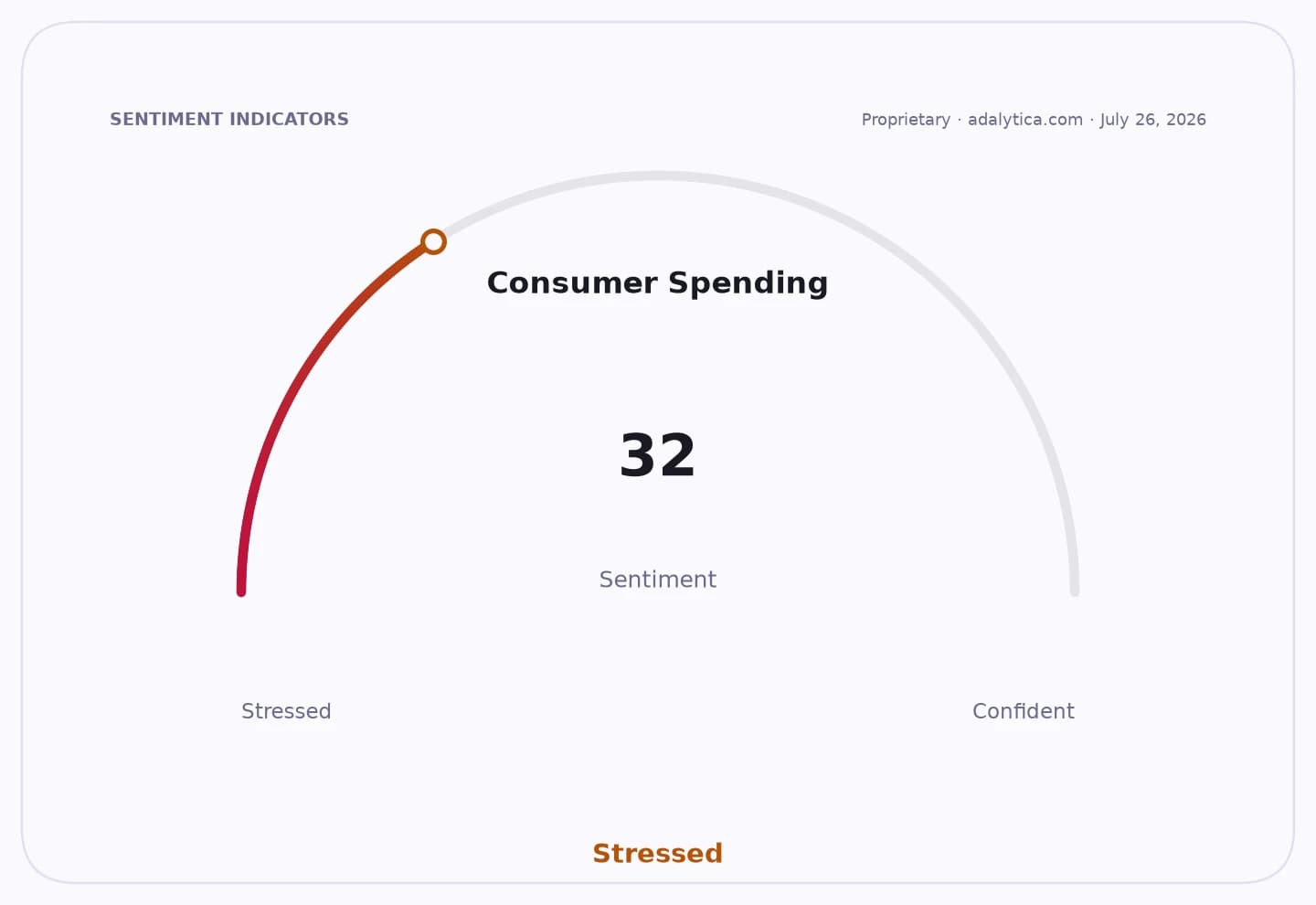
Sentiment IndicatorsⓘProprietary · adalytica.com · July 26, 2026
This is a snapshot — live sentiment, awareness and momentum for 130+ markets update continuously in the dashboard.Open AlphaPulse
Whirlpool, whose shares have fallen to $37.27 from $91.61 in February, is already under pressure from a weaker appliance backdrop, with the stock trading well below its 200-day moving average of $61.54. The technical picture underscores the strain: the latest close sits just above the lower Bollinger Band and the 50-day average near $39.76, suggesting a battered name that could be sensitive to any further hit to replacement demand.
A. O. Smith has also been navigating a softer consumer environment, with its shares at $60.78 versus a 200-day moving average of $65.62. While the company is more exposed to water heaters than broad appliances, the EU repair shift adds another layer of uncertainty for manufacturers that rely on frequent replacement cycles and aftermarket sales to stabilize revenue.
The policy lands as consumer demand shows signs of strain. Adalytica’s Consumer Spending Sentiment gauge is at 32, in neutral territory but with awareness stuck in “Extreme Fear,” while Household Savings Rate Sentiment sits at 29 in “Fear.” That combination suggests households are still under pressure to stretch the life of big-ticket purchases, which makes a repair-first framework economically meaningful beyond Europe.
Best Buy, which sells appliances as part of its broader consumer electronics and home goods mix, is less directly exposed than manufacturers but could still feel the effects if fewer customers replace damaged goods outright. At the same time, the company’s recent stock surge to $85.43 from a March low of $59.61 shows investors are already rewarding retail names with resilient pricing power and service revenue, even as the appliance category faces structural change.
The broader narrative is simple: Europe is pushing the appliance market away from throwaway economics and toward maintenance, parts and service. That may help repair networks and service-oriented business lines, but it raises the bar for manufacturers whose growth depends on replacement volume and on the pace at which households decide to buy new.
The next test is whether the new rules change buying behavior quickly enough to show up in European sales trends and company guidance over the coming quarters, especially for Whirlpool and other consumer durables makers with repair-heavy product lines.
| Entity | Gains | Losses |
|---|---|---|
| Repair shops and parts suppliers | ▲More service demand | ▼N/A |
| Consumers | ▲Lower repair costs, longer product life | ▼Less incentive for discounts on new units |
| Whirlpool and other appliance makers | ▲Potential parts/service revenue | ▼Fewer replacement sales |
| Retailers like Best Buy | ▲More service attach opportunities | ▼Lower big-ticket replacement volumes |